mirror of
https://github.com/bentoml/OpenLLM.git
synced 2025-12-23 15:47:49 -05:00

212 lines
8.8 KiB
Smarty
212 lines
8.8 KiB
Smarty
<div align="center">
|
||
|
||
<h1>🦾 OpenLLM: Self-Hosting LLMs Made Easy</h1>
|
||
|
||
[](https://github.com/bentoml/OpenLLM/blob/main/LICENSE)
|
||
[](https://pypi.org/project/openllm)
|
||
[](https://results.pre-commit.ci/latest/github/bentoml/OpenLLM/main)
|
||
[](https://twitter.com/bentomlai)
|
||
[](https://l.bentoml.com/join-slack)
|
||
|
||
</div>
|
||
|
||
OpenLLM allows developers to run **any open-source LLMs** (Llama 3.3, Qwen2.5, Phi3 and [more](#supported-models)) or **custom models** as **OpenAI-compatible APIs** with a single command. It features a [built-in chat UI](#chat-ui), state-of-the-art inference backends, and a simplified workflow for creating enterprise-grade cloud deployment with Docker, Kubernetes, and [BentoCloud](#deploy-to-bentocloud).
|
||
|
||
Understand the [design philosophy of OpenLLM](https://www.bentoml.com/blog/from-ollama-to-openllm-running-llms-in-the-cloud).
|
||
|
||
## Get Started
|
||
|
||
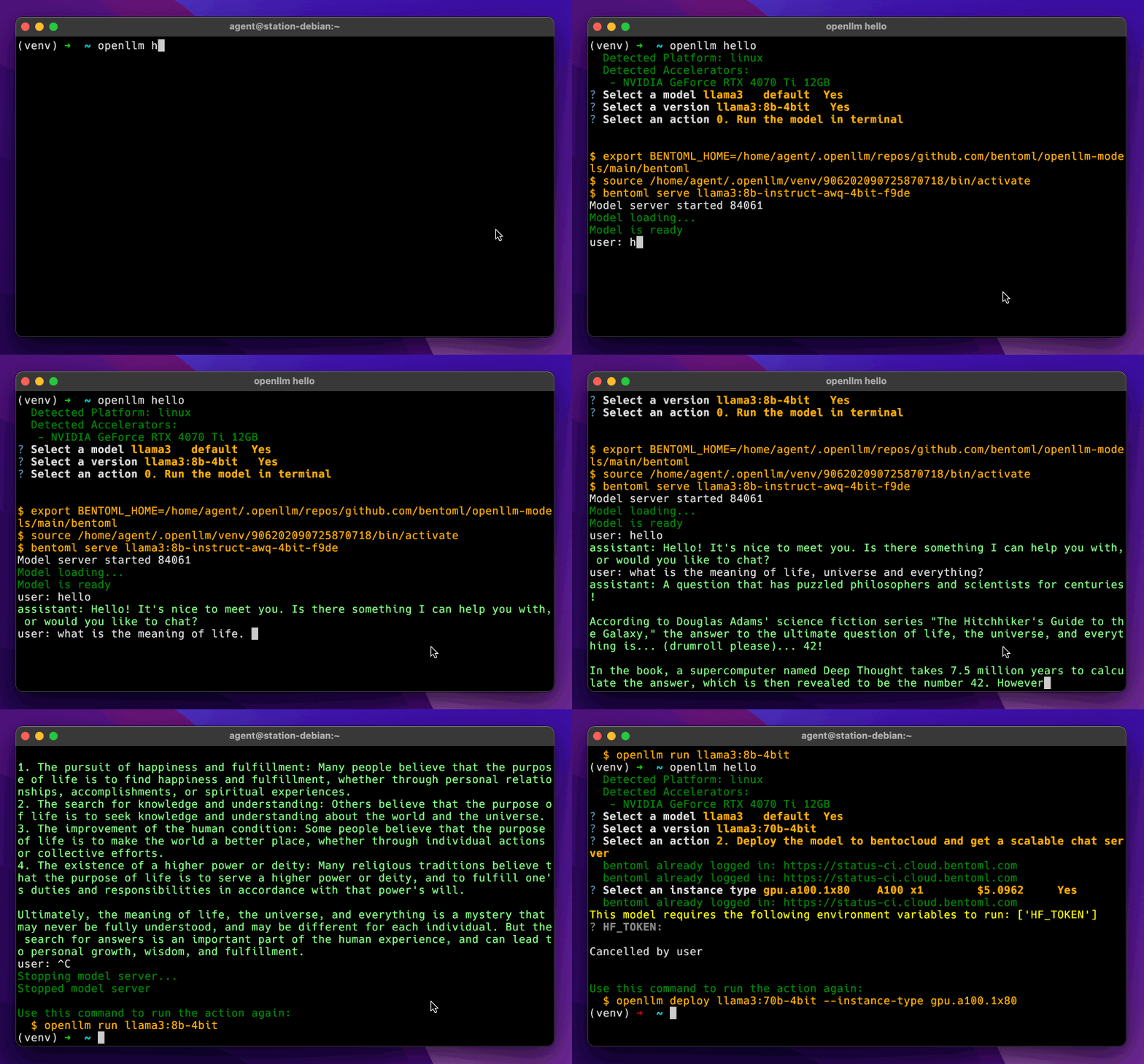
Run the following commands to install OpenLLM and explore it interactively.
|
||
|
||
```bash
|
||
pip install openllm # or pip3 install openllm
|
||
openllm hello
|
||
```
|
||
|
||
|
||
|
||
## Supported models
|
||
|
||
OpenLLM supports a wide range of state-of-the-art open-source LLMs. You can also add a [model repository to run custom models](#set-up-a-custom-repository) with OpenLLM.
|
||
|
||
<table>
|
||
<tr>
|
||
<th>Model</th>
|
||
<th>Parameters</th>
|
||
<th>Required GPU</th>
|
||
<th>Start a Server</th>
|
||
</tr>
|
||
{%- for key, value in model_dict|items %}
|
||
<tr>
|
||
<td>{{key}}</td>
|
||
<td>{{value['version']}}</td>
|
||
<td>{{value['pretty_gpu']}}</td>
|
||
<td><code>{{value['command']}}</code></td>
|
||
</tr>
|
||
{%- endfor %}
|
||
</table>
|
||
|
||
|
||
For the full model list, see the [OpenLLM models repository](https://github.com/bentoml/openllm-models).
|
||
|
||
## Start an LLM server
|
||
|
||
To start an LLM server locally, use the `openllm serve` command and specify the model version.
|
||
|
||
> [!NOTE]
|
||
> OpenLLM does not store model weights. A Hugging Face token (HF_TOKEN) is required for gated models.
|
||
>
|
||
> 1. Create your Hugging Face token [here](https://huggingface.co/settings/tokens).
|
||
> 2. Request access to the gated model, such as [meta-llama/Llama-3.2-1B-Instruct](https://huggingface.co/meta-llama/Llama-3.2-1B-Instruct).
|
||
> 3. Set your token as an environment variable by running:
|
||
> ```bash
|
||
> export HF_TOKEN=<your token>
|
||
> ```
|
||
|
||
```bash
|
||
{{model_dict.get("llama3.2")["command"]}}
|
||
```
|
||
|
||
The server will be accessible at [http://localhost:3000](http://localhost:3000/), providing OpenAI-compatible APIs for interaction. You can call the endpoints with different frameworks and tools that support OpenAI-compatible APIs. Typically, you may need to specify the following:
|
||
|
||
- **The API host address**: By default, the LLM is hosted at [http://localhost:3000](http://localhost:3000/).
|
||
- **The model name:** The name can be different depending on the tool you use.
|
||
- **The API key**: The API key used for client authentication. This is optional.
|
||
|
||
Here are some examples:
|
||
|
||
<details>
|
||
|
||
<summary>OpenAI Python client</summary>
|
||
|
||
```python
|
||
from openai import OpenAI
|
||
|
||
client = OpenAI(base_url='http://localhost:3000/v1', api_key='na')
|
||
|
||
# Use the following func to get the available models
|
||
# model_list = client.models.list()
|
||
# print(model_list)
|
||
|
||
chat_completion = client.chat.completions.create(
|
||
model="meta-llama/Llama-3.2-1B-Instruct",
|
||
messages=[
|
||
{
|
||
"role": "user",
|
||
"content": "Explain superconductors like I'm five years old"
|
||
}
|
||
],
|
||
stream=True,
|
||
)
|
||
for chunk in chat_completion:
|
||
print(chunk.choices[0].delta.content or "", end="")
|
||
```
|
||
|
||
</details>
|
||
|
||
<details>
|
||
|
||
<summary>LlamaIndex</summary>
|
||
|
||
```python
|
||
from llama_index.llms.openai import OpenAI
|
||
|
||
llm = OpenAI(api_bese="http://localhost:3000/v1", model="meta-llama/Llama-3.2-1B-Instruct", api_key="dummy")
|
||
...
|
||
```
|
||
|
||
</details>
|
||
|
||
## Chat UI
|
||
|
||
OpenLLM provides a chat UI at the `/chat` endpoint for the launched LLM server at http://localhost:3000/chat.
|
||
|
||
<img width="800" alt="openllm_ui" src="https://github.com/bentoml/OpenLLM/assets/5886138/8b426b2b-67da-4545-8b09-2dc96ff8a707">
|
||
|
||
## Chat with a model in the CLI
|
||
|
||
To start a chat conversation in the CLI, use the `openllm run` command and specify the model version.
|
||
|
||
```bash
|
||
openllm run llama3:8b
|
||
```
|
||
|
||
## Model repository
|
||
|
||
A model repository in OpenLLM represents a catalog of available LLMs that you can run. OpenLLM provides a default model repository that includes the latest open-source LLMs like Llama 3, Mistral, and Qwen2, hosted at [this GitHub repository](https://github.com/bentoml/openllm-models). To see all available models from the default and any added repository, use:
|
||
|
||
```bash
|
||
openllm model list
|
||
```
|
||
|
||
To ensure your local list of models is synchronized with the latest updates from all connected repositories, run:
|
||
|
||
```bash
|
||
openllm repo update
|
||
```
|
||
|
||
To review a model’s information, run:
|
||
|
||
```bash
|
||
openllm model get {{model_dict.get("llama3.2")["tag"]}}
|
||
```
|
||
|
||
### Add a model to the default model repository
|
||
|
||
You can contribute to the default model repository by adding new models that others can use. This involves creating and submitting a Bento of the LLM. For more information, check out this [example pull request](https://github.com/bentoml/openllm-models/pull/1).
|
||
|
||
### Set up a custom repository
|
||
|
||
You can add your own repository to OpenLLM with custom models. To do so, follow the format in the default OpenLLM model repository with a `bentos` directory to store custom LLMs. You need to [build your Bentos with BentoML](https://docs.bentoml.com/en/latest/guides/build-options.html) and submit them to your model repository.
|
||
|
||
First, prepare your custom models in a `bentos` directory following the guidelines provided by [BentoML to build Bentos](https://docs.bentoml.com/en/latest/guides/build-options.html). Check out the [default model repository](https://github.com/bentoml/openllm-repo) for an example and read the [Developer Guide](https://github.com/bentoml/OpenLLM/blob/main/DEVELOPMENT.md) for details.
|
||
|
||
Then, register your custom model repository with OpenLLM:
|
||
|
||
```bash
|
||
openllm repo add <repo-name> <repo-url>
|
||
```
|
||
|
||
**Note**: Currently, OpenLLM only supports adding public repositories.
|
||
|
||
## Deploy to BentoCloud
|
||
|
||
OpenLLM supports LLM cloud deployment via BentoML, the unified model serving framework, and BentoCloud, an AI inference platform for enterprise AI teams. BentoCloud provides fully-managed infrastructure optimized for LLM inference with autoscaling, model orchestration, observability, and many more, allowing you to run any AI model in the cloud.
|
||
|
||
[Sign up for BentoCloud](https://www.bentoml.com/) for free and [log in](https://docs.bentoml.com/en/latest/bentocloud/how-tos/manage-access-token.html). Then, run `openllm deploy` to deploy a model to BentoCloud:
|
||
|
||
```bash
|
||
openllm deploy {{model_dict.get("llama3.2")["tag"]}}
|
||
```
|
||
|
||
> [!NOTE]
|
||
> If you are deploying a gated model, make sure to set HF_TOKEN in enviroment variables.
|
||
|
||
Once the deployment is complete, you can run model inference on the BentoCloud console:
|
||
|
||
<img width="800" alt="bentocloud_ui" src="https://github.com/bentoml/OpenLLM/assets/65327072/4f7819d9-73ea-488a-a66c-f724e5d063e6">
|
||
|
||
## Community
|
||
|
||
OpenLLM is actively maintained by the BentoML team. Feel free to reach out and join us in our pursuit to make LLMs more accessible and easy to use 👉 [Join our Slack community!](https://l.bentoml.com/join-slack)
|
||
|
||
## Contributing
|
||
|
||
As an open-source project, we welcome contributions of all kinds, such as new features, bug fixes, and documentation. Here are some of the ways to contribute:
|
||
|
||
- Repost a bug by [creating a GitHub issue](https://github.com/bentoml/OpenLLM/issues/new/choose).
|
||
- [Submit a pull request](https://github.com/bentoml/OpenLLM/compare) or help review other developers’ [pull requests](https://github.com/bentoml/OpenLLM/pulls).
|
||
- Add an LLM to the OpenLLM default model repository so that other users can run your model. See the [pull request template](https://github.com/bentoml/openllm-models/pull/1).
|
||
- Check out the [Developer Guide](https://github.com/bentoml/OpenLLM/blob/main/DEVELOPMENT.md) to learn more.
|
||
|
||
## Acknowledgements
|
||
|
||
This project uses the following open-source projects:
|
||
|
||
- [bentoml/bentoml](https://github.com/bentoml/bentoml) for production level model serving
|
||
- [vllm-project/vllm](https://github.com/vllm-project/vllm) for production level LLM backend
|
||
- [blrchen/chatgpt-lite](https://github.com/blrchen/chatgpt-lite) for a fancy Web Chat UI
|
||
- [astral-sh/uv](https://github.com/astral-sh/uv) for blazing fast model requirements installing
|
||
|
||
We are grateful to the developers and contributors of these projects for their hard work and dedication.
|