It doesn't make sense to send a formatted caption without a plain text
caption so using TextMessageEventContent forces the latter to be present.

This also allows to use the helpful constructors of
TextMessageEventContent.

Signed-off-by: Kévin Commaille <zecakeh@tedomum.fr>
Now that there is some support for [MSC2530](https://github.com/matrix-org/matrix-spec-proposals/pull/2530), I gave adding sending captions a try. ( This is my first time with Rust 😄 )
I tried it on Element X with a hardcoded caption and it seems to work well
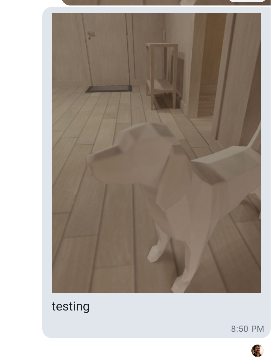
(It even got forwarded through mautrix-whatsapp and the caption was visible on the Whatsapp side)
---
* ffi: Expose filename and formatted body fields for media captions
In relevance to MSC2530
* MSC2530: added the ability to send media with captions
Signed-off-by: Marco Antonio Alvarez <surakin@gmail.com>
* signoff
Signed-off-by: Marco Antonio Alvarez <surakin@gmail.com>
* fixing the import messup
* fix missing parameters in documentation
* fix formatting
* move optional parameters to the end
* more formatting fixes
* more formatting fixes
* rename url parameter to filename in send_attachment and helpers
* fix send_attachment documentation example
* move caption and formatted_caption into attachmentconfig
* fix formatting
* fix formatting
* fix formatting (hopefully the last one)
* updated stale comments
* simplify attachment message comments
---------
Signed-off-by: Marco Antonio Alvarez <surakin@gmail.com>
Co-authored-by: SpiritCroc <dev@spiritcroc.de>
Inspired by the changes in #1013 I was thinking about the use case for `sync_*` and how we handle error cases. Most notably while we give the callback the option to stop the loop, we don't really give an indication to the outside, how to interpret that cancellation: was there a failure? should we restart?

Take e.g. a connectivity issue on the wire, we'd constantly loop and just `warn`, what you might or might not see. Even if you handle that in the `sync_with_result_callback` and thus break the loop, the outer caller now still doesn't know whether everything is honky dory or whether they should restart.

This Changes reworks that area by having all the `sync` return `Result<(), Error>`, where `()` means it was ended by the inner callback (which in `sync()` never occurs) or `Error` is the error either the inner `result_callback` found or the that was coming from the `send` in the first place. Thus allowing us to e.g. back down to sync as it was a dead wire or restart it if there was only a temporary problem. Making all that a just a bit more "rust-y".
The use of `io::Read` wasn't helping since we had to buffer the whole
file in memory anyways, and we are unlikely to get around that in the
near future.
