mirror of
https://github.com/CompassConnections/Compass.git
synced 2026-03-26 10:31:10 -04:00

1295 lines
42 KiB
Markdown
1295 lines
42 KiB
Markdown
---
|
||
trigger: always_on
|
||
description:
|
||
globs:
|
||
---
|
||
|
||
## Project Structure
|
||
|
||
- next.js react tailwind frontend `/web`
|
||
- broken down into pages, components, hooks, lib
|
||
- express node api server `/backend/api`
|
||
- one off scripts, like migrations `/backend/scripts`
|
||
- supabase postgres. schema in `/backend/supabase`
|
||
- supabase-generated types in `/backend/supabase/schema.ts`
|
||
- files shared between backend directories `/backend/shared`
|
||
- anything in `/backend` can import from `shared`, but not vice versa
|
||
- files shared between the frontend and backend in `/common`
|
||
- `/common` has lots of type definitions for our data structures, like User. It also contains many useful utility
|
||
functions. We try not to add package dependencies to common. `/web` and `/backend` are allowed to import from
|
||
`/common`, but not vice versa.
|
||
|
||
## Deployment
|
||
|
||
- The project has both dev and prod environments.
|
||
- Backend is on GCP (Google Cloud Platform). Deployment handled by terraform.
|
||
- Project ID is `compass-130ba`.
|
||
|
||
## Code Guidelines
|
||
|
||
---
|
||
|
||
Here's an example component from web in our style:
|
||
|
||
```tsx
|
||
import clsx from 'clsx'
|
||
import Link from 'next/link'
|
||
|
||
import {isAdminId, isModId} from 'common/envs/constants'
|
||
import {type Headline} from 'common/news'
|
||
import {EditNewsButton} from 'web/components/news/edit-news-button'
|
||
import {Carousel} from 'web/components/widgets/carousel'
|
||
import {useUser} from 'web/hooks/use-user'
|
||
import {track} from 'web/lib/service/analytics'
|
||
import {DashboardEndpoints} from 'web/components/dashboard/dashboard-page'
|
||
import {removeEmojis} from 'common/util/string'
|
||
|
||
export function HeadlineTabs(props: {
|
||
headlines: Headline[]
|
||
currentSlug: string
|
||
endpoint: DashboardEndpoints
|
||
hideEmoji?: boolean
|
||
notSticky?: boolean
|
||
className?: string
|
||
}) {
|
||
const {headlines, endpoint, currentSlug, hideEmoji, notSticky, className} = props
|
||
const user = useUser()
|
||
|
||
return (
|
||
<div className={clsx(className, 'bg-canvas-50 w-full', !notSticky && 'sticky top-0 z-50')}>
|
||
<Carousel labelsParentClassName="gap-px">
|
||
{headlines.map(({id, slug, title}) => (
|
||
<Tab
|
||
key={id}
|
||
label={hideEmoji ? removeEmojis(title) : title}
|
||
href={`/${endpoint}/${slug}`}
|
||
active={slug === currentSlug}
|
||
/>
|
||
))}
|
||
{user && <Tab label="More" href="/dashboard" />}
|
||
{user && (isAdminId(user.id) || isModId(user.id)) && (
|
||
<EditNewsButton endpoint={endpoint} defaultDashboards={headlines} />
|
||
)}
|
||
</Carousel>
|
||
</div>
|
||
)
|
||
}
|
||
```
|
||
|
||
---
|
||
|
||
We prefer to have many smaller components that each represent one logical unit, rather than one very large component
|
||
that does everything. Then we compose and reuse the components.
|
||
|
||
It's best to export the main component at the top of the file. We also try to name the component the same as the file
|
||
name (headline-tabs.tsx) so that it's easy to find.
|
||
|
||
Here's another example in `home.tsx` that calls our api. We have an endpoint called 'headlines', which is being cached
|
||
by NextJS:
|
||
|
||
```ts
|
||
import {api} from 'web/lib/api/api'
|
||
|
||
// More imports...
|
||
|
||
export async function getStaticProps() {
|
||
try {
|
||
const headlines = await api('headlines', {})
|
||
return {
|
||
props: {
|
||
headlines,
|
||
revalidate: 30 * 60, // 30 minutes
|
||
},
|
||
}
|
||
} catch (err) {
|
||
return {props: {headlines: []}, revalidate: 60}
|
||
}
|
||
}
|
||
|
||
export default function Home(props: { headlines: Headline[] }) { ...
|
||
}
|
||
```
|
||
|
||
---
|
||
|
||
If we are calling the API on the client, prefer using the `useAPIGetter` hook:
|
||
|
||
```ts
|
||
export const YourTopicsSection = (props: {
|
||
user: User
|
||
className?: string
|
||
}) => {
|
||
const {user, className} = props
|
||
const {data, refresh} = useAPIGetter('get-followed-groups', {
|
||
userId: user.id,
|
||
})
|
||
const followedGroups = data?.groups ?? []
|
||
...
|
||
```
|
||
|
||
This stores the result in memory, and allows you to call refresh() to get an updated version.
|
||
|
||
---
|
||
|
||
We frequently use `usePersistentInMemoryState` or `usePersistentLocalState` as an alternative to `useState`. These cache
|
||
data. Most of the time you want in-memory caching so that navigating back to a page will preserve the same state and
|
||
appear to load instantly.
|
||
|
||
Here's the definition of usePersistentInMemoryState:
|
||
|
||
```ts
|
||
export const usePersistentInMemoryState = <T>(initialValue: T, key: string) => {
|
||
const [state, setState] = useStateCheckEquality<T>(safeJsonParse(store[key]) ?? initialValue)
|
||
|
||
useEffect(() => {
|
||
const storedValue = safeJsonParse(store[key]) ?? initialValue
|
||
setState(storedValue as T)
|
||
}, [key])
|
||
|
||
const saveState = useEvent((newState: T | ((prevState: T) => T)) => {
|
||
setState((prevState) => {
|
||
const updatedState = isFunction(newState) ? newState(prevState) : newState
|
||
store[key] = JSON.stringify(updatedState)
|
||
return updatedState
|
||
})
|
||
})
|
||
|
||
return [state, saveState] as const
|
||
}
|
||
```
|
||
|
||
---
|
||
|
||
For live updates, we use websockets. In `use-api-subscription.ts`, we have this hook:
|
||
|
||
```ts
|
||
export function useApiSubscription(opts: SubscriptionOptions) {
|
||
useEffect(() => {
|
||
const ws = client
|
||
if (ws != null) {
|
||
if (opts.enabled ?? true) {
|
||
ws.subscribe(opts.topics, opts.onBroadcast).catch(opts.onError)
|
||
return () => {
|
||
ws.unsubscribe(opts.topics, opts.onBroadcast).catch(opts.onError)
|
||
}
|
||
}
|
||
}
|
||
}, [opts.enabled, JSON.stringify(opts.topics)])
|
||
}
|
||
```
|
||
|
||
In `use-bets`, we have this hook to get live updates with useApiSubscription:
|
||
|
||
```ts
|
||
export const useContractBets = (
|
||
contractId: string,
|
||
opts?: APIParams<'bets'> & {enabled?: boolean},
|
||
) => {
|
||
const {enabled = true, ...apiOptions} = {
|
||
contractId,
|
||
...opts,
|
||
}
|
||
const optionsKey = JSON.stringify(apiOptions)
|
||
|
||
const [newBets, setNewBets] = usePersistentInMemoryState<Bet[]>([], `${optionsKey}-bets`)
|
||
|
||
const addBets = (bets: Bet[]) => {
|
||
setNewBets((currentBets) => {
|
||
const uniqueBets = sortBy(uniqBy([...currentBets, ...bets], 'id'), 'createdTime')
|
||
return uniqueBets.filter((b) => !betShouldBeFiltered(b, apiOptions))
|
||
})
|
||
}
|
||
|
||
const isPageVisible = useIsPageVisible()
|
||
|
||
useEffect(() => {
|
||
if (isPageVisible && enabled) {
|
||
api('bets', apiOptions).then(addBets)
|
||
}
|
||
}, [optionsKey, enabled, isPageVisible])
|
||
|
||
useApiSubscription({
|
||
topics: [`contract/${contractId}/new-bet`],
|
||
onBroadcast: (msg) => {
|
||
addBets(msg.data.bets as Bet[])
|
||
},
|
||
enabled,
|
||
})
|
||
|
||
return newBets
|
||
}
|
||
```
|
||
|
||
---
|
||
|
||
Here are all the topics we broadcast, from `backend/shared/src/websockets/helpers.ts`
|
||
|
||
```ts
|
||
export function broadcastUpdatedPrivateUser(userId: string) {
|
||
// don't send private user info because it's private and anyone can listen
|
||
broadcast(`private-user/${userId}`, {})
|
||
}
|
||
|
||
export function broadcastUpdatedUser(user: Partial<User> & {id: string}) {
|
||
broadcast(`user/${user.id}`, {user})
|
||
}
|
||
|
||
export function broadcastUpdatedComment(comment: Comment) {
|
||
broadcast(`user/${comment.onUserId}/comment`, {comment})
|
||
}
|
||
```
|
||
|
||
---
|
||
|
||
We have our scripts in the directory `/backend/scripts`.
|
||
|
||
To write a script, run it inside the helper function called `runScript` that automatically fetches any secret keys and
|
||
loads them into process.env.
|
||
|
||
Example from `/backend/scripts/manicode.ts`
|
||
|
||
```ts
|
||
import {runScript} from 'run-script'
|
||
|
||
runScript(async ({pg}) => {
|
||
const userPrompt = process.argv[2]
|
||
await pg.none(...)
|
||
})
|
||
```
|
||
|
||
Generally scripts should be run by me, especially if they modify backend state or schema.
|
||
But if you need to run a script, you can use `bun`. For example:
|
||
|
||
```sh
|
||
bun run manicode.ts "Generate a page called cowp, which has cows that make noises!"
|
||
```
|
||
|
||
if that doesn't work, try
|
||
|
||
```sh
|
||
bun x ts-node manicode.ts "Generate a page called cowp, which has cows that make noises!"
|
||
```
|
||
|
||
---
|
||
|
||
Our backend is mostly a set of endpoints. We create new endpoints by adding to the schema in
|
||
`/common/src/api/schema.ts`.
|
||
|
||
E.g. Here is a hypothetical bet schema:
|
||
|
||
```ts
|
||
bet: {
|
||
method: 'POST',
|
||
authed
|
||
:
|
||
true,
|
||
returns
|
||
:
|
||
{
|
||
}
|
||
as
|
||
CandidateBet & {betId: string},
|
||
props
|
||
:
|
||
z
|
||
.object({
|
||
contractId: z.string(),
|
||
amount: z.number().gte(1),
|
||
replyToCommentId: z.string().optional(),
|
||
limitProb: z.number().gte(0.01).lte(0.99).optional(),
|
||
expiresAt: z.number().optional(),
|
||
// Used for binary and new multiple choice contracts (cpmm-multi-1).
|
||
outcome: z.enum(['YES', 'NO']).default('YES'),
|
||
//Multi
|
||
answerId: z.string().optional(),
|
||
dryRun: z.boolean().optional(),
|
||
})
|
||
.strict(),
|
||
}
|
||
```
|
||
|
||
Then, we define the bet endpoint in `backend/api/src/place-bet.ts`
|
||
|
||
```ts
|
||
export const placeBet: APIHandler<'bet'> = async (props, auth) => {
|
||
const isApi = auth.creds.kind === 'key'
|
||
return await betsQueue.enqueueFn(
|
||
() => placeBetMain(props, auth.uid, isApi),
|
||
[props.contractId, auth.uid],
|
||
)
|
||
}
|
||
```
|
||
|
||
And finally, you need to register the handler in `backend/api/src/routes.ts`
|
||
|
||
```ts
|
||
import {placeBet} from './place-bet'
|
||
|
||
...
|
||
|
||
const handlers = {
|
||
bet: placeBet,
|
||
...
|
||
}
|
||
```
|
||
|
||
---
|
||
|
||
We have two ways to access our postgres database.
|
||
|
||
```ts
|
||
import {db} from 'web/lib/supabase/db'
|
||
|
||
db.from('profiles').select('*').eq('user_id', userId)
|
||
```
|
||
|
||
and
|
||
|
||
```ts
|
||
import {createSupabaseDirectClient} from 'shared/supabase/init'
|
||
|
||
const pg = createSupabaseDirectClient()
|
||
pg.oneOrNone<Row<'profiles'>>('select * from profiles where user_id = $1', [userId])
|
||
```
|
||
|
||
The supabase client just uses the supabase client library, which is a wrapper around postgREST. It allows us to query
|
||
and update the database directly from the frontend.
|
||
|
||
`createSupabaseDirectClient` is used on the backend. it lets us specify sql strings to run directly on our database,
|
||
using the pg-promise library. The client (code in web) does not have permission to do this.
|
||
|
||
Another example using the direct client:
|
||
|
||
```ts
|
||
export const getUniqueBettorIds = async (contractId: string, pg: SupabaseDirectClient) => {
|
||
const res = await pg.manyOrNone(
|
||
'select distinct user_id from contract_bets where contract_id = $1',
|
||
[contractId],
|
||
)
|
||
return res.map((r) => r.user_id as string)
|
||
}
|
||
```
|
||
|
||
(you may notice we write sql in lowercase)
|
||
|
||
We have a few helper functions for updating and inserting data into the database.
|
||
|
||
```ts
|
||
import {
|
||
buikInsert,
|
||
bulkUpdate,
|
||
bulkUpdateData,
|
||
bulkUpsert,
|
||
insert,
|
||
update,
|
||
updateData,
|
||
} from 'shared/supabase/utils'
|
||
|
||
...
|
||
|
||
const pg = createSupabaseDirectClient()
|
||
|
||
// you are encouraged to use tryCatch for these
|
||
const {data, error} = await tryCatch(
|
||
insert(pg, 'profiles', {user_id: auth.uid, ...body})
|
||
)
|
||
|
||
if (error) throw APIError(500, 'Error creating profile: ' + error.message)
|
||
|
||
await update(pg, 'profiles', 'user_id', {user_id: auth.uid, age: 99})
|
||
|
||
await updateData(pg, 'private_users', {id: userId, notifications: {...}})
|
||
```
|
||
|
||
The sqlBuilder from `shared/supabase/sql-builder.ts` can be used to construct SQL queries with re-useable parts. All it
|
||
does is sanitize and output sql query strings. It has several helper functions including:
|
||
|
||
- `select`: Specifies the columns to select
|
||
- `from`: Specifies the table to query
|
||
- `where`: Adds WHERE clauses
|
||
- `orderBy`: Specifies the order of results
|
||
- `limit`: Limits the number of results
|
||
- `renderSql`: Combines all parts into a final SQL string
|
||
|
||
Example usage:
|
||
|
||
```typescript
|
||
const query = renderSql(
|
||
select('distinct user_id'),
|
||
from('contract_bets'),
|
||
where('contract_id = ${id}', {id}),
|
||
orderBy('created_time desc'),
|
||
limitValue != null && limit(limitValue),
|
||
)
|
||
|
||
const res = await pg.manyOrNone(query)
|
||
```
|
||
|
||
Use these functions instead of string concatenation.
|
||
|
||
# Documentation for development
|
||
|
||
> [!WARNING]
|
||
> TODO: This document is a work in progress. Please help us improve it!
|
||
|
||
See those other useful documents as well:
|
||
|
||
- [knowledge.md](knowledge.md) for high-level architecture and design decisions.
|
||
- [README.md](../backend/api/README.md) for the backend API
|
||
- [README.md](../backend/email/README.md) for the email routines and how to set up a local server for quick email
|
||
rendering
|
||
- [README.md](../web/README.md) for the frontend / web server
|
||
- [TESTING.md](TESTING.md) for testing guidance and direction
|
||
|
||
### Adding a new profile field
|
||
|
||
A profile field is any variable associated with a user profile, such as age, politics, diet, etc. You may want to add a
|
||
new profile field if it helps people find better matches.
|
||
|
||
To do so, you can add code in a similar way as
|
||
in [this commit](https://github.com/CompassConnections/Compass/commit/940c1f5692f63bf72ddccd4ec3b00b1443801682) for the
|
||
`religion` field. If you also want people to filter by that profile field, you'll also need to add it to the search
|
||
filters, as done
|
||
in [this commit](https://github.com/CompassConnections/Compass/commit/a4bb184e95553184a4c8773d7896e4b570508fe5) (for the
|
||
`religion` field as well).
|
||
|
||
Note that you will also need to add a column to the `profiles` table in the dev database before running the code; you
|
||
can do so via this SQL command (change the type if not `TEXT`):
|
||
|
||
```sql
|
||
ALTER TABLE profiles
|
||
ADD COLUMN profile_field TEXT;
|
||
```
|
||
|
||
Store it in `add_profile_field.sql` in the [migrations](../backend/supabase/migrations) folder and
|
||
run [migrate.sh](../scripts/migrate.sh) from the root folder:
|
||
|
||
```bash
|
||
./scripts/migrate.sh backend/supabase/migrations/add_profile_field.sql
|
||
```
|
||
|
||
Then sync the database types from supabase to the local files (which assist Typescript in typing):
|
||
|
||
```bash
|
||
yarn regen-types dev
|
||
```
|
||
|
||
That's it!
|
||
|
||
### Adding a new language
|
||
|
||
Adding a new language is very easy, especially with translating tools like large language models (ChatGPT, etc.) which
|
||
you can use as first draft.
|
||
|
||
- Add the language to the LOCALES dictionary in [constants.ts](../common/src/constants.ts) (the key is the locale code,
|
||
the value is the original language name (not in English)).
|
||
- Duplicate [fr.json](../web/messages/fr.json) and rename it to the locale code (e.g., `de.json` for German). Translate
|
||
all the strings in the new file (keep the keys identical). LLMs like ChatGPT may not be able to translate the whole
|
||
file in one go; try to copy-paste by batch of 300 lines and ask the LLM to
|
||
`translate the values of the json above to <new language> (keep the keys unchanged)`. In order to fit the bottom
|
||
navigation bar on mobile, make sure the values for those keys are less than 10 characters: "nav.home", "
|
||
nav.messages", "nav.more", "nav.notifs", "nav.people".
|
||
- Duplicate the [fr](../web/public/md/fr) folder and rename it to the locale code (e.g., `de` for German). Translate all
|
||
the markdown files in the new folder. To do so, you can copy-paste each file into an LLM and ask it to
|
||
`translate the markdown above to <new language>`.
|
||
|
||
That's all, no code needed!
|
||
|
||
# Testing
|
||
|
||
### Why we test
|
||
|
||
Testing exists to give us fast, reliable feedback about real behavior so we can ship with confidence.
|
||
|
||
- Prevent regressions: Lock in correct behavior so future changes don’t silently break working features.
|
||
- Enable safe refactoring: A trustworthy suite lets us improve design without fear.
|
||
- Document intent: Tests act as living examples of how modules and components are expected to work.
|
||
- Catch edge cases early: Exercise unhappy paths, timeouts, and integration boundaries before production.
|
||
- Increase release confidence: Unit/integration tests plus a few critical E2E flows gate deployments.
|
||
|
||
What testing is not
|
||
|
||
- Not a replacement for monitoring, logging, or manual exploratory testing.
|
||
- Not a quest for 100% coverage—optimize for meaningful scenarios over raw numbers.
|
||
|
||
How we apply it here
|
||
|
||
- Unit and integration tests live in each package and run with Jest (see `jest.config.ts`).
|
||
- Critical user journeys are covered by Playwright E2E tests under `tests/e2e` (see `playwright.config.ts`).
|
||
|
||
### Test types at a glance
|
||
|
||
This project uses three complementary test types. Use the right level for the job:
|
||
|
||
- Unit tests
|
||
- Purpose: Verify a single function/module in isolation; fast, deterministic.
|
||
- Where: Each package under `tests/unit` (e.g., `backend/api/tests/unit`, `web/tests/unit`, `common/tests/unit`,
|
||
etc.).
|
||
- Runner: Jest (configured via root `jest.config.ts`).
|
||
- Naming: `*.unit.test.ts` (or `.tsx` for React in `web`).
|
||
- When to use: Pure logic, utilities, hooks, reducers, small components with mocked dependencies.
|
||
|
||
- Integration tests
|
||
- Purpose: Verify multiple units working together (e.g., function + DB/client, component + context/provider) without
|
||
spinning up the full app.
|
||
- Where: Each package under `tests/integration` (e.g., `backend/shared/tests/integration`, `web/tests/integration`).
|
||
- Runner: Jest (configured via root `jest.config.ts`).
|
||
- Naming: `*.integration.test.ts` (or `.tsx` for React in `web`).
|
||
- When to use: Boundaries between modules, real serialization/parsing, API handlers with mocked network/DB,
|
||
component trees with providers.
|
||
|
||
- End-to-End (E2E) tests
|
||
- Purpose: Validate real user flows across the full stack.
|
||
- Where: Top-level `tests/e2e` with separate areas for `web` and `backend`.
|
||
- Runner: Playwright (see root `playwright.config.ts`, `testDir: ./tests/e2e`).
|
||
- Naming: `*.e2e.spec.ts`.
|
||
- When to use: Critical journeys (signup, login, checkout), cross-service interactions, smoke tests for deployments.
|
||
|
||
Quick commands
|
||
|
||
```bash
|
||
# Jest (unit + integration)
|
||
yarn test
|
||
|
||
# Playwright (E2E)
|
||
yarn test:e2e
|
||
```
|
||
|
||
### Where to put test files
|
||
|
||
```filetree
|
||
# Config
|
||
jest.config.ts (for unit and integration tests)
|
||
playwright.config.ts (for e2e tests)
|
||
|
||
# Top-level End-to-End (Playwright)
|
||
tests/
|
||
├── e2e/
|
||
│ ├── web/
|
||
│ │ ├── pages/
|
||
│ │ └── specs/
|
||
│ │ └── example.e2e.spec.ts
|
||
│ └── backend/
|
||
│ └── specs/
|
||
│ └── api.e2e.spec.ts
|
||
└── reports/
|
||
└── playwright-report/
|
||
|
||
# Package-level Unit & Integration (Jest)
|
||
backend/
|
||
├── api/
|
||
│ ├── src/
|
||
│ └── tests/
|
||
│ ├── unit/
|
||
│ │ └── example.unit.test.ts
|
||
│ └── integration/
|
||
│ └── example.integration.test.ts
|
||
├── email/
|
||
│ └── tests/
|
||
│ ├── unit/
|
||
│ └── integration/
|
||
└── shared/
|
||
└── tests/
|
||
├── unit/
|
||
└── integration/
|
||
|
||
common/
|
||
└── tests/
|
||
├── unit/
|
||
│ └── example.unit.test.ts
|
||
└── integration/
|
||
└── example.integration.test.ts
|
||
|
||
web/
|
||
└── tests/
|
||
├── unit/
|
||
│ └── example.unit.test.tsx
|
||
└── integration/
|
||
└── example.integration.test.tsx
|
||
```
|
||
|
||
- End-to-End tests live under `tests/e2e` and are executed by Playwright. The root `playwright.config.ts` sets `testDir`
|
||
to `./tests/e2e`.
|
||
- Unit and integration tests live in each package’s `tests` folder and are executed by Jest via the root
|
||
`jest.config.ts` projects array.
|
||
- Naming:
|
||
- Unit: `*.unit.test.ts` (or `.tsx` for React in `web`)
|
||
- Integration: `*.integration.test.ts`
|
||
- E2E (Playwright): `*.e2e.spec.ts`
|
||
|
||
### Best Practices
|
||
|
||
- Test Behavior, Not Implementation. Don’t test internal state or function calls unless you’re testing utilities or very
|
||
critical behavior.
|
||
- Use msw to Mock APIs. Don't manually mock fetch—use msw to simulate realistic behavior, including network delays and
|
||
errors.
|
||
- Don’t Overuse Snapshots. Snapshots are fragile and often meaningless unless used sparingly (e.g., for JSON response
|
||
schemas).
|
||
- Prefer userEvent Over fireEvent. It simulates real user interactions more accurately.
|
||
- Avoid Testing Next.js Internals . You don’t need to test getStaticProps, getServerSideProps themselves-test what they
|
||
render.
|
||
- Don't test just for coverage. Test to prevent regressions, document intent, and handle edge cases.
|
||
- Don't write end-to-end tests for features that change frequently unless absolutely necessary.
|
||
|
||
### Jest Unit Testing Guide
|
||
|
||
This guide provides guidelines and best practices for writing unit tests using Jest in this project. Following these
|
||
standards ensures consistency, maintainability, and comprehensive test coverage.
|
||
|
||
#### Best Practices
|
||
|
||
1. Isolate a function route - Each test should focus on one thing that can affect the function outcome
|
||
2. Keep tests independent - Tests should not rely on the execution order
|
||
3. Use meaningful assertions - Assert that functions are called, what they are called with and the results
|
||
4. Avoid testing implementation details - Focus on behavior and outputs
|
||
5. Mock external dependencies - Isolate the unit being tested
|
||
|
||
#### Running Tests
|
||
|
||
```bash
|
||
# Run all tests
|
||
yarn test
|
||
|
||
# Run specific test file
|
||
yarn test path/to/test.unit.test.ts
|
||
```
|
||
|
||
#### Test Standards
|
||
|
||
- Test file names should convey what to expect
|
||
- Follow the pattern: `<exact-filename>.[unit,integration].test.ts`. Examples:
|
||
- filename.unit.test.ts
|
||
- filename.integration.test.ts
|
||
- Group related tests using describe blocks
|
||
- Use descriptive test names that explain the expected behavior.
|
||
- Follow the pattern: "should `expected behavior` [relevant modifier]". Examples:
|
||
- should `ban user` [with matching user id]
|
||
- should `ban user` [with matching user name]
|
||
|
||
#### Mocking
|
||
|
||
Mocking means replacing a real dependency (like a module, function, API client, timer, or browser API) with a
|
||
controllable test double so your test can run quickly and deterministically, without calling the real thing. In unit
|
||
tests we use mocks to isolate the unit under test; in integration tests we selectively mock only the expensive or
|
||
unstable edges (e.g., network, filesystem) while exercising real collaborations.
|
||
|
||
What to mock vs not to mock
|
||
|
||
- Mock: network/HTTP calls, databases/ORM clients, email/SMS providers, time and randomness (`Date`, timers,
|
||
`Math.random`), browser APIs that are hard to reproduce in Node (e.g., `localStorage`, `IntersectionObserver`).
|
||
- Prefer real: pure functions, small utilities, reducers/selectors, simple components; let their real logic run so tests
|
||
actually verify behavior.
|
||
- Don’t over-mock: If you mock everything, you only test your mocks. Keep integration tests that hit real boundaries
|
||
inside the process.
|
||
|
||
Common test doubles
|
||
|
||
- Stub: a function that returns a fixed value (no assertions on how it was used).
|
||
- Spy: records how a function was called (calls count/args); may optionally change behavior.
|
||
- Mock: a spy with expectations about how it must be called; in Jest, `jest.fn()` and `jest.spyOn()` produce mock
|
||
functions you can assert on.
|
||
- Fake: a lightweight in-memory implementation (e.g., an in-memory repo) used instead of the real service.
|
||
|
||
Jest quick reference
|
||
|
||
- Module mock: `jest.mock('path/to/module')` to replace all exports with mock functions. Control behavior with
|
||
`(exportedFn as jest.Mock).mockReturnValue(...)` or `.mockResolvedValue(...)` for async.
|
||
- Function mock: `const fn = jest.fn()`; set behavior with `.mockReturnValue`, `.mockImplementation`.
|
||
- Spy on existing method: `const spy = jest.spyOn(obj, 'method')` and optionally `spy.mockImplementation(...)`.
|
||
- Timers/time: `jest.useFakeTimers(); jest.setSystemTime(new Date('2024-01-01'));` and advance with
|
||
`jest.advanceTimersByTime(ms)`; finally `jest.useRealTimers()`.
|
||
- Clearing: `jest.clearAllMocks()` (between tests) vs `jest.resetAllMocks()` (reset implementations) vs
|
||
`jest.restoreAllMocks()` (restore spied originals).
|
||
|
||
When writing mocks, assert both outcome and interaction:
|
||
|
||
- Outcome: what your function returned or what side-effect occurred.
|
||
- Interaction: that dependencies were called the expected number of times and with the right arguments.
|
||
|
||
Why mocking is important?
|
||
|
||
- _Isolation_ - Test your code independently of databases, APIs, and external systems. Tests only fail when your code
|
||
breaks, not when a server is down.
|
||
- _Speed_ - Mocked tests run in milliseconds vs. seconds for real network/database calls. Run your suite constantly
|
||
without waiting.
|
||
- _Control_ - Easily simulate edge cases like API errors, timeouts, or rare conditions that are difficult to reproduce
|
||
with real systems.
|
||
- _Reliability_ - Eliminate unpredictable failures from network issues, rate limits, or changing external data. Same
|
||
inputs = same results, every time.
|
||
- _Focus_ - Verify your function's logic and how it uses its dependencies, without requiring those dependencies to
|
||
actually work yet.
|
||
|
||
###### Use `jest.mock()`
|
||
|
||
Jest automatically hoists all `jest.mock()` calls to the top of the file before imports are evaluated. To maintain
|
||
clarity and align with best practices, explicitly place `jest.mock()` calls at the very top of the file.
|
||
|
||
Modules mocked this way automatically return `undefined`, which is useful for simplifying tests. If a module or
|
||
function’s return value isn’t used, there’s no need to mock it further.
|
||
|
||
```tsx
|
||
//Function and module mocks
|
||
jest.mock('path/to/module')
|
||
|
||
//Function and module imports
|
||
import {functionUnderTest} from 'path/to/function'
|
||
import {module} from 'path/to/module'
|
||
|
||
describe('functionUnderTest', () => {
|
||
//Setup
|
||
beforeEach(() => {
|
||
//Run before each test
|
||
jest.resetAllMocks() // Resets any mocks from previous tests
|
||
})
|
||
afterEach(() => {
|
||
//Run after each test
|
||
jest.restoreAllMocks() // Cleans up between tests
|
||
})
|
||
|
||
describe('when given valid input', () => {
|
||
it('should describe what is being tested', async () => {
|
||
//Arrange: Setup test data
|
||
const mockData = 'test'
|
||
|
||
//Act: Execute the function under test
|
||
const result = myFunction(mockData)
|
||
|
||
//Assert: Verify the result
|
||
expect(result).toBe('expected')
|
||
})
|
||
})
|
||
|
||
describe('when an error occurs', () => {
|
||
//Test cases for errors
|
||
})
|
||
})
|
||
```
|
||
|
||
###### Modules
|
||
|
||
When mocking modules it's important to verify what was returned if applicable, the amount of times said module was
|
||
called and what it was called with.
|
||
|
||
```tsx
|
||
//functionFile.ts
|
||
import {module as mockedDep} from 'path/to/module'
|
||
|
||
export const functionUnderTest = async (param) => {
|
||
return await mockedDep(param)
|
||
}
|
||
```
|
||
|
||
```tsx
|
||
//testFile.unit.test.ts
|
||
import {functionUnderTest} from 'path/to/function'
|
||
import {module as mockedDep} from 'path/to/module'
|
||
|
||
jest.mock('path/to/module')
|
||
|
||
/**
|
||
* Inside the test case
|
||
* We create a mock for any information passed into the function that is being tested
|
||
* and if the function returns a result we create a mock to test the result
|
||
*/
|
||
const mockParam = 'mockParam'
|
||
const mockReturnValue = 'mockModuleValue'
|
||
|
||
/**
|
||
* use .mockResolvedValue when handling async/await modules that return values
|
||
* use .mockReturnValue when handling non async/await modules that return values
|
||
*/
|
||
describe('functionUnderTest', () => {
|
||
it('returns mocked module value and calls dependency correctly', async () => {
|
||
;(mockedDep as jest.Mock).mockResolvedValue(mockReturnValue)
|
||
|
||
const result = await functionUnderTest(mockParam)
|
||
|
||
expect(result).toBe(mockReturnValue)
|
||
expect(mockedDep).toHaveBeenCalledTimes(1)
|
||
expect(mockedDep).toHaveBeenCalledWith(mockParam)
|
||
})
|
||
})
|
||
```
|
||
|
||
Use namespace imports when you want to import everything a module exports under a single name.
|
||
|
||
```tsx
|
||
//moduleFile.ts
|
||
export const module = async (param) => {
|
||
const value = 'module'
|
||
return value
|
||
}
|
||
|
||
export const moduleTwo = async (param) => {
|
||
const value = 'moduleTwo'
|
||
return value
|
||
}
|
||
```
|
||
|
||
```tsx
|
||
//functionFile.ts
|
||
import {module, moduleTwo} from 'path/to/module'
|
||
|
||
export const functionUnderTest = async (param) => {
|
||
const mockValue = await moduleTwo(param)
|
||
const returnValue = await module(mockValue)
|
||
return returnValue
|
||
}
|
||
```
|
||
|
||
```tsx
|
||
//testFile.unit.test.ts
|
||
jest.mock('path/to/module')
|
||
|
||
/**
|
||
* This creates an object containing all named exports from ./path/to/module
|
||
*/
|
||
import * as mockModule from 'path/to/module'
|
||
;(mockModule.module as jest.Mock).mockResolvedValue(mockReturnValue)
|
||
```
|
||
|
||
When mocking modules, you can use `jest.spyOn()` instead of `jest.mock()`.
|
||
|
||
- `jest.mock()` mocks the entire module, which is ideal for external dependencies like Axios or database clients.
|
||
- `jest.spyOn()` mocks specific methods while keeping the real implementation for others. It can also be used to observe
|
||
how a real method is called without changing its behavior.
|
||
- also replaces the need to have `jest.mock()` at the top of the file.
|
||
|
||
```tsx
|
||
//testFile.unit.test.ts
|
||
import * as mockModule from 'path/to/module'
|
||
|
||
//Mocking the return value of the module
|
||
jest.spyOn(mockModule, 'module').mockResolvedValue(mockReturnValue)
|
||
|
||
//Spying on the module to check functionality
|
||
jest.spyOn(mockModule, 'module')
|
||
|
||
//You can assert the module functionality with both of the above exactly like you would if you used jest.mock()
|
||
expect(mockModule.module).toBeCalledTimes(1)
|
||
expect(mockModule.module).toBeCalledWith(mockParam)
|
||
```
|
||
|
||
###### Dependencies
|
||
|
||
Mocking dependencies allows you to test `your code’s` logic in isolation, without relying on third-party services or
|
||
external functionality.
|
||
|
||
```tsx
|
||
//functionFile.ts
|
||
import {dependency} from 'path/to/dependency'
|
||
|
||
export const functionUnderTest = async (param) => {
|
||
const depen = await dependency()
|
||
const value = depen.module()
|
||
|
||
return value
|
||
}
|
||
```
|
||
|
||
```tsx
|
||
//testFile.unit.test.ts
|
||
jest.mock('path/to/dependency')
|
||
|
||
import {dependency} from 'path/to/dependency'
|
||
|
||
describe('functionUnderTest', () => {
|
||
/**
|
||
* Because the dependency has modules that are used we need to
|
||
* create a variable outside of scope that can be asserted on
|
||
*/
|
||
let mockDependency = {} as any
|
||
beforeEach(() => {
|
||
mockDependency = {
|
||
module: jest.fn(),
|
||
}
|
||
jest.resetAllMocks() // Resets any mocks from previous tests
|
||
})
|
||
afterEach(() => {
|
||
//Run after each test
|
||
jest.restoreAllMocks() // Cleans up between tests
|
||
})
|
||
|
||
//Inside the test case
|
||
;(mockDependency.module as jest.Mock).mockResolvedValue(mockReturnValue)
|
||
|
||
expect(mockDependency.module).toBeCalledTimes(1)
|
||
expect(mockDependency.module).toBeCalledWith(mockParam)
|
||
})
|
||
```
|
||
|
||
###### Error checking
|
||
|
||
```tsx
|
||
//function.ts
|
||
const result = await functionName(param)
|
||
|
||
if (!result) {
|
||
throw new Error(403, 'Error text', error)
|
||
}
|
||
```
|
||
|
||
```tsx
|
||
//testFile.unit.test.ts
|
||
const mockParam = {} as any
|
||
|
||
//This will check only the error message
|
||
expect(functionName(mockParam)).rejects.toThrowError('Error text')
|
||
|
||
//This will check the complete error
|
||
try {
|
||
await functionName(mockParam)
|
||
fail('Should have thrown')
|
||
} catch (error) {
|
||
const functionError = error as Error
|
||
expect(functionError.code).toBe(403)
|
||
expect(functionError.message).toBe('Error text')
|
||
expect(functionError.details).toBe(mockParam)
|
||
expect(functionError.name).toBe('Error')
|
||
}
|
||
```
|
||
|
||
```tsx
|
||
//For console.error types
|
||
console.error('Error message', error)
|
||
|
||
//Use spyOn to mock
|
||
const errorSpy = jest.spyOn(console, 'error').mockImplementation(() => {})
|
||
|
||
expect(errorSpy).toHaveBeenCalledWith(
|
||
'Error message',
|
||
expect.objectContaining({name: 'Error'}), //The error 'name' refers to the error type
|
||
)
|
||
```
|
||
|
||
###### Mocking array return value
|
||
|
||
```tsx
|
||
//arrayFile.ts
|
||
const exampleArray = [1, 2, 3, 4, 5]
|
||
|
||
const arrayResult = exampleArray.includes(2)
|
||
```
|
||
|
||
```tsx
|
||
//testFile.unit.test.ts
|
||
|
||
//This will mock 'includes' for all arrays and force the return value to be true
|
||
jest.spyOn(Array.prototype, 'includes').mockReturnValue(true)
|
||
|
||
// ---
|
||
//This will specify which 'includes' array to mock based on the args passed into the .includes()
|
||
jest.spyOn(Array.prototype, 'includes').mockImplementation(function (value) {
|
||
if (value === 2) {
|
||
return true
|
||
}
|
||
return false
|
||
})
|
||
```
|
||
|
||
### Playwright (E2E) Testing Guide
|
||
|
||
##### Usage
|
||
|
||
```shell
|
||
# Run all tests
|
||
yarn test:e2e
|
||
|
||
# Run with UI
|
||
yarn test:e2e:ui
|
||
|
||
# Run specific test file
|
||
yarn test:e2e tests/e2e/auth.spec.ts
|
||
|
||
# Reset test database
|
||
yarn test:db:reset
|
||
```
|
||
|
||
##### Component Selection Hierarchy
|
||
|
||
Use this priority order for selecting elements in Playwright tests:
|
||
|
||
1. Prefer `getByRole()` — use semantic roles that reflect how users interact
|
||
|
||
```typescript
|
||
await page.getByRole('button', {name: 'Submit'}).click()
|
||
```
|
||
|
||
If a meaningful ARIA role is not available, fall back to accessible text selectors (next point).
|
||
|
||
2. Use accessible text selectors — when roles don't apply, target user-facing text
|
||
|
||
```typescript
|
||
await page.getByLabel('Email').fill('user@example.com')
|
||
await page.getByPlaceholder('Enter your name').fill('John')
|
||
await page.getByText('Welcome back').isVisible()
|
||
```
|
||
|
||
3. Only use `data-testid` — when elements have no stable user-facing text
|
||
```typescript
|
||
// For icons, toggles, or dynamic content without text
|
||
await page.getByTestId('menu-toggle').click()
|
||
await page.getByTestId('loading-spinner').isVisible()
|
||
```
|
||
|
||
This hierarchy mirrors how users actually interact with your application, making tests more reliable and meaningful.
|
||
|
||

|
||
[](https://github.com/CompassConnections/Compass/actions/workflows/cd.yml)
|
||
[](https://github.com/CompassConnections/Compass/actions/workflows/cd-api.yml)
|
||
[](https://github.com/CompassConnections/Compass/actions/workflows/ci.yml)
|
||
[](https://codecov.io/gh/CompassConnections/Compass)
|
||
[](https://www.compassmeet.com/stats)
|
||
|
||
# Compass
|
||
|
||
This repository contains the source code for [Compass](https://compassmeet.com) — a transparent platform for forming
|
||
deep, authentic 1-on-1 connections with clarity and efficiency.
|
||
|
||
## Features
|
||
|
||
- Extremely detailed profiles for deep connections
|
||
- Radically transparent: user base fully searchable
|
||
- Free, ad-free, not for profit (supported by donations)
|
||
- Created, hosted, maintained, and moderated by volunteers
|
||
- Open source
|
||
- Democratically governed
|
||
|
||
You can find a lot of interesting info in the [About page](https://www.compassmeet.com/about) and
|
||
the [FAQ](https://www.compassmeet.com/faq) as well.
|
||
A detailed description of the early vision is also available in
|
||
this [blog post](https://martinbraquet.com/meeting-rational) (you can disregard the parts about rationality, as Compass
|
||
shifted to a more general audience).
|
||
|
||
**We can’t do this alone.** Whatever your skills—coding, design, writing, moderation, marketing, or even small
|
||
donations—you can make a real difference. [Contribute](https://www.compassmeet.com/support) in any way you can and help
|
||
our community thrive!
|
||
|
||
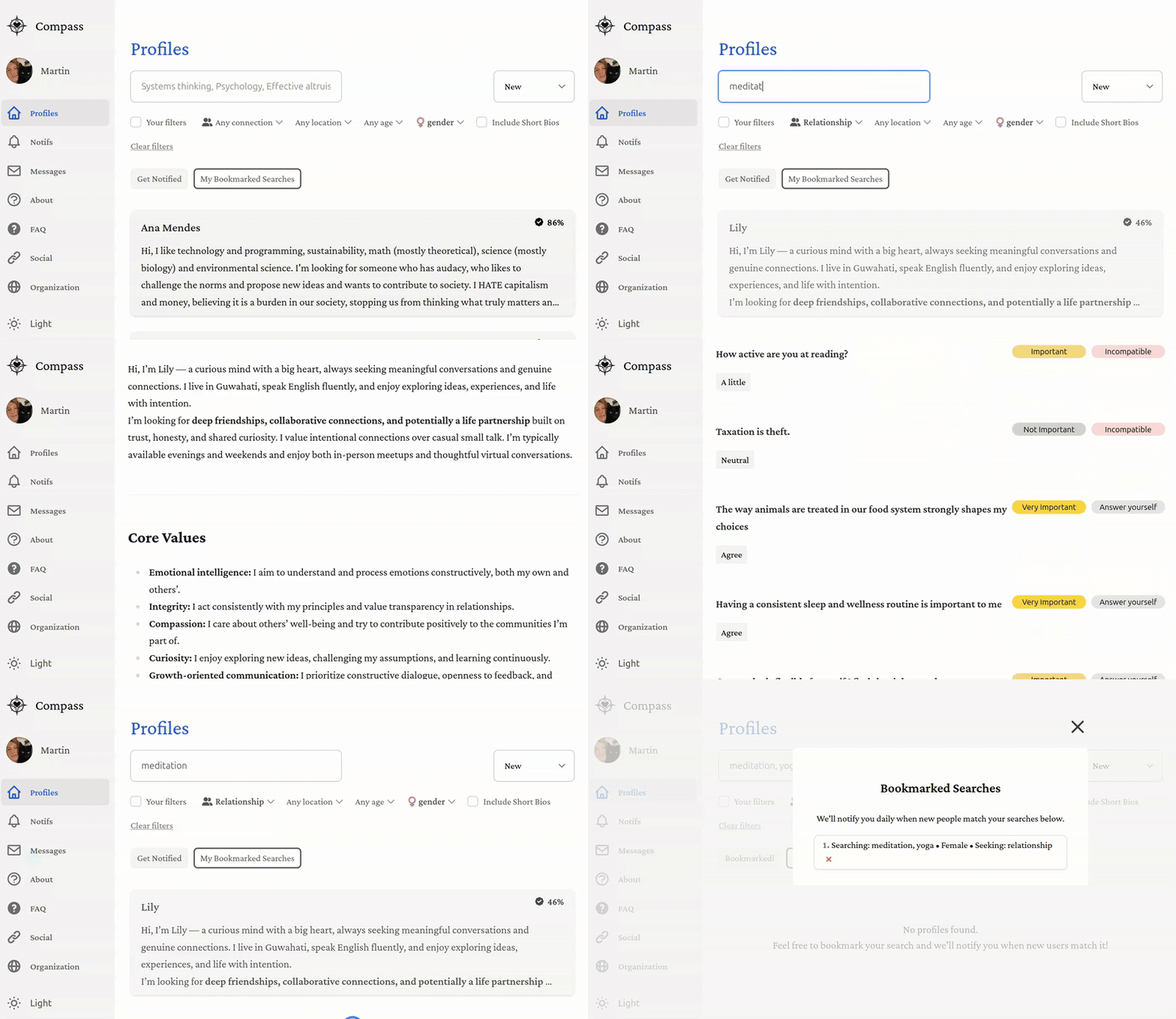
|
||
|
||
## To Do
|
||
|
||
No contribution is too small—whether it’s changing a color, resizing a button, tweaking a font, or improving wording.
|
||
Bigger contributions like adding new profile fields, building modules, or improving onboarding are equally welcome. The
|
||
goal is to make the platform better step by step, and every improvement counts. If you see something that could be
|
||
clearer, smoother, or more engaging, **please jump in**!
|
||
|
||
The complete, official list of tasks is
|
||
available [here on ClickUp](https://sharing.clickup.com/90181043445/l/h/6-901810339879-1/bbfd32f4f4bf64b). If you are
|
||
working on one task, just assign it to yourself and move its status to "in progress". If there is also a GitHub issue
|
||
for that task, assign it to yourself as well.
|
||
|
||
To have edit access to the ClickUp workspace, you need an admin to manually give you permission (one time thing). To do
|
||
so, use your preferred option:
|
||
|
||
- Ask or DM an admin on [Discord](https://discord.gg/8Vd7jzqjun)
|
||
- Email hello@compassmeet.com
|
||
- Raise an issue on GitHub
|
||
|
||
If you want to add tasks without creating an account, you can simply email
|
||
|
||
```
|
||
a.t.901810339879.u-276866260.b847aba1-2709-4f17-b4dc-565a6967c234@tasks.clickup.com
|
||
```
|
||
|
||
Put the task title in the email subject and the task description in the email content.
|
||
|
||
Here is a tailored selection of things that would be very useful. If you want to help but don’t know where to start,
|
||
just ask us on [Discord](https://discord.gg/8Vd7jzqjun).
|
||
|
||
- [x] Authentication (user/password and Google Sign In)
|
||
- [x] Set up PostgreSQL in Production with supabase
|
||
- [x] Set up web hosting (vercel)
|
||
- [x] Set up backend hosting (google cloud)
|
||
- [x] Ask for detailed info upon registration (location, desired type of connection, prompt answers, gender, etc.)
|
||
- [x] Set up page listing all the profiles
|
||
- [x] Search through most profile variables
|
||
- [x] Set up chat / direct messaging
|
||
- [x] Set up domain name (compassmeet.com)
|
||
- [ ] Cover more than 90% with tests (unit, integration, e2e)
|
||
- [x] Add Android mobile app
|
||
- [ ] Add iOS mobile app
|
||
- [x] Add better onboarding (tooltips, modals, etc.)
|
||
- [ ] Add modules to learn more about each other (personality test, conflict style, love languages, etc.)
|
||
- [ ] Add modules to improve interpersonal skills (active listening, nonviolent communication, etc.)
|
||
- [ ] Add calendar integration and scheduling
|
||
- [ ] Add events (group calls, in-person meetups, etc.)
|
||
|
||
#### Secondary To Do
|
||
|
||
Everything is open to anyone for collaboration, but the following ones are particularly easy to do for first-time
|
||
contributors.
|
||
|
||
- [x] Clean up learn more page
|
||
- [x] Add dark theme
|
||
- [x] Add profile fields (intellectual interests, cause areas, personality type, etc.)
|
||
- [ ] Add profile fields: conflict style
|
||
- [ ] Add profile fields: timezone
|
||
- [ ] Add translations: Italian, Dutch, Hindi, Chinese, etc.
|
||
- [x] Add filters to search through remaining profile fields (politics, religion, education level, etc.)
|
||
- [ ] Make the app more user-friendly and appealing (UI/UX)
|
||
- [ ] Clean up terms and conditions (convert to Markdown)
|
||
- [ ] Clean up privacy notice (convert to Markdown)
|
||
- [ ] Add other authentication methods (GitHub, Facebook, Apple, phone, etc.)
|
||
- [x] Add email verification
|
||
- [x] Add password reset
|
||
- [x] Add automated welcome email
|
||
- [ ] Security audit and penetration testing
|
||
- [x] Make `deploy-api.sh` run automatically on push to `main` branch
|
||
- [x] Create settings page (change email, password, delete account, etc.)
|
||
- [ ] Improve [financials](web/public/md/financials.md) page (donor / acknowledgments, etc.)
|
||
- [x] Improve loading sign (e.g., animation of a compass moving around)
|
||
- [x] Show compatibility score in profile page
|
||
|
||
## Implementation
|
||
|
||
The web app is coded in Typescript using React as front-end. It includes:
|
||
|
||
- [Supabase](https://supabase.com/) for the PostgreSQL database
|
||
- [Google Cloud](https://console.cloud.google.com) for hosting the backend API
|
||
- [Firebase](https://firebase.google.com/) for authentication and media storage
|
||
- [Vercel](https://vercel.com/) for hosting the front-end
|
||
|
||
## Development
|
||
|
||
Below are the steps to contribute. If you have any trouble or questions, please don't hesitate to open an issue or
|
||
contact us on [Discord](https://discord.gg/8Vd7jzqjun)! We're responsive and happy to help.
|
||
|
||
### Installation
|
||
|
||
Fork the [repo](https://github.com/CompassConnections/Compass) on GitHub (button in top right). Then, clone your repo
|
||
and navigating into it:
|
||
|
||
```bash
|
||
git clone https://github.com/<your-username>/Compass.git
|
||
cd Compass
|
||
```
|
||
|
||
Install `yarn` (if not already installed):
|
||
|
||
```bash
|
||
npm install --global yarn
|
||
```
|
||
|
||
Then, install the dependencies for this project:
|
||
|
||
```bash
|
||
yarn install
|
||
```
|
||
|
||
### Tests
|
||
|
||
Make sure the tests pass:
|
||
|
||
```bash
|
||
yarn test
|
||
```
|
||
|
||
If they don't and you can't find out why, simply raise an issue! Sometimes it's something on our end that we overlooked.
|
||
|
||
### Running the Development Server
|
||
|
||
Start the development server:
|
||
|
||
```bash
|
||
yarn dev
|
||
```
|
||
|
||
Once the server is running, visit http://localhost:3000 to start using the app. You can sign up and visit the profiles;
|
||
you should see a few synthetic profiles.
|
||
|
||
Note: it's normal if page loading locally is much slower than the deployed version. It can take up to 10 seconds, it
|
||
would be great to improve that though!
|
||
|
||
##### Full isolation
|
||
|
||
`yarn dev` runs the app locally but uses the data from a shared remote database (Supabase) and authentication (
|
||
Firebase).
|
||
If you want to avoid any conflict / break or simply have it run faster, run the app in full isolation locally:
|
||
|
||
```bash
|
||
yarn test:db:reset # reset your local supabase
|
||
yarn dev:isolated
|
||
```
|
||
|
||
### Contributing
|
||
|
||
Now you can start contributing by making changes and submitting pull requests!
|
||
|
||
We recommend using a good code editor (VSCode, WebStorm, Cursor, etc.) with Typescript support and a good AI assistant (
|
||
GitHub Copilot, etc.) to make your life easier. To debug, you can use the browser developer tools (F12), specifically:
|
||
|
||
- Components tab to see the React component tree and props (you need to install
|
||
the [React Developer Tools](https://react.dev/learn/react-developer-tools) extension)
|
||
- Console tab for errors and logs
|
||
- Network tab to see the requests and responses
|
||
- Storage tab to see cookies and local storage
|
||
|
||
You can also add `console.log()` statements in the code.
|
||
|
||
If you are new to Typescript or the open-source space, you could start with small changes, such as tweaking some web
|
||
components or improving wording in some pages. You can find those files in `web/public/md/`.
|
||
|
||
##### Resources
|
||
|
||
There is a lof of documentation in the [docs](docs) folder and across the repo, namely:
|
||
|
||
- [Next.js.md](docs/Next.js.md) for core fundamentals about our web / page-rendering framework.
|
||
- [knowledge.md](docs/knowledge.md) for general information about the project structure.
|
||
- [development.md](docs/development.md) for additional instructions, such as adding new profile fields or languages.
|
||
- [TESTING.md](docs/TESTING.md) for how to write tests.
|
||
- [web](web) for the web.
|
||
- [backend/api](backend/api) for the backend API.
|
||
- [android](android) for the Android app.
|
||
|
||
There are a lot of useful scripts you can use in the [scripts](scripts) folder.
|
||
|
||
### Submission
|
||
|
||
Add the original repo as upstream for syncing:
|
||
|
||
```bash
|
||
git remote add upstream https://github.com/CompassConnections/Compass.git
|
||
```
|
||
|
||
Create a new branch for your changes:
|
||
|
||
```bash
|
||
git checkout -b <branch-name>
|
||
```
|
||
|
||
Make changes, then stage and commit:
|
||
|
||
```bash
|
||
git add .
|
||
git commit -m "Describe your changes"
|
||
```
|
||
|
||
Push branch to your fork:
|
||
|
||
```bash
|
||
git push origin <branch-name>
|
||
```
|
||
|
||
Finally, open a Pull Request on GitHub from your `fork/<branch-name>` → `CompassConnections/Compass` main branch.
|
||
|
||
### Environment Variables
|
||
|
||
Almost all the features will work out of the box, so you can skip this step and come back later if you need to test the
|
||
following services: email, geolocation.
|
||
|
||
We can't make the following information public, for security and privacy reasons:
|
||
|
||
- Database, otherwise anyone could access all the user data (including private messages)
|
||
- Firebase, otherwise anyone could remove users or modify the media files
|
||
- Email, analytics, and location services, otherwise anyone could use the service plans Compass paid for and run up the
|
||
bill.
|
||
|
||
That's why we separate all those services between production and development environments, so that you can code freely
|
||
without impacting the functioning of the deployed platform.
|
||
Contributors should use the default keys for local development. Production uses a separate environment with stricter
|
||
rules and private keys that are not shared.
|
||
|
||
If you do need one of the few remaining services, you need to set them up and store your own secrets as environment
|
||
variables. To do so, simply open `.env` and fill in the variables according to the instructions in the file.
|