 fa0826ca24
The return value of Distance() differs depending on which version of that's
used:

Distance( geom1 Geometry , geom2 Geometry ) : Double precision
  return the distance between geom1 and geom2 (always measured in CRS units).

Distance( geom1 Geometry , geom2 Geometry ,
          use_ellipsoid Boolean ) : Double precision
  return the distance between geom1 and geom2 (measured in meters).

Ordering by CRS units causes unexpected item order.

Fixes #411
EVMap 
Android app to find electric vehicle charging stations.


Features
- Material Design
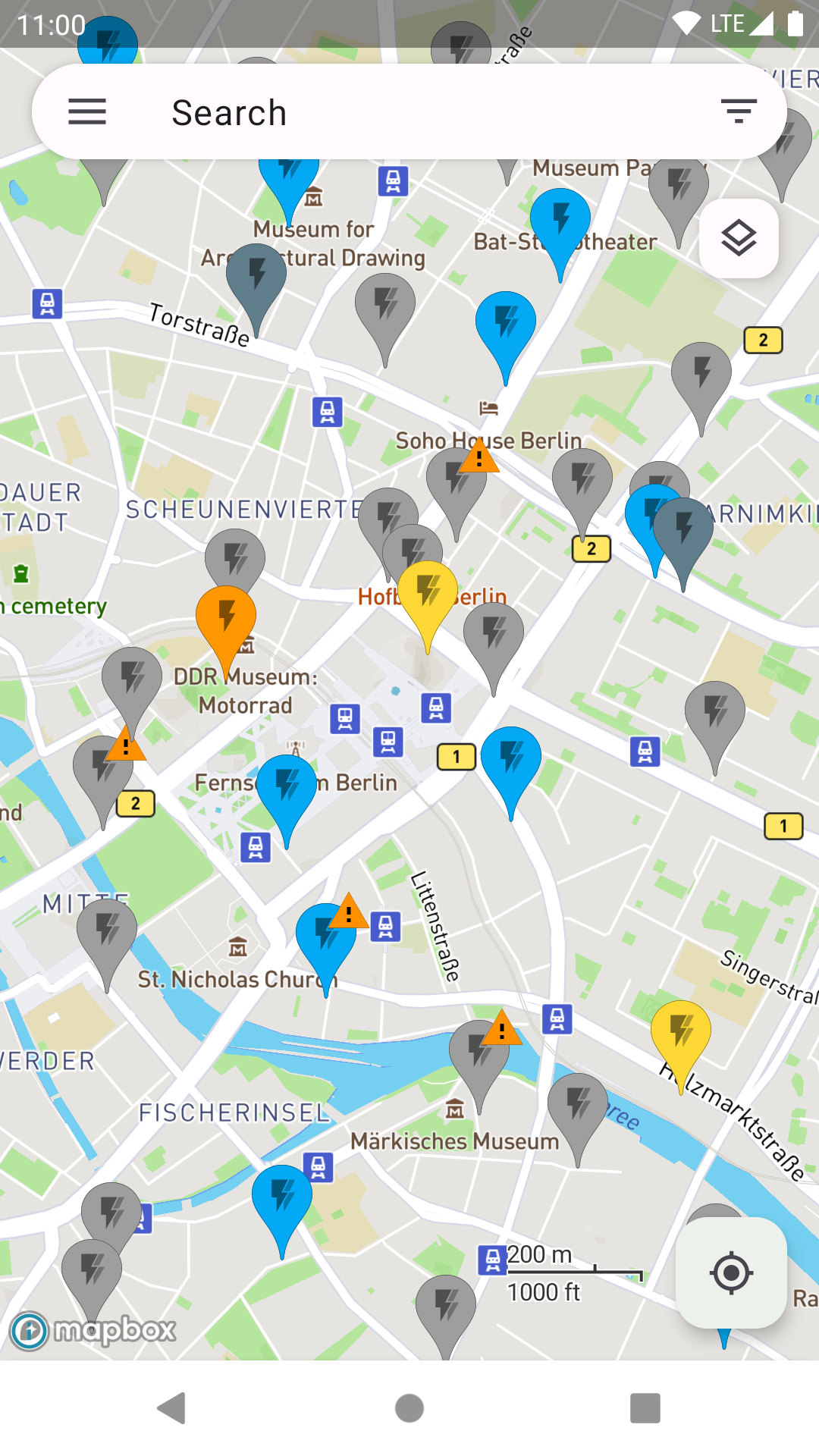
- Shows all charging stations from the community-maintained GoingElectric.de and Open Charge Map directories
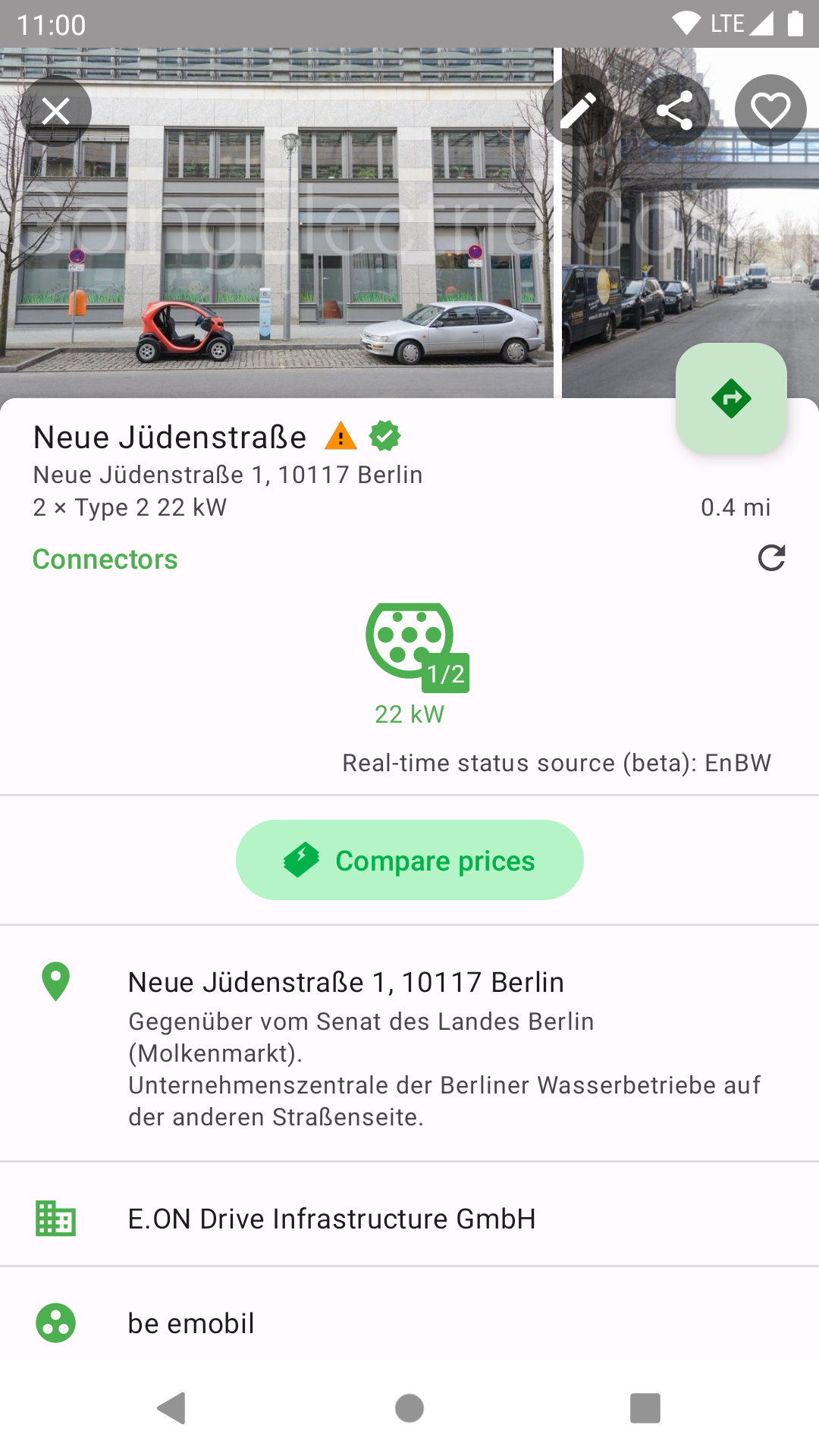
- Realtime availability information (only in Europe)
- Search for places
- Advanced filtering options, including saved filter profiles
- Favorites list, also with availability information
- Android Auto & Android Automotive OS integration
- No ads, fully open source
- Compatible with Android 5.0 and above
- Can use Google Maps or OpenStreetMap as map backends - the version available on F-Droid only uses OSM.
Screenshots
Development setup
The App is developed using Android Studio and should pretty much work out-of-the-box when you clone the Git repository and open the project with Android Studio.
The only exception is that you need to obtain some API keys for the different data sources that
EVMap uses and put them into the app in the form of a resource file called apikeys.xml under
app/src/main/res/values. You can find more information on which API keys are necessary for which
features and how they can be obtained in our documentation page.
There are four different build flavors, googleNormal, fossNormal, googleAutomotive, and
fossAutomotive.
- The
fossvariants only use OSM data for the base map and place search. They should run on most Android devices, even those without Google Play Services.fossNormalis intended to run on smartphones and tablets, and also includes the Android Auto app for use on the car display (however Android Auto may not work if the app is not installed from Google Play, see https://github.com/ev-map/EVMap/issues/319).fossAutomotivecan be installed directly on Android Automotive OS (AAOS) headunits without Google services. It does not provide the usual smartphone UI, and requires an implementation of the AOSP template app host to be installed. If you are an OEM and would like to distribute EVMap to your AAOS vehicles, please get in touch.
- The
googlevariants also include access to Google Maps data.googleNormalis intended to run on smartphones and tablets, and also includes the Android Auto app for use on the car display.googleAutomotivecan be installed directly on car infotainment systems running the Google-flavored Android Automotive OS (Google Automotive Services / "Google built-in"). It does not provide the usual smartphone UI, and requires the Google Automotive App Host to run, which should be preinstalled on those cars and can be updated through the Play Store.
We also have a special documentation page on how to test the Android Auto app.
Translations
You can use our Weblate page to help translate EVMap into new languages.
Sponsors
Many users currently support the development EVMap with their donations. You can find more information on the Donate page on the EVMap website.

Since May 2024, JawgMaps provide their OpenStreetMap vector map tiles service to EVMap for
free, i.e. the background map displayed in the app if OpenStreetMap is selected as the data source.