mirror of
https://github.com/fastapi/fastapi.git
synced 2025-12-24 14:48:35 -05:00
Compare commits
67 Commits
| Author | SHA1 | Date | |
|---|---|---|---|

|
7213d421f5 | ||
|
|
68e5ef6968 | ||
|
|
1f64a1bb55 | ||
|
|
9b2a9333b3 | ||
|
|
f42fd9aac2 | ||
|
|
cbdc58b1b7 | ||
|
|
3feed9dd8c | ||
|
|
560c43269d | ||
|
|
7eae925443 | ||
|
|
7d69943a22 | ||
|
|
56cfecc1bf | ||
|
|
e26229ed98 | ||
|
|
c1c57336b0 | ||
|
|
7537bac43f | ||
|
|
6b3d1c6d4e | ||
|
|
a6ad088183 | ||
|
|
b63b4189ee | ||
|
|
17f1f7b5bd | ||
|
|
92bdfbc7ba | ||
|
|
b203d7a15f | ||
|
|
23bda0ffeb | ||
|
|
d5c6cf8122 | ||
|
|
d08b95ea57 | ||
|
|
3660c7a063 | ||
|
|
5b7fa3900e | ||
|
|
8d7d89e8c6 | ||
|
|
08547e1d57 | ||
|
|
75c4e7fc44 | ||
|
|
581aacc4a9 | ||
|
|
47b3351be9 | ||
|
|
eebc6c3d54 | ||
|
|
83422b1923 | ||
|
|
0077af9719 | ||
|
|
6c8a205db1 | ||
|
|
c37f2c976d | ||
|
|
5827b922c3 | ||
|
|
1b5984b23b | ||
|
|
6ca7b8c608 | ||
|
|
a2458d594f | ||
|
|
9519380764 | ||
|
|
4eec14fa8c | ||
|
|
6e98249c21 | ||
|
|
17a29149e4 | ||
|
|
4cf3421178 | ||
|
|
ffa6d2eafd | ||
|
|
ae27540348 | ||
|
|
3332895251 | ||
|
|
9b35d355bf | ||
|
|
a930128910 | ||
|
|
cabed9efb6 | ||
|
|
48bf0db58f | ||
|
|
4909e44a7f | ||
|
|
be9abcf353 | ||
|
|
f41f6234af | ||
|
|
9416e89bd7 | ||
|
|
5fdbeed792 | ||
|
|
3a96938771 | ||
|
|
bd1b77548f | ||
|
|
b5cbff9521 | ||
|
|
c692176d42 | ||
|
|
d8e526c1db | ||
|
|
6aa44a85a2 | ||
|
|
e4727ed20a | ||
|
|
9656895b60 | ||
|
|
866c6987fc | ||
|
|
ead4f8c6a4 | ||
|
|
7ff5da8bf2 |
4
.github/labeler.yml
vendored
4
.github/labeler.yml
vendored
@@ -7,6 +7,8 @@ docs:
|
||||
- all-globs-to-all-files:
|
||||
- '!fastapi/**'
|
||||
- '!pyproject.toml'
|
||||
- '!docs/en/data/sponsors.yml'
|
||||
- '!docs/en/overrides/main.html'
|
||||
|
||||
lang-all:
|
||||
- all:
|
||||
@@ -28,6 +30,8 @@ internal:
|
||||
- .pre-commit-config.yaml
|
||||
- pdm_build.py
|
||||
- requirements*.txt
|
||||
- docs/en/data/sponsors.yml
|
||||
- docs/en/overrides/main.html
|
||||
- all-globs-to-all-files:
|
||||
- '!docs/*/docs/**'
|
||||
- '!fastapi/**'
|
||||
|
||||
1
.github/workflows/build-docs.yml
vendored
1
.github/workflows/build-docs.yml
vendored
@@ -113,6 +113,7 @@ jobs:
|
||||
with:
|
||||
name: docs-site-${{ matrix.lang }}
|
||||
path: ./site/**
|
||||
include-hidden-files: true
|
||||
|
||||
# https://github.com/marketplace/actions/alls-green#why
|
||||
docs-all-green: # This job does nothing and is only used for the branch protection
|
||||
|
||||
3
.github/workflows/latest-changes.yml
vendored
3
.github/workflows/latest-changes.yml
vendored
@@ -34,8 +34,7 @@ jobs:
|
||||
if: ${{ github.event_name == 'workflow_dispatch' && github.event.inputs.debug_enabled == 'true' }}
|
||||
with:
|
||||
limit-access-to-actor: true
|
||||
- uses: docker://tiangolo/latest-changes:0.3.0
|
||||
# - uses: tiangolo/latest-changes@main
|
||||
- uses: tiangolo/latest-changes@0.3.1
|
||||
with:
|
||||
token: ${{ secrets.GITHUB_TOKEN }}
|
||||
latest_changes_file: docs/en/docs/release-notes.md
|
||||
|
||||
2
.github/workflows/publish.yml
vendored
2
.github/workflows/publish.yml
vendored
@@ -35,7 +35,7 @@ jobs:
|
||||
TIANGOLO_BUILD_PACKAGE: ${{ matrix.package }}
|
||||
run: python -m build
|
||||
- name: Publish
|
||||
uses: pypa/gh-action-pypi-publish@v1.9.0
|
||||
uses: pypa/gh-action-pypi-publish@v1.10.1
|
||||
- name: Dump GitHub context
|
||||
env:
|
||||
GITHUB_CONTEXT: ${{ toJson(github) }}
|
||||
|
||||
2
.github/workflows/test.yml
vendored
2
.github/workflows/test.yml
vendored
@@ -91,6 +91,7 @@ jobs:
|
||||
with:
|
||||
name: coverage-${{ matrix.python-version }}-${{ matrix.pydantic-version }}
|
||||
path: coverage
|
||||
include-hidden-files: true
|
||||
|
||||
coverage-combine:
|
||||
needs: [test]
|
||||
@@ -123,6 +124,7 @@ jobs:
|
||||
with:
|
||||
name: coverage-html
|
||||
path: htmlcov
|
||||
include-hidden-files: true
|
||||
|
||||
# https://github.com/marketplace/actions/alls-green#why
|
||||
check: # This job does nothing and is only used for the branch protection
|
||||
|
||||
@@ -14,7 +14,7 @@ repos:
|
||||
- id: end-of-file-fixer
|
||||
- id: trailing-whitespace
|
||||
- repo: https://github.com/astral-sh/ruff-pre-commit
|
||||
rev: v0.6.1
|
||||
rev: v0.6.3
|
||||
hooks:
|
||||
- id: ruff
|
||||
args:
|
||||
|
||||
@@ -52,9 +52,8 @@ The key features are:
|
||||
<a href="https://bump.sh/fastapi?utm_source=fastapi&utm_medium=referral&utm_campaign=sponsor" target="_blank" title="Automate FastAPI documentation generation with Bump.sh"><img src="https://fastapi.tiangolo.com/img/sponsors/bump-sh.svg"></a>
|
||||
<a href="https://github.com/scalar/scalar/?utm_source=fastapi&utm_medium=website&utm_campaign=main-badge" target="_blank" title="Scalar: Beautiful Open-Source API References from Swagger/OpenAPI files"><img src="https://fastapi.tiangolo.com/img/sponsors/scalar.svg"></a>
|
||||
<a href="https://www.propelauth.com/?utm_source=fastapi&utm_campaign=1223&utm_medium=mainbadge" target="_blank" title="Auth, user management and more for your B2B product"><img src="https://fastapi.tiangolo.com/img/sponsors/propelauth.png"></a>
|
||||
<a href="https://docs.withcoherence.com/configuration/frameworks/?utm_medium=advertising&utm_source=fastapi&utm_campaign=docs#fastapi-example" target="_blank" title="Coherence"><img src="https://fastapi.tiangolo.com/img/sponsors/coherence.png"></a>
|
||||
<a href="https://docs.withcoherence.com/coherence-templates/full-stack-template/#fastapi?utm_medium=advertising&utm_source=fastapi&utm_campaign=docs" target="_blank" title="Coherence"><img src="https://fastapi.tiangolo.com/img/sponsors/coherence.png"></a>
|
||||
<a href="https://www.mongodb.com/developer/languages/python/python-quickstart-fastapi/?utm_campaign=fastapi_framework&utm_source=fastapi_sponsorship&utm_medium=web_referral" target="_blank" title="Simplify Full Stack Development with FastAPI & MongoDB"><img src="https://fastapi.tiangolo.com/img/sponsors/mongodb.png"></a>
|
||||
<a href="https://konghq.com/products/kong-konnect?utm_medium=referral&utm_source=github&utm_campaign=platform&utm_content=fast-api" target="_blank" title="Kong Konnect - API management platform"><img src="https://fastapi.tiangolo.com/img/sponsors/kong.png"></a>
|
||||
<a href="https://zuplo.link/fastapi-gh" target="_blank" title="Zuplo: Scale, Protect, Document, and Monetize your FastAPI"><img src="https://fastapi.tiangolo.com/img/sponsors/zuplo.png"></a>
|
||||
<a href="https://fine.dev?ref=fastapibadge" target="_blank" title="Fine's AI FastAPI Workflow: Effortlessly Deploy and Integrate FastAPI into Your Project"><img src="https://fastapi.tiangolo.com/img/sponsors/fine.png"></a>
|
||||
<a href="https://liblab.com?utm_source=fastapi" target="_blank" title="liblab - Generate SDKs from FastAPI"><img src="https://fastapi.tiangolo.com/img/sponsors/liblab.png"></a>
|
||||
@@ -394,7 +393,7 @@ Coming back to the previous code example, **FastAPI** will:
|
||||
* Check if there is an optional query parameter named `q` (as in `http://127.0.0.1:8000/items/foo?q=somequery`) for `GET` requests.
|
||||
* As the `q` parameter is declared with `= None`, it is optional.
|
||||
* Without the `None` it would be required (as is the body in the case with `PUT`).
|
||||
* For `PUT` requests to `/items/{item_id}`, Read the body as JSON:
|
||||
* For `PUT` requests to `/items/{item_id}`, read the body as JSON:
|
||||
* Check that it has a required attribute `name` that should be a `str`.
|
||||
* Check that it has a required attribute `price` that has to be a `float`.
|
||||
* Check that it has an optional attribute `is_offer`, that should be a `bool`, if present.
|
||||
|
||||
@@ -72,7 +72,7 @@ Beachten Sie, dass die Testfunktion jetzt `async def` ist und nicht nur `def` wi
|
||||
|
||||
Dann können wir einen `AsyncClient` mit der App erstellen und mit `await` asynchrone Requests an ihn senden.
|
||||
|
||||
```Python hl_lines="9-10"
|
||||
```Python hl_lines="9-12"
|
||||
{!../../../docs_src/async_tests/test_main.py!}
|
||||
```
|
||||
|
||||
|
||||
@@ -72,7 +72,7 @@ $ pytest
|
||||
|
||||
⤴️ 👥 💪 ✍ `AsyncClient` ⏮️ 📱, & 📨 🔁 📨 ⚫️, ⚙️ `await`.
|
||||
|
||||
```Python hl_lines="9-10"
|
||||
```Python hl_lines="9-12"
|
||||
{!../../../docs_src/async_tests/test_main.py!}
|
||||
```
|
||||
|
||||
|
||||
@@ -264,6 +264,14 @@ Articles:
|
||||
author_link: https://devonray.com
|
||||
link: https://devonray.com/blog/deploying-a-fastapi-project-using-aws-lambda-aurora-cdk
|
||||
title: Deployment using Docker, Lambda, Aurora, CDK & GH Actions
|
||||
- author: Shubhendra Kushwaha
|
||||
author_link: https://www.linkedin.com/in/theshubhendra/
|
||||
link: https://theshubhendra.medium.com/mastering-soft-delete-advanced-sqlalchemy-techniques-4678f4738947
|
||||
title: 'Mastering Soft Delete: Advanced SQLAlchemy Techniques'
|
||||
- author: Shubhendra Kushwaha
|
||||
author_link: https://www.linkedin.com/in/theshubhendra/
|
||||
link: https://theshubhendra.medium.com/role-based-row-filtering-advanced-sqlalchemy-techniques-733e6b1328f6
|
||||
title: 'Role based row filtering: Advanced SQLAlchemy Techniques'
|
||||
German:
|
||||
- author: Marcel Sander (actidoo)
|
||||
author_link: https://www.actidoo.com
|
||||
|
||||
@@ -17,15 +17,12 @@ gold:
|
||||
- url: https://www.propelauth.com/?utm_source=fastapi&utm_campaign=1223&utm_medium=mainbadge
|
||||
title: Auth, user management and more for your B2B product
|
||||
img: https://fastapi.tiangolo.com/img/sponsors/propelauth.png
|
||||
- url: https://docs.withcoherence.com/configuration/frameworks/?utm_medium=advertising&utm_source=fastapi&utm_campaign=docs#fastapi-example
|
||||
- url: https://docs.withcoherence.com/coherence-templates/full-stack-template/#fastapi?utm_medium=advertising&utm_source=fastapi&utm_campaign=docs
|
||||
title: Coherence
|
||||
img: https://fastapi.tiangolo.com/img/sponsors/coherence.png
|
||||
- url: https://www.mongodb.com/developer/languages/python/python-quickstart-fastapi/?utm_campaign=fastapi_framework&utm_source=fastapi_sponsorship&utm_medium=web_referral
|
||||
title: Simplify Full Stack Development with FastAPI & MongoDB
|
||||
img: https://fastapi.tiangolo.com/img/sponsors/mongodb.png
|
||||
- url: https://konghq.com/products/kong-konnect?utm_medium=referral&utm_source=github&utm_campaign=platform&utm_content=fast-api
|
||||
title: Kong Konnect - API management platform
|
||||
img: https://fastapi.tiangolo.com/img/sponsors/kong.png
|
||||
- url: https://zuplo.link/fastapi-gh
|
||||
title: 'Zuplo: Scale, Protect, Document, and Monetize your FastAPI'
|
||||
img: https://fastapi.tiangolo.com/img/sponsors/zuplo.png
|
||||
|
||||
@@ -72,7 +72,7 @@ Note that the test function is now `async def` instead of just `def` as before w
|
||||
|
||||
Then we can create an `AsyncClient` with the app, and send async requests to it, using `await`.
|
||||
|
||||
```Python hl_lines="9-10"
|
||||
```Python hl_lines="9-12"
|
||||
{!../../../docs_src/async_tests/test_main.py!}
|
||||
```
|
||||
|
||||
|
||||
@@ -4,9 +4,9 @@ By default, **FastAPI** will return the responses using `JSONResponse`.
|
||||
|
||||
You can override it by returning a `Response` directly as seen in [Return a Response directly](response-directly.md){.internal-link target=_blank}.
|
||||
|
||||
But if you return a `Response` directly, the data won't be automatically converted, and the documentation won't be automatically generated (for example, including the specific "media type", in the HTTP header `Content-Type` as part of the generated OpenAPI).
|
||||
But if you return a `Response` directly (or any subclass, like `JSONResponse`), the data won't be automatically converted (even if you declare a `response_model`), and the documentation won't be automatically generated (for example, including the specific "media type", in the HTTP header `Content-Type` as part of the generated OpenAPI).
|
||||
|
||||
But you can also declare the `Response` that you want to be used, in the *path operation decorator*.
|
||||
But you can also declare the `Response` that you want to be used (e.g. any `Response` subclass), in the *path operation decorator* using the `response_class` parameter.
|
||||
|
||||
The contents that you return from your *path operation function* will be put inside of that `Response`.
|
||||
|
||||
|
||||
@@ -28,7 +28,7 @@ This gives you a lot of flexibility. You can return any data type, override any
|
||||
|
||||
## Using the `jsonable_encoder` in a `Response`
|
||||
|
||||
Because **FastAPI** doesn't do any change to a `Response` you return, you have to make sure it's contents are ready for it.
|
||||
Because **FastAPI** doesn't do any change to a `Response` you return, you have to make sure its contents are ready for it.
|
||||
|
||||
For example, you cannot put a Pydantic model in a `JSONResponse` without first converting it to a `dict` with all the data types (like `datetime`, `UUID`, etc) converted to JSON-compatible types.
|
||||
|
||||
|
||||
@@ -36,12 +36,12 @@ In this case, it will be mounted at the path `/subapi`:
|
||||
|
||||
### Check the automatic API docs
|
||||
|
||||
Now, run `uvicorn` with the main app, if your file is `main.py`, it would be:
|
||||
Now, run the `fastapi` command with your file:
|
||||
|
||||
<div class="termy">
|
||||
|
||||
```console
|
||||
$ uvicorn main:app --reload
|
||||
$ fastapi dev main.py
|
||||
|
||||
<span style="color: green;">INFO</span>: Uvicorn running on http://127.0.0.1:8000 (Press CTRL+C to quit)
|
||||
```
|
||||
|
||||
@@ -474,7 +474,7 @@ It is the recommended server for Starlette and **FastAPI**.
|
||||
|
||||
The main web server to run **FastAPI** applications.
|
||||
|
||||
You can combine it with Gunicorn, to have an asynchronous multi-process server.
|
||||
You can also use the `--workers` command line option to have an asynchronous multi-process server.
|
||||
|
||||
Check more details in the [Deployment](deployment/index.md){.internal-link target=_blank} section.
|
||||
|
||||
|
||||
@@ -292,7 +292,7 @@ For example:
|
||||
|
||||
### Concurrency + Parallelism: Web + Machine Learning
|
||||
|
||||
With **FastAPI** you can take the advantage of concurrency that is very common for web development (the same main attraction of NodeJS).
|
||||
With **FastAPI** you can take advantage of concurrency that is very common for web development (the same main attraction of NodeJS).
|
||||
|
||||
But you can also exploit the benefits of parallelism and multiprocessing (having multiple processes running in parallel) for **CPU bound** workloads like those in Machine Learning systems.
|
||||
|
||||
@@ -387,7 +387,7 @@ In previous versions of NodeJS / Browser JavaScript, you would have used "callba
|
||||
|
||||
## Coroutines
|
||||
|
||||
**Coroutine** is just the very fancy term for the thing returned by an `async def` function. Python knows that it is something like a function that it can start and that it will end at some point, but that it might be paused ⏸ internally too, whenever there is an `await` inside of it.
|
||||
**Coroutine** is just the very fancy term for the thing returned by an `async def` function. Python knows that it is something like a function, that it can start and that it will end at some point, but that it might be paused ⏸ internally too, whenever there is an `await` inside of it.
|
||||
|
||||
But all this functionality of using asynchronous code with `async` and `await` is many times summarized as using "coroutines". It is comparable to the main key feature of Go, the "Goroutines".
|
||||
|
||||
|
||||
@@ -170,7 +170,7 @@ If you run the examples with, e.g.:
|
||||
<div class="termy">
|
||||
|
||||
```console
|
||||
$ uvicorn tutorial001:app --reload
|
||||
$ fastapi dev tutorial001.py
|
||||
|
||||
<span style="color: green;">INFO</span>: Uvicorn running on http://127.0.0.1:8000 (Press CTRL+C to quit)
|
||||
```
|
||||
|
||||
@@ -14,4 +14,4 @@ You might want to try their services and follow their guides:
|
||||
|
||||
* <a href="https://docs.platform.sh/languages/python.html?utm_source=fastapi-signup&utm_medium=banner&utm_campaign=FastAPI-signup-June-2023" class="external-link" target="_blank">Platform.sh</a>
|
||||
* <a href="https://docs.porter.run/language-specific-guides/fastapi" class="external-link" target="_blank">Porter</a>
|
||||
* <a href="https://docs.withcoherence.com/docs/configuration/frameworks?utm_medium=advertising&utm_source=fastapi&utm_campaign=banner%20january%2024#fast-api-example" class="external-link" target="_blank">Coherence</a>
|
||||
* <a href="https://docs.withcoherence.com/coherence-templates/full-stack-template/#fastapi?utm_medium=advertising&utm_source=fastapi&utm_campaign=docs" class="external-link" target="_blank">Coherence</a>
|
||||
|
||||
@@ -94,7 +94,7 @@ In most cases, when you create a web API, you want it to be **always running**,
|
||||
|
||||
### In a Remote Server
|
||||
|
||||
When you set up a remote server (a cloud server, a virtual machine, etc.) the simplest thing you can do is to use `fastapi run`, Uvicorn (or similar) manually, the same way you do when developing locally.
|
||||
When you set up a remote server (a cloud server, a virtual machine, etc.) the simplest thing you can do is use `fastapi run` (which uses Uvicorn) or something similar, manually, the same way you do when developing locally.
|
||||
|
||||
And it will work and will be useful **during development**.
|
||||
|
||||
@@ -178,7 +178,7 @@ For example, this could be handled by:
|
||||
|
||||
## Replication - Processes and Memory
|
||||
|
||||
With a FastAPI application, using a server program like Uvicorn, running it once in **one process** can serve multiple clients concurrently.
|
||||
With a FastAPI application, using a server program like the `fastapi` command that runs Uvicorn, running it once in **one process** can serve multiple clients concurrently.
|
||||
|
||||
But in many cases, you will want to run several worker processes at the same time.
|
||||
|
||||
@@ -232,9 +232,7 @@ The main constraint to consider is that there has to be a **single** component h
|
||||
|
||||
Here are some possible combinations and strategies:
|
||||
|
||||
* **Gunicorn** managing **Uvicorn workers**
|
||||
* Gunicorn would be the **process manager** listening on the **IP** and **port**, the replication would be by having **multiple Uvicorn worker processes**.
|
||||
* **Uvicorn** managing **Uvicorn workers**
|
||||
* **Uvicorn** with `--workers`
|
||||
* One Uvicorn **process manager** would listen on the **IP** and **port**, and it would start **multiple Uvicorn worker processes**.
|
||||
* **Kubernetes** and other distributed **container systems**
|
||||
* Something in the **Kubernetes** layer would listen on the **IP** and **port**. The replication would be by having **multiple containers**, each with **one Uvicorn process** running.
|
||||
|
||||
@@ -167,22 +167,22 @@ def read_item(item_id: int, q: Union[str, None] = None):
|
||||
Now in the same project directory create a file `Dockerfile` with:
|
||||
|
||||
```{ .dockerfile .annotate }
|
||||
# (1)
|
||||
# (1)!
|
||||
FROM python:3.9
|
||||
|
||||
# (2)
|
||||
# (2)!
|
||||
WORKDIR /code
|
||||
|
||||
# (3)
|
||||
# (3)!
|
||||
COPY ./requirements.txt /code/requirements.txt
|
||||
|
||||
# (4)
|
||||
# (4)!
|
||||
RUN pip install --no-cache-dir --upgrade -r /code/requirements.txt
|
||||
|
||||
# (5)
|
||||
# (5)!
|
||||
COPY ./app /code/app
|
||||
|
||||
# (6)
|
||||
# (6)!
|
||||
CMD ["fastapi", "run", "app/main.py", "--port", "80"]
|
||||
```
|
||||
|
||||
@@ -232,6 +232,38 @@ Review what each line does by clicking each number bubble in the code. 👆
|
||||
|
||||
///
|
||||
|
||||
/// warning
|
||||
|
||||
Make sure to **always** use the **exec form** of the `CMD` instruction, as explained below.
|
||||
|
||||
///
|
||||
|
||||
#### Use `CMD` - Exec Form
|
||||
|
||||
The <a href="https://docs.docker.com/reference/dockerfile/#cmd" class="external-link" target="_blank">`CMD`</a> Docker instruction can be written using two forms:
|
||||
|
||||
✅ **Exec** form:
|
||||
|
||||
```Dockerfile
|
||||
# ✅ Do this
|
||||
CMD ["fastapi", "run", "app/main.py", "--port", "80"]
|
||||
```
|
||||
|
||||
⛔️ **Shell** form:
|
||||
|
||||
```Dockerfile
|
||||
# ⛔️ Don't do this
|
||||
CMD fastapi run app/main.py --port 80
|
||||
```
|
||||
|
||||
Make sure to always use the **exec** form to ensure that FastAPI can shutdown gracefully and [lifespan events](../advanced/events.md){.internal-link target=_blank} are triggered.
|
||||
|
||||
You can read more about it in the <a href="https://docs.docker.com/reference/dockerfile/#shell-and-exec-form" class="external-link" target="_blank">Docker docs for shell and exec form</a>.
|
||||
|
||||
This can be quite noticeable when using `docker compose`. See this Docker Compose FAQ section for more technical details: <a href="https://docs.docker.com/compose/faq/#why-do-my-services-take-10-seconds-to-recreate-or-stop" class="external-link" target="_blank">Why do my services take 10 seconds to recreate or stop?</a>.
|
||||
|
||||
#### Directory Structure
|
||||
|
||||
You should now have a directory structure like:
|
||||
|
||||
```
|
||||
@@ -368,10 +400,10 @@ COPY ./requirements.txt /code/requirements.txt
|
||||
|
||||
RUN pip install --no-cache-dir --upgrade -r /code/requirements.txt
|
||||
|
||||
# (1)
|
||||
# (1)!
|
||||
COPY ./main.py /code/
|
||||
|
||||
# (2)
|
||||
# (2)!
|
||||
CMD ["fastapi", "run", "main.py", "--port", "80"]
|
||||
```
|
||||
|
||||
@@ -424,11 +456,11 @@ Without using containers, making applications run on startup and with restarts c
|
||||
|
||||
## Replication - Number of Processes
|
||||
|
||||
If you have a <abbr title="A group of machines that are configured to be connected and work together in some way.">cluster</abbr> of machines with **Kubernetes**, Docker Swarm Mode, Nomad, or another similar complex system to manage distributed containers on multiple machines, then you will probably want to **handle replication** at the **cluster level** instead of using a **process manager** (like Gunicorn with workers) in each container.
|
||||
If you have a <abbr title="A group of machines that are configured to be connected and work together in some way.">cluster</abbr> of machines with **Kubernetes**, Docker Swarm Mode, Nomad, or another similar complex system to manage distributed containers on multiple machines, then you will probably want to **handle replication** at the **cluster level** instead of using a **process manager** (like Uvicorn with workers) in each container.
|
||||
|
||||
One of those distributed container management systems like Kubernetes normally has some integrated way of handling **replication of containers** while still supporting **load balancing** for the incoming requests. All at the **cluster level**.
|
||||
|
||||
In those cases, you would probably want to build a **Docker image from scratch** as [explained above](#dockerfile), installing your dependencies, and running **a single Uvicorn process** instead of running something like Gunicorn with Uvicorn workers.
|
||||
In those cases, you would probably want to build a **Docker image from scratch** as [explained above](#dockerfile), installing your dependencies, and running **a single Uvicorn process** instead of using multiple Uvicorn workers.
|
||||
|
||||
### Load Balancer
|
||||
|
||||
@@ -458,21 +490,38 @@ And normally this **load balancer** would be able to handle requests that go to
|
||||
|
||||
In this type of scenario, you probably would want to have **a single (Uvicorn) process per container**, as you would already be handling replication at the cluster level.
|
||||
|
||||
So, in this case, you **would not** want to have a process manager like Gunicorn with Uvicorn workers, or Uvicorn using its own Uvicorn workers. You would want to have just a **single Uvicorn process** per container (but probably multiple containers).
|
||||
So, in this case, you **would not** want to have a multiple workers in the container, for example with the `--workers` command line option.You would want to have just a **single Uvicorn process** per container (but probably multiple containers).
|
||||
|
||||
Having another process manager inside the container (as would be with Gunicorn or Uvicorn managing Uvicorn workers) would only add **unnecessary complexity** that you are most probably already taking care of with your cluster system.
|
||||
Having another process manager inside the container (as would be with multiple workers) would only add **unnecessary complexity** that you are most probably already taking care of with your cluster system.
|
||||
|
||||
### Containers with Multiple Processes and Special Cases
|
||||
|
||||
Of course, there are **special cases** where you could want to have **a container** with a **Gunicorn process manager** starting several **Uvicorn worker processes** inside.
|
||||
Of course, there are **special cases** where you could want to have **a container** with several **Uvicorn worker processes** inside.
|
||||
|
||||
In those cases, you can use the **official Docker image** that includes **Gunicorn** as a process manager running multiple **Uvicorn worker processes**, and some default settings to adjust the number of workers based on the current CPU cores automatically. I'll tell you more about it below in [Official Docker Image with Gunicorn - Uvicorn](#official-docker-image-with-gunicorn-uvicorn).
|
||||
In those cases, you can use the `--workers` command line option to set the number of workers that you want to run:
|
||||
|
||||
```{ .dockerfile .annotate }
|
||||
FROM python:3.9
|
||||
|
||||
WORKDIR /code
|
||||
|
||||
COPY ./requirements.txt /code/requirements.txt
|
||||
|
||||
RUN pip install --no-cache-dir --upgrade -r /code/requirements.txt
|
||||
|
||||
COPY ./app /code/app
|
||||
|
||||
# (1)!
|
||||
CMD ["fastapi", "run", "app/main.py", "--port", "80", "--workers", "4"]
|
||||
```
|
||||
|
||||
1. Here we use the `--workers` command line option to set the number of workers to 4.
|
||||
|
||||
Here are some examples of when that could make sense:
|
||||
|
||||
#### A Simple App
|
||||
|
||||
You could want a process manager in the container if your application is **simple enough** that you don't need (at least not yet) to fine-tune the number of processes too much, and you can just use an automated default (with the official Docker image), and you are running it on a **single server**, not a cluster.
|
||||
You could want a process manager in the container if your application is **simple enough** that can run it on a **single server**, not a cluster.
|
||||
|
||||
#### Docker Compose
|
||||
|
||||
@@ -480,16 +529,6 @@ You could be deploying to a **single server** (not a cluster) with **Docker Comp
|
||||
|
||||
Then you could want to have **a single container** with a **process manager** starting **several worker processes** inside.
|
||||
|
||||
#### Prometheus and Other Reasons
|
||||
|
||||
You could also have **other reasons** that would make it easier to have a **single container** with **multiple processes** instead of having **multiple containers** with **a single process** in each of them.
|
||||
|
||||
For example (depending on your setup) you could have some tool like a Prometheus exporter in the same container that should have access to **each of the requests** that come.
|
||||
|
||||
In this case, if you had **multiple containers**, by default, when Prometheus came to **read the metrics**, it would get the ones for **a single container each time** (for the container that handled that particular request), instead of getting the **accumulated metrics** for all the replicated containers.
|
||||
|
||||
Then, in that case, it could be simpler to have **one container** with **multiple processes**, and a local tool (e.g. a Prometheus exporter) on the same container collecting Prometheus metrics for all the internal processes and exposing those metrics on that single container.
|
||||
|
||||
---
|
||||
|
||||
The main point is, **none** of these are **rules written in stone** that you have to blindly follow. You can use these ideas to **evaluate your own use case** and decide what is the best approach for your system, checking out how to manage the concepts of:
|
||||
@@ -509,7 +548,7 @@ And then you can set those same memory limits and requirements in your configura
|
||||
|
||||
If your application is **simple**, this will probably **not be a problem**, and you might not need to specify hard memory limits. But if you are **using a lot of memory** (for example with **machine learning** models), you should check how much memory you are consuming and adjust the **number of containers** that runs in **each machine** (and maybe add more machines to your cluster).
|
||||
|
||||
If you run **multiple processes per container** (for example with the official Docker image) you will have to make sure that the number of processes started doesn't **consume more memory** than what is available.
|
||||
If you run **multiple processes per container** you will have to make sure that the number of processes started doesn't **consume more memory** than what is available.
|
||||
|
||||
## Previous Steps Before Starting and Containers
|
||||
|
||||
@@ -529,80 +568,26 @@ If in your use case there's no problem in running those previous steps **multipl
|
||||
|
||||
### Single Container
|
||||
|
||||
If you have a simple setup, with a **single container** that then starts multiple **worker processes** (or also just one process), then you could run those previous steps in the same container, right before starting the process with the app. The official Docker image supports this internally.
|
||||
If you have a simple setup, with a **single container** that then starts multiple **worker processes** (or also just one process), then you could run those previous steps in the same container, right before starting the process with the app.
|
||||
|
||||
## Official Docker Image with Gunicorn - Uvicorn
|
||||
### Base Docker Image
|
||||
|
||||
There is an official Docker image that includes Gunicorn running with Uvicorn workers, as detailed in a previous chapter: [Server Workers - Gunicorn with Uvicorn](server-workers.md){.internal-link target=_blank}.
|
||||
There used to be an official FastAPI Docker image: <a href="https://github.com/tiangolo/uvicorn-gunicorn-fastapi-docker" class="external-link" target="_blank">tiangolo/uvicorn-gunicorn-fastapi</a>. But it is now deprecated. ⛔️
|
||||
|
||||
This image would be useful mainly in the situations described above in: [Containers with Multiple Processes and Special Cases](#containers-with-multiple-processes-and-special-cases).
|
||||
You should probably **not** use this base Docker image (or any other similar one).
|
||||
|
||||
* <a href="https://github.com/tiangolo/uvicorn-gunicorn-fastapi-docker" class="external-link" target="_blank">tiangolo/uvicorn-gunicorn-fastapi</a>.
|
||||
If you are using **Kubernetes** (or others) and you are already setting **replication** at the cluster level, with multiple **containers**. In those cases, you are better off **building an image from scratch** as described above: [Build a Docker Image for FastAPI](#build-a-docker-image-for-fastapi).
|
||||
|
||||
/// warning
|
||||
And if you need to have multiple workers, you can simply use the `--workers` command line option.
|
||||
|
||||
There's a high chance that you **don't** need this base image or any other similar one, and would be better off by building the image from scratch as [described above in: Build a Docker Image for FastAPI](#build-a-docker-image-for-fastapi).
|
||||
/// note | Technical Details
|
||||
|
||||
The Docker image was created when Uvicorn didn't support managing and restarting dead workers, so it was needed to use Gunicorn with Uvicorn, which added quite some complexity, just to have Gunicorn manage and restart the Uvicorn worker processes.
|
||||
|
||||
But now that Uvicorn (and the `fastapi` command) support using `--workers`, there's no reason to use a base Docker image instead of building your own (it's pretty much the same amount of code 😅).
|
||||
|
||||
///
|
||||
|
||||
This image has an **auto-tuning** mechanism included to set the **number of worker processes** based on the CPU cores available.
|
||||
|
||||
It has **sensible defaults**, but you can still change and update all the configurations with **environment variables** or configuration files.
|
||||
|
||||
It also supports running <a href="https://github.com/tiangolo/uvicorn-gunicorn-fastapi-docker#pre_start_path" class="external-link" target="_blank">**previous steps before starting**</a> with a script.
|
||||
|
||||
/// tip
|
||||
|
||||
To see all the configurations and options, go to the Docker image page: <a href="https://github.com/tiangolo/uvicorn-gunicorn-fastapi-docker" class="external-link" target="_blank">tiangolo/uvicorn-gunicorn-fastapi</a>.
|
||||
|
||||
///
|
||||
|
||||
### Number of Processes on the Official Docker Image
|
||||
|
||||
The **number of processes** on this image is **computed automatically** from the CPU **cores** available.
|
||||
|
||||
This means that it will try to **squeeze** as much **performance** from the CPU as possible.
|
||||
|
||||
You can also adjust it with the configurations using **environment variables**, etc.
|
||||
|
||||
But it also means that as the number of processes depends on the CPU the container is running, the **amount of memory consumed** will also depend on that.
|
||||
|
||||
So, if your application consumes a lot of memory (for example with machine learning models), and your server has a lot of CPU cores **but little memory**, then your container could end up trying to use more memory than what is available, and degrading performance a lot (or even crashing). 🚨
|
||||
|
||||
### Create a `Dockerfile`
|
||||
|
||||
Here's how you would create a `Dockerfile` based on this image:
|
||||
|
||||
```Dockerfile
|
||||
FROM tiangolo/uvicorn-gunicorn-fastapi:python3.9
|
||||
|
||||
COPY ./requirements.txt /app/requirements.txt
|
||||
|
||||
RUN pip install --no-cache-dir --upgrade -r /app/requirements.txt
|
||||
|
||||
COPY ./app /app
|
||||
```
|
||||
|
||||
### Bigger Applications
|
||||
|
||||
If you followed the section about creating [Bigger Applications with Multiple Files](../tutorial/bigger-applications.md){.internal-link target=_blank}, your `Dockerfile` might instead look like:
|
||||
|
||||
```Dockerfile hl_lines="7"
|
||||
FROM tiangolo/uvicorn-gunicorn-fastapi:python3.9
|
||||
|
||||
COPY ./requirements.txt /app/requirements.txt
|
||||
|
||||
RUN pip install --no-cache-dir --upgrade -r /app/requirements.txt
|
||||
|
||||
COPY ./app /app/app
|
||||
```
|
||||
|
||||
### When to Use
|
||||
|
||||
You should probably **not** use this official base image (or any other similar one) if you are using **Kubernetes** (or others) and you are already setting **replication** at the cluster level, with multiple **containers**. In those cases, you are better off **building an image from scratch** as described above: [Build a Docker Image for FastAPI](#build-a-docker-image-for-fastapi).
|
||||
|
||||
This image would be useful mainly in the special cases described above in [Containers with Multiple Processes and Special Cases](#containers-with-multiple-processes-and-special-cases). For example, if your application is **simple enough** that setting a default number of processes based on the CPU works well, you don't want to bother with manually configuring the replication at the cluster level, and you are not running more than one container with your app. Or if you are deploying with **Docker Compose**, running on a single server, etc.
|
||||
|
||||
## Deploy the Container Image
|
||||
|
||||
After having a Container (Docker) Image there are several ways to deploy it.
|
||||
@@ -615,98 +600,9 @@ For example:
|
||||
* With another tool like Nomad
|
||||
* With a cloud service that takes your container image and deploys it
|
||||
|
||||
## Docker Image with Poetry
|
||||
## Docker Image with `uv`
|
||||
|
||||
If you use <a href="https://python-poetry.org/" class="external-link" target="_blank">Poetry</a> to manage your project's dependencies, you could use Docker multi-stage building:
|
||||
|
||||
```{ .dockerfile .annotate }
|
||||
# (1)
|
||||
FROM python:3.9 as requirements-stage
|
||||
|
||||
# (2)
|
||||
WORKDIR /tmp
|
||||
|
||||
# (3)
|
||||
RUN pip install poetry
|
||||
|
||||
# (4)
|
||||
COPY ./pyproject.toml ./poetry.lock* /tmp/
|
||||
|
||||
# (5)
|
||||
RUN poetry export -f requirements.txt --output requirements.txt --without-hashes
|
||||
|
||||
# (6)
|
||||
FROM python:3.9
|
||||
|
||||
# (7)
|
||||
WORKDIR /code
|
||||
|
||||
# (8)
|
||||
COPY --from=requirements-stage /tmp/requirements.txt /code/requirements.txt
|
||||
|
||||
# (9)
|
||||
RUN pip install --no-cache-dir --upgrade -r /code/requirements.txt
|
||||
|
||||
# (10)
|
||||
COPY ./app /code/app
|
||||
|
||||
# (11)
|
||||
CMD ["fastapi", "run", "app/main.py", "--port", "80"]
|
||||
```
|
||||
|
||||
1. This is the first stage, it is named `requirements-stage`.
|
||||
|
||||
2. Set `/tmp` as the current working directory.
|
||||
|
||||
Here's where we will generate the file `requirements.txt`
|
||||
|
||||
3. Install Poetry in this Docker stage.
|
||||
|
||||
4. Copy the `pyproject.toml` and `poetry.lock` files to the `/tmp` directory.
|
||||
|
||||
Because it uses `./poetry.lock*` (ending with a `*`), it won't crash if that file is not available yet.
|
||||
|
||||
5. Generate the `requirements.txt` file.
|
||||
|
||||
6. This is the final stage, anything here will be preserved in the final container image.
|
||||
|
||||
7. Set the current working directory to `/code`.
|
||||
|
||||
8. Copy the `requirements.txt` file to the `/code` directory.
|
||||
|
||||
This file only lives in the previous Docker stage, that's why we use `--from-requirements-stage` to copy it.
|
||||
|
||||
9. Install the package dependencies in the generated `requirements.txt` file.
|
||||
|
||||
10. Copy the `app` directory to the `/code` directory.
|
||||
|
||||
11. Use the `fastapi run` command to run your app.
|
||||
|
||||
/// tip
|
||||
|
||||
Click the bubble numbers to see what each line does.
|
||||
|
||||
///
|
||||
|
||||
A **Docker stage** is a part of a `Dockerfile` that works as a **temporary container image** that is only used to generate some files to be used later.
|
||||
|
||||
The first stage will only be used to **install Poetry** and to **generate the `requirements.txt`** with your project dependencies from Poetry's `pyproject.toml` file.
|
||||
|
||||
This `requirements.txt` file will be used with `pip` later in the **next stage**.
|
||||
|
||||
In the final container image **only the final stage** is preserved. The previous stage(s) will be discarded.
|
||||
|
||||
When using Poetry, it would make sense to use **Docker multi-stage builds** because you don't really need to have Poetry and its dependencies installed in the final container image, you **only need** to have the generated `requirements.txt` file to install your project dependencies.
|
||||
|
||||
Then in the next (and final) stage you would build the image more or less in the same way as described before.
|
||||
|
||||
### Behind a TLS Termination Proxy - Poetry
|
||||
|
||||
Again, if you are running your container behind a TLS Termination Proxy (load balancer) like Nginx or Traefik, add the option `--proxy-headers` to the command:
|
||||
|
||||
```Dockerfile
|
||||
CMD ["fastapi", "run", "app/main.py", "--proxy-headers", "--port", "80"]
|
||||
```
|
||||
If you are using <a href="https://github.com/astral-sh/uv" class="external-link" target="_blank">uv</a> to install and manage your project, you can follow their <a href="https://docs.astral.sh/uv/guides/integration/docker/" class="external-link" target="_blank">uv Docker guide</a>.
|
||||
|
||||
## Recap
|
||||
|
||||
@@ -722,5 +618,3 @@ Using container systems (e.g. with **Docker** and **Kubernetes**) it becomes fai
|
||||
In most cases, you probably won't want to use any base image, and instead **build a container image from scratch** one based on the official Python Docker image.
|
||||
|
||||
Taking care of the **order** of instructions in the `Dockerfile` and the **Docker cache** you can **minimize build times**, to maximize your productivity (and avoid boredom). 😎
|
||||
|
||||
In certain special cases, you might want to use the official Docker image for FastAPI. 🤓
|
||||
|
||||
@@ -67,6 +67,8 @@ There are several alternatives, including:
|
||||
* <a href="https://www.uvicorn.org/" class="external-link" target="_blank">Uvicorn</a>: a high performance ASGI server.
|
||||
* <a href="https://hypercorn.readthedocs.io/" class="external-link" target="_blank">Hypercorn</a>: an ASGI server compatible with HTTP/2 and Trio among other features.
|
||||
* <a href="https://github.com/django/daphne" class="external-link" target="_blank">Daphne</a>: the ASGI server built for Django Channels.
|
||||
* <a href="https://github.com/emmett-framework/granian" class="external-link" target="_blank">Granian</a>: A Rust HTTP server for Python applications.
|
||||
* <a href="https://unit.nginx.org/howto/fastapi/" class="external-link" target="_blank">NGINX Unit</a>: NGINX Unit is a lightweight and versatile web application runtime.
|
||||
|
||||
## Server Machine and Server Program
|
||||
|
||||
@@ -84,11 +86,9 @@ When you install FastAPI, it comes with a production server, Uvicorn, and you ca
|
||||
|
||||
But you can also install an ASGI server manually.
|
||||
|
||||
Make sure you create a [virtual environment](../virtual-environments.md){.internal-link target=_blank}, activate it, and then you can install the server:
|
||||
Make sure you create a [virtual environment](../virtual-environments.md){.internal-link target=_blank}, activate it, and then you can install the server application.
|
||||
|
||||
//// tab | Uvicorn
|
||||
|
||||
* <a href="https://www.uvicorn.org/" class="external-link" target="_blank">Uvicorn</a>, a lightning-fast ASGI server, built on uvloop and httptools.
|
||||
For example, to install Uvicorn:
|
||||
|
||||
<div class="termy">
|
||||
|
||||
@@ -100,6 +100,8 @@ $ pip install "uvicorn[standard]"
|
||||
|
||||
</div>
|
||||
|
||||
A similar process would apply to any other ASGI server program.
|
||||
|
||||
/// tip
|
||||
|
||||
By adding the `standard`, Uvicorn will install and use some recommended extra dependencies.
|
||||
@@ -110,32 +112,10 @@ When you install FastAPI with something like `pip install "fastapi[standard]"` y
|
||||
|
||||
///
|
||||
|
||||
////
|
||||
|
||||
//// tab | Hypercorn
|
||||
|
||||
* <a href="https://github.com/pgjones/hypercorn" class="external-link" target="_blank">Hypercorn</a>, an ASGI server also compatible with HTTP/2.
|
||||
|
||||
<div class="termy">
|
||||
|
||||
```console
|
||||
$ pip install hypercorn
|
||||
|
||||
---> 100%
|
||||
```
|
||||
|
||||
</div>
|
||||
|
||||
...or any other ASGI server.
|
||||
|
||||
////
|
||||
|
||||
## Run the Server Program
|
||||
|
||||
If you installed an ASGI server manually, you would normally need to pass an import string in a special format for it to import your FastAPI application:
|
||||
|
||||
//// tab | Uvicorn
|
||||
|
||||
<div class="termy">
|
||||
|
||||
```console
|
||||
@@ -146,22 +126,6 @@ $ uvicorn main:app --host 0.0.0.0 --port 80
|
||||
|
||||
</div>
|
||||
|
||||
////
|
||||
|
||||
//// tab | Hypercorn
|
||||
|
||||
<div class="termy">
|
||||
|
||||
```console
|
||||
$ hypercorn main:app --bind 0.0.0.0:80
|
||||
|
||||
Running on 0.0.0.0:8080 over http (CTRL + C to quit)
|
||||
```
|
||||
|
||||
</div>
|
||||
|
||||
////
|
||||
|
||||
/// note
|
||||
|
||||
The command `uvicorn main:app` refers to:
|
||||
@@ -177,9 +141,11 @@ from main import app
|
||||
|
||||
///
|
||||
|
||||
Each alternative ASGI server program would have a similar command, you can read more in their respective documentation.
|
||||
|
||||
/// warning
|
||||
|
||||
Uvicorn and others support a `--reload` option that is useful during development.
|
||||
Uvicorn and other servers support a `--reload` option that is useful during development.
|
||||
|
||||
The `--reload` option consumes much more resources, is more unstable, etc.
|
||||
|
||||
@@ -187,43 +153,6 @@ It helps a lot during **development**, but you **shouldn't** use it in **product
|
||||
|
||||
///
|
||||
|
||||
## Hypercorn with Trio
|
||||
|
||||
Starlette and **FastAPI** are based on <a href="https://anyio.readthedocs.io/en/stable/" class="external-link" target="_blank">AnyIO</a>, which makes them compatible with both Python's standard library <a href="https://docs.python.org/3/library/asyncio-task.html" class="external-link" target="_blank">asyncio</a> and <a href="https://trio.readthedocs.io/en/stable/" class="external-link" target="_blank">Trio</a>.
|
||||
|
||||
Nevertheless, Uvicorn is currently only compatible with asyncio, and it normally uses <a href="https://github.com/MagicStack/uvloop" class="external-link" target="_blank">`uvloop`</a>, the high-performance drop-in replacement for `asyncio`.
|
||||
|
||||
But if you want to directly use **Trio**, then you can use **Hypercorn** as it supports it. ✨
|
||||
|
||||
### Install Hypercorn with Trio
|
||||
|
||||
First you need to install Hypercorn with Trio support:
|
||||
|
||||
<div class="termy">
|
||||
|
||||
```console
|
||||
$ pip install "hypercorn[trio]"
|
||||
---> 100%
|
||||
```
|
||||
|
||||
</div>
|
||||
|
||||
### Run with Trio
|
||||
|
||||
Then you can pass the command line option `--worker-class` with the value `trio`:
|
||||
|
||||
<div class="termy">
|
||||
|
||||
```console
|
||||
$ hypercorn main:app --worker-class trio
|
||||
```
|
||||
|
||||
</div>
|
||||
|
||||
And that will start Hypercorn with your app using Trio as the backend.
|
||||
|
||||
Now you can use Trio internally in your app. Or even better, you can use AnyIO, to keep your code compatible with both Trio and asyncio. 🎉
|
||||
|
||||
## Deployment Concepts
|
||||
|
||||
These examples run the server program (e.g Uvicorn), starting **a single process**, listening on all the IPs (`0.0.0.0`) on a predefined port (e.g. `80`).
|
||||
|
||||
@@ -1,4 +1,4 @@
|
||||
# Server Workers - Gunicorn with Uvicorn
|
||||
# Server Workers - Uvicorn with Workers
|
||||
|
||||
Let's check back those deployment concepts from before:
|
||||
|
||||
@@ -9,125 +9,92 @@ Let's check back those deployment concepts from before:
|
||||
* Memory
|
||||
* Previous steps before starting
|
||||
|
||||
Up to this point, with all the tutorials in the docs, you have probably been running a **server program** like Uvicorn, running a **single process**.
|
||||
Up to this point, with all the tutorials in the docs, you have probably been running a **server program**, for example, using the `fastapi` command, that runs Uvicorn, running a **single process**.
|
||||
|
||||
When deploying applications you will probably want to have some **replication of processes** to take advantage of **multiple cores** and to be able to handle more requests.
|
||||
|
||||
As you saw in the previous chapter about [Deployment Concepts](concepts.md){.internal-link target=_blank}, there are multiple strategies you can use.
|
||||
|
||||
Here I'll show you how to use <a href="https://gunicorn.org/" class="external-link" target="_blank">**Gunicorn**</a> with **Uvicorn worker processes**.
|
||||
Here I'll show you how to use **Uvicorn** with **worker processes** using the `fastapi` command or the `uvicorn` command directly.
|
||||
|
||||
/// info
|
||||
|
||||
If you are using containers, for example with Docker or Kubernetes, I'll tell you more about that in the next chapter: [FastAPI in Containers - Docker](docker.md){.internal-link target=_blank}.
|
||||
|
||||
In particular, when running on **Kubernetes** you will probably **not** want to use Gunicorn and instead run **a single Uvicorn process per container**, but I'll tell you about it later in that chapter.
|
||||
In particular, when running on **Kubernetes** you will probably **not** want to use workers and instead run **a single Uvicorn process per container**, but I'll tell you about it later in that chapter.
|
||||
|
||||
///
|
||||
|
||||
## Gunicorn with Uvicorn Workers
|
||||
## Multiple Workers
|
||||
|
||||
**Gunicorn** is mainly an application server using the **WSGI standard**. That means that Gunicorn can serve applications like Flask and Django. Gunicorn by itself is not compatible with **FastAPI**, as FastAPI uses the newest **<a href="https://asgi.readthedocs.io/en/latest/" class="external-link" target="_blank">ASGI standard</a>**.
|
||||
You can start multiple workers with the `--workers` command line option:
|
||||
|
||||
But Gunicorn supports working as a **process manager** and allowing users to tell it which specific **worker process class** to use. Then Gunicorn would start one or more **worker processes** using that class.
|
||||
//// tab | `fastapi`
|
||||
|
||||
And **Uvicorn** has a **Gunicorn-compatible worker class**.
|
||||
|
||||
Using that combination, Gunicorn would act as a **process manager**, listening on the **port** and the **IP**. And it would **transmit** the communication to the worker processes running the **Uvicorn class**.
|
||||
|
||||
And then the Gunicorn-compatible **Uvicorn worker** class would be in charge of converting the data sent by Gunicorn to the ASGI standard for FastAPI to use it.
|
||||
|
||||
## Install Gunicorn and Uvicorn
|
||||
|
||||
Make sure you create a [virtual environment](../virtual-environments.md){.internal-link target=_blank}, activate it, and then install `gunicorn`:
|
||||
If you use the `fastapi` command:
|
||||
|
||||
<div class="termy">
|
||||
|
||||
```console
|
||||
$ pip install "uvicorn[standard]" gunicorn
|
||||
$ <pre> <font color="#4E9A06">fastapi</font> run --workers 4 <u style="text-decoration-style:single">main.py</u>
|
||||
<font color="#3465A4">INFO </font> Using path <font color="#3465A4">main.py</font>
|
||||
<font color="#3465A4">INFO </font> Resolved absolute path <font color="#75507B">/home/user/code/awesomeapp/</font><font color="#AD7FA8">main.py</font>
|
||||
<font color="#3465A4">INFO </font> Searching for package file structure from directories with <font color="#3465A4">__init__.py</font> files
|
||||
<font color="#3465A4">INFO </font> Importing from <font color="#75507B">/home/user/code/</font><font color="#AD7FA8">awesomeapp</font>
|
||||
|
||||
---> 100%
|
||||
╭─ <font color="#8AE234"><b>Python module file</b></font> ─╮
|
||||
│ │
|
||||
│ 🐍 main.py │
|
||||
│ │
|
||||
╰──────────────────────╯
|
||||
|
||||
<font color="#3465A4">INFO </font> Importing module <font color="#4E9A06">main</font>
|
||||
<font color="#3465A4">INFO </font> Found importable FastAPI app
|
||||
|
||||
╭─ <font color="#8AE234"><b>Importable FastAPI app</b></font> ─╮
|
||||
│ │
|
||||
│ <span style="background-color:#272822"><font color="#FF4689">from</font></span><span style="background-color:#272822"><font color="#F8F8F2"> main </font></span><span style="background-color:#272822"><font color="#FF4689">import</font></span><span style="background-color:#272822"><font color="#F8F8F2"> app</font></span><span style="background-color:#272822"> </span> │
|
||||
│ │
|
||||
╰──────────────────────────╯
|
||||
|
||||
<font color="#3465A4">INFO </font> Using import string <font color="#8AE234"><b>main:app</b></font>
|
||||
|
||||
<font color="#4E9A06">╭─────────── FastAPI CLI - Production mode ───────────╮</font>
|
||||
<font color="#4E9A06">│ │</font>
|
||||
<font color="#4E9A06">│ Serving at: http://0.0.0.0:8000 │</font>
|
||||
<font color="#4E9A06">│ │</font>
|
||||
<font color="#4E9A06">│ API docs: http://0.0.0.0:8000/docs │</font>
|
||||
<font color="#4E9A06">│ │</font>
|
||||
<font color="#4E9A06">│ Running in production mode, for development use: │</font>
|
||||
<font color="#4E9A06">│ │</font>
|
||||
<font color="#4E9A06">│ </font><font color="#8AE234"><b>fastapi dev</b></font><font color="#4E9A06"> │</font>
|
||||
<font color="#4E9A06">│ │</font>
|
||||
<font color="#4E9A06">╰─────────────────────────────────────────────────────╯</font>
|
||||
|
||||
<font color="#4E9A06">INFO</font>: Uvicorn running on <b>http://0.0.0.0:8000</b> (Press CTRL+C to quit)
|
||||
<font color="#4E9A06">INFO</font>: Started parent process [<font color="#34E2E2"><b>27365</b></font>]
|
||||
<font color="#4E9A06">INFO</font>: Started server process [<font color="#06989A">27368</font>]
|
||||
<font color="#4E9A06">INFO</font>: Waiting for application startup.
|
||||
<font color="#4E9A06">INFO</font>: Application startup complete.
|
||||
<font color="#4E9A06">INFO</font>: Started server process [<font color="#06989A">27369</font>]
|
||||
<font color="#4E9A06">INFO</font>: Waiting for application startup.
|
||||
<font color="#4E9A06">INFO</font>: Application startup complete.
|
||||
<font color="#4E9A06">INFO</font>: Started server process [<font color="#06989A">27370</font>]
|
||||
<font color="#4E9A06">INFO</font>: Waiting for application startup.
|
||||
<font color="#4E9A06">INFO</font>: Application startup complete.
|
||||
<font color="#4E9A06">INFO</font>: Started server process [<font color="#06989A">27367</font>]
|
||||
<font color="#4E9A06">INFO</font>: Waiting for application startup.
|
||||
<font color="#4E9A06">INFO</font>: Application startup complete.
|
||||
</pre>
|
||||
```
|
||||
|
||||
</div>
|
||||
|
||||
That will install both Uvicorn with the `standard` extra packages (to get high performance) and Gunicorn.
|
||||
////
|
||||
|
||||
## Run Gunicorn with Uvicorn Workers
|
||||
//// tab | `uvicorn`
|
||||
|
||||
Then you can run Gunicorn with:
|
||||
|
||||
<div class="termy">
|
||||
|
||||
```console
|
||||
$ gunicorn main:app --workers 4 --worker-class uvicorn.workers.UvicornWorker --bind 0.0.0.0:80
|
||||
|
||||
[19499] [INFO] Starting gunicorn 20.1.0
|
||||
[19499] [INFO] Listening at: http://0.0.0.0:80 (19499)
|
||||
[19499] [INFO] Using worker: uvicorn.workers.UvicornWorker
|
||||
[19511] [INFO] Booting worker with pid: 19511
|
||||
[19513] [INFO] Booting worker with pid: 19513
|
||||
[19514] [INFO] Booting worker with pid: 19514
|
||||
[19515] [INFO] Booting worker with pid: 19515
|
||||
[19511] [INFO] Started server process [19511]
|
||||
[19511] [INFO] Waiting for application startup.
|
||||
[19511] [INFO] Application startup complete.
|
||||
[19513] [INFO] Started server process [19513]
|
||||
[19513] [INFO] Waiting for application startup.
|
||||
[19513] [INFO] Application startup complete.
|
||||
[19514] [INFO] Started server process [19514]
|
||||
[19514] [INFO] Waiting for application startup.
|
||||
[19514] [INFO] Application startup complete.
|
||||
[19515] [INFO] Started server process [19515]
|
||||
[19515] [INFO] Waiting for application startup.
|
||||
[19515] [INFO] Application startup complete.
|
||||
```
|
||||
|
||||
</div>
|
||||
|
||||
Let's see what each of those options mean:
|
||||
|
||||
* `main:app`: This is the same syntax used by Uvicorn, `main` means the Python module named "`main`", so, a file `main.py`. And `app` is the name of the variable that is the **FastAPI** application.
|
||||
* You can imagine that `main:app` is equivalent to a Python `import` statement like:
|
||||
|
||||
```Python
|
||||
from main import app
|
||||
```
|
||||
|
||||
* So, the colon in `main:app` would be equivalent to the Python `import` part in `from main import app`.
|
||||
|
||||
* `--workers`: The number of worker processes to use, each will run a Uvicorn worker, in this case, 4 workers.
|
||||
|
||||
* `--worker-class`: The Gunicorn-compatible worker class to use in the worker processes.
|
||||
* Here we pass the class that Gunicorn can import and use with:
|
||||
|
||||
```Python
|
||||
import uvicorn.workers.UvicornWorker
|
||||
```
|
||||
|
||||
* `--bind`: This tells Gunicorn the IP and the port to listen to, using a colon (`:`) to separate the IP and the port.
|
||||
* If you were running Uvicorn directly, instead of `--bind 0.0.0.0:80` (the Gunicorn option) you would use `--host 0.0.0.0` and `--port 80`.
|
||||
|
||||
In the output, you can see that it shows the **PID** (process ID) of each process (it's just a number).
|
||||
|
||||
You can see that:
|
||||
|
||||
* The Gunicorn **process manager** starts with PID `19499` (in your case it will be a different number).
|
||||
* Then it starts `Listening at: http://0.0.0.0:80`.
|
||||
* Then it detects that it has to use the worker class at `uvicorn.workers.UvicornWorker`.
|
||||
* And then it starts **4 workers**, each with its own PID: `19511`, `19513`, `19514`, and `19515`.
|
||||
|
||||
Gunicorn would also take care of managing **dead processes** and **restarting** new ones if needed to keep the number of workers. So that helps in part with the **restart** concept from the list above.
|
||||
|
||||
Nevertheless, you would probably also want to have something outside making sure to **restart Gunicorn** if necessary, and also to **run it on startup**, etc.
|
||||
|
||||
## Uvicorn with Workers
|
||||
|
||||
Uvicorn also has an option to start and run several **worker processes**.
|
||||
|
||||
Nevertheless, as of now, Uvicorn's capabilities for handling worker processes are more limited than Gunicorn's. So, if you want to have a process manager at this level (at the Python level), then it might be better to try with Gunicorn as the process manager.
|
||||
|
||||
In any case, you would run it like this:
|
||||
If you prefer to use the `uvicorn` command directly:
|
||||
|
||||
<div class="termy">
|
||||
|
||||
@@ -151,13 +118,15 @@ $ uvicorn main:app --host 0.0.0.0 --port 8080 --workers 4
|
||||
|
||||
</div>
|
||||
|
||||
////
|
||||
|
||||
The only new option here is `--workers` telling Uvicorn to start 4 worker processes.
|
||||
|
||||
You can also see that it shows the **PID** of each process, `27365` for the parent process (this is the **process manager**) and one for each worker process: `27368`, `27369`, `27370`, and `27367`.
|
||||
|
||||
## Deployment Concepts
|
||||
|
||||
Here you saw how to use **Gunicorn** (or Uvicorn) managing **Uvicorn worker processes** to **parallelize** the execution of the application, take advantage of **multiple cores** in the CPU, and be able to serve **more requests**.
|
||||
Here you saw how to use multiple **workers** to **parallelize** the execution of the application, take advantage of **multiple cores** in the CPU, and be able to serve **more requests**.
|
||||
|
||||
From the list of deployment concepts from above, using workers would mainly help with the **replication** part, and a little bit with the **restarts**, but you still need to take care of the others:
|
||||
|
||||
@@ -172,13 +141,11 @@ From the list of deployment concepts from above, using workers would mainly help
|
||||
|
||||
In the next chapter about [FastAPI in Containers - Docker](docker.md){.internal-link target=_blank} I'll tell some strategies you could use to handle the other **deployment concepts**.
|
||||
|
||||
I'll also show you the **official Docker image** that includes **Gunicorn with Uvicorn workers** and some default configurations that can be useful for simple cases.
|
||||
|
||||
There I'll also show you how to **build your own image from scratch** to run a single Uvicorn process (without Gunicorn). It is a simple process and is probably what you would want to do when using a distributed container management system like **Kubernetes**.
|
||||
I'll show you how to **build your own image from scratch** to run a single Uvicorn process. It is a simple process and is probably what you would want to do when using a distributed container management system like **Kubernetes**.
|
||||
|
||||
## Recap
|
||||
|
||||
You can use **Gunicorn** (or also Uvicorn) as a process manager with Uvicorn workers to take advantage of **multi-core CPUs**, to run **multiple processes in parallel**.
|
||||
You can use multiple worker processes with the `--workers` CLI option with the `fastapi` or `uvicorn` commands to take advantage of **multi-core CPUs**, to run **multiple processes in parallel**.
|
||||
|
||||
You could use these tools and ideas if you are setting up **your own deployment system** while taking care of the other deployment concepts yourself.
|
||||
|
||||
|
||||
@@ -30,7 +30,7 @@ fastapi[standard]>=0.112.0,<0.113.0
|
||||
|
||||
that would mean that you would use the versions `0.112.0` or above, but less than `0.113.0`, for example, a version `0.112.2` would still be accepted.
|
||||
|
||||
If you use any other tool to manage your installations, like Poetry, Pipenv, or others, they all have a way that you can use to define specific versions for your packages.
|
||||
If you use any other tool to manage your installations, like `uv`, Poetry, Pipenv, or others, they all have a way that you can use to define specific versions for your packages.
|
||||
|
||||
## Available versions
|
||||
|
||||
|
||||
@@ -390,7 +390,7 @@ Coming back to the previous code example, **FastAPI** will:
|
||||
* Check if there is an optional query parameter named `q` (as in `http://127.0.0.1:8000/items/foo?q=somequery`) for `GET` requests.
|
||||
* As the `q` parameter is declared with `= None`, it is optional.
|
||||
* Without the `None` it would be required (as is the body in the case with `PUT`).
|
||||
* For `PUT` requests to `/items/{item_id}`, Read the body as JSON:
|
||||
* For `PUT` requests to `/items/{item_id}`, read the body as JSON:
|
||||
* Check that it has a required attribute `name` that should be a `str`.
|
||||
* Check that it has a required attribute `price` that has to be a `float`.
|
||||
* Check that it has an optional attribute `is_offer`, that should be a `bool`, if present.
|
||||
|
||||
@@ -324,7 +324,7 @@ In Python 3.6 and above (including Python 3.10) you can declare it by importing
|
||||
{!../../../docs_src/python_types/tutorial009.py!}
|
||||
```
|
||||
|
||||
Using `Optional[str]` instead of just `str` will let the editor help you detecting errors where you could be assuming that a value is always a `str`, when it could actually be `None` too.
|
||||
Using `Optional[str]` instead of just `str` will let the editor help you detect errors where you could be assuming that a value is always a `str`, when it could actually be `None` too.
|
||||
|
||||
`Optional[Something]` is actually a shortcut for `Union[Something, None]`, they are equivalent.
|
||||
|
||||
|
||||
@@ -7,6 +7,53 @@ hide:
|
||||
|
||||
## Latest Changes
|
||||
|
||||
## 0.112.3
|
||||
|
||||
This release is mainly internal refactors, it shouldn't affect apps using FastAPI in any way. You don't even have to upgrade to this version yet. There are a few bigger releases coming right after. 🚀
|
||||
|
||||
### Refactors
|
||||
|
||||
* ♻️ Refactor internal `check_file_field()`, rename to `ensure_multipart_is_installed()` to clarify its purpose. PR [#12106](https://github.com/fastapi/fastapi/pull/12106) by [@tiangolo](https://github.com/tiangolo).
|
||||
* ♻️ Rename internal `create_response_field()` to `create_model_field()` as it's used for more than response models. PR [#12103](https://github.com/fastapi/fastapi/pull/12103) by [@tiangolo](https://github.com/tiangolo).
|
||||
* ♻️ Refactor and simplify internal data from `solve_dependencies()` using dataclasses. PR [#12100](https://github.com/fastapi/fastapi/pull/12100) by [@tiangolo](https://github.com/tiangolo).
|
||||
* ♻️ Refactor and simplify internal `analyze_param()` to structure data with dataclasses instead of tuple. PR [#12099](https://github.com/fastapi/fastapi/pull/12099) by [@tiangolo](https://github.com/tiangolo).
|
||||
* ♻️ Refactor and simplify dependencies data structures with dataclasses. PR [#12098](https://github.com/fastapi/fastapi/pull/12098) by [@tiangolo](https://github.com/tiangolo).
|
||||
|
||||
### Docs
|
||||
|
||||
* 📝 Add External Link: Techniques and applications of SQLAlchemy global filters in FastAPI. PR [#12109](https://github.com/fastapi/fastapi/pull/12109) by [@TheShubhendra](https://github.com/TheShubhendra).
|
||||
* 📝 Add note about `time.perf_counter()` in middlewares. PR [#12095](https://github.com/fastapi/fastapi/pull/12095) by [@tiangolo](https://github.com/tiangolo).
|
||||
* 📝 Tweak middleware code sample `time.time()` to `time.perf_counter()`. PR [#11957](https://github.com/fastapi/fastapi/pull/11957) by [@domdent](https://github.com/domdent).
|
||||
* 🔧 Update sponsors: Coherence. PR [#12093](https://github.com/fastapi/fastapi/pull/12093) by [@tiangolo](https://github.com/tiangolo).
|
||||
* 📝 Fix async test example not to trigger DeprecationWarning. PR [#12084](https://github.com/fastapi/fastapi/pull/12084) by [@marcinsulikowski](https://github.com/marcinsulikowski).
|
||||
* 📝 Update `docs_src/path_params_numeric_validations/tutorial006.py`. PR [#11478](https://github.com/fastapi/fastapi/pull/11478) by [@MuhammadAshiqAmeer](https://github.com/MuhammadAshiqAmeer).
|
||||
* 📝 Update comma in `docs/en/docs/async.md`. PR [#12062](https://github.com/fastapi/fastapi/pull/12062) by [@Alec-Gillis](https://github.com/Alec-Gillis).
|
||||
* 📝 Update docs about serving FastAPI: ASGI servers, Docker containers, etc.. PR [#12069](https://github.com/fastapi/fastapi/pull/12069) by [@tiangolo](https://github.com/tiangolo).
|
||||
* 📝 Clarify `response_class` parameter, validations, and returning a response directly. PR [#12067](https://github.com/fastapi/fastapi/pull/12067) by [@tiangolo](https://github.com/tiangolo).
|
||||
* 📝 Fix minor typos and issues in the documentation. PR [#12063](https://github.com/fastapi/fastapi/pull/12063) by [@svlandeg](https://github.com/svlandeg).
|
||||
* 📝 Add note in Docker docs about ensuring graceful shutdowns and lifespan events with `CMD` exec form. PR [#11960](https://github.com/fastapi/fastapi/pull/11960) by [@GPla](https://github.com/GPla).
|
||||
|
||||
### Translations
|
||||
|
||||
* 🌐 Add Dutch translation for `docs/nl/docs/features.md`. PR [#12101](https://github.com/fastapi/fastapi/pull/12101) by [@maxscheijen](https://github.com/maxscheijen).
|
||||
* 🌐 Add Portuguese translation for `docs/pt/docs/advanced/testing-events.md`. PR [#12108](https://github.com/fastapi/fastapi/pull/12108) by [@ceb10n](https://github.com/ceb10n).
|
||||
* 🌐 Add Portuguese translation for `docs/pt/docs/advanced/security/index.md`. PR [#12114](https://github.com/fastapi/fastapi/pull/12114) by [@ceb10n](https://github.com/ceb10n).
|
||||
* 🌐 Add Dutch translation for `docs/nl/docs/index.md`. PR [#12042](https://github.com/fastapi/fastapi/pull/12042) by [@svlandeg](https://github.com/svlandeg).
|
||||
* 🌐 Update Chinese translation for `docs/zh/docs/how-to/index.md`. PR [#12070](https://github.com/fastapi/fastapi/pull/12070) by [@synthpop123](https://github.com/synthpop123).
|
||||
|
||||
### Internal
|
||||
|
||||
* ⬆ [pre-commit.ci] pre-commit autoupdate. PR [#12115](https://github.com/fastapi/fastapi/pull/12115) by [@pre-commit-ci[bot]](https://github.com/apps/pre-commit-ci).
|
||||
* ⬆ Bump pypa/gh-action-pypi-publish from 1.10.0 to 1.10.1. PR [#12120](https://github.com/fastapi/fastapi/pull/12120) by [@dependabot[bot]](https://github.com/apps/dependabot).
|
||||
* ⬆ Bump pillow from 10.3.0 to 10.4.0. PR [#12105](https://github.com/fastapi/fastapi/pull/12105) by [@dependabot[bot]](https://github.com/apps/dependabot).
|
||||
* 💚 Set `include-hidden-files` to `True` when using the `upload-artifact` GH action. PR [#12118](https://github.com/fastapi/fastapi/pull/12118) by [@svlandeg](https://github.com/svlandeg).
|
||||
* ⬆ Bump pypa/gh-action-pypi-publish from 1.9.0 to 1.10.0. PR [#12112](https://github.com/fastapi/fastapi/pull/12112) by [@dependabot[bot]](https://github.com/apps/dependabot).
|
||||
* 🔧 Update sponsors link: Coherence. PR [#12097](https://github.com/fastapi/fastapi/pull/12097) by [@tiangolo](https://github.com/tiangolo).
|
||||
* 🔧 Update labeler config to handle sponsorships data. PR [#12096](https://github.com/fastapi/fastapi/pull/12096) by [@tiangolo](https://github.com/tiangolo).
|
||||
* 🔧 Update sponsors, remove Kong. PR [#12085](https://github.com/fastapi/fastapi/pull/12085) by [@tiangolo](https://github.com/tiangolo).
|
||||
* ⬆ [pre-commit.ci] pre-commit autoupdate. PR [#12076](https://github.com/fastapi/fastapi/pull/12076) by [@pre-commit-ci[bot]](https://github.com/apps/pre-commit-ci).
|
||||
* 👷 Update `latest-changes` GitHub Action. PR [#12073](https://github.com/fastapi/fastapi/pull/12073) by [@tiangolo](https://github.com/tiangolo).
|
||||
|
||||
## 0.112.2
|
||||
|
||||
### Fixes
|
||||
|
||||
@@ -1,6 +1,6 @@
|
||||
# Bigger Applications - Multiple Files
|
||||
|
||||
If you are building an application or a web API, it's rarely the case that you can put everything on a single file.
|
||||
If you are building an application or a web API, it's rarely the case that you can put everything in a single file.
|
||||
|
||||
**FastAPI** provides a convenience tool to structure your application while keeping all the flexibility.
|
||||
|
||||
@@ -478,7 +478,7 @@ We can declare all that without having to modify the original `APIRouter` by pas
|
||||
{!../../../docs_src/bigger_applications/app/main.py!}
|
||||
```
|
||||
|
||||
That way, the original `APIRouter` will keep unmodified, so we can still share that same `app/internal/admin.py` file with other projects in the organization.
|
||||
That way, the original `APIRouter` will stay unmodified, so we can still share that same `app/internal/admin.py` file with other projects in the organization.
|
||||
|
||||
The result is that in our app, each of the *path operations* from the `admin` module will have:
|
||||
|
||||
@@ -519,12 +519,12 @@ As we cannot just isolate them and "mount" them independently of the rest, the *
|
||||
|
||||
## Check the automatic API docs
|
||||
|
||||
Now, run `uvicorn`, using the module `app.main` and the variable `app`:
|
||||
Now, run your app:
|
||||
|
||||
<div class="termy">
|
||||
|
||||
```console
|
||||
$ uvicorn app.main:app --reload
|
||||
$ fastapi dev app/main.py
|
||||
|
||||
<span style="color: green;">INFO</span>: Uvicorn running on http://127.0.0.1:8000 (Press CTRL+C to quit)
|
||||
```
|
||||
|
||||
@@ -97,7 +97,7 @@ But you can also declare multiple body parameters, e.g. `item` and `user`:
|
||||
|
||||
////
|
||||
|
||||
In this case, **FastAPI** will notice that there are more than one body parameters in the function (two parameters that are Pydantic models).
|
||||
In this case, **FastAPI** will notice that there is more than one body parameter in the function (there are two parameters that are Pydantic models).
|
||||
|
||||
So, it will then use the parameter names as keys (field names) in the body, and expect a body like:
|
||||
|
||||
|
||||
@@ -155,7 +155,7 @@ In summary, to apply partial updates you would:
|
||||
* Put that data in a Pydantic model.
|
||||
* Generate a `dict` without default values from the input model (using `exclude_unset`).
|
||||
* This way you can update only the values actually set by the user, instead of overriding values already stored with default values in your model.
|
||||
* Create a copy of the stored model, updating it's attributes with the received partial updates (using the `update` parameter).
|
||||
* Create a copy of the stored model, updating its attributes with the received partial updates (using the `update` parameter).
|
||||
* Convert the copied model to something that can be stored in your DB (for example, using the `jsonable_encoder`).
|
||||
* This is comparable to using the model's `.model_dump()` method again, but it makes sure (and converts) the values to data types that can be converted to JSON, for example, `datetime` to `str`.
|
||||
* Save the data to your DB.
|
||||
|
||||
@@ -123,7 +123,7 @@ The JSON Schemas of your models will be part of your OpenAPI generated schema, a
|
||||
|
||||
<img src="/img/tutorial/body/image01.png">
|
||||
|
||||
And will be also used in the API docs inside each *path operation* that needs them:
|
||||
And will also be used in the API docs inside each *path operation* that needs them:
|
||||
|
||||
<img src="/img/tutorial/body/image02.png">
|
||||
|
||||
|
||||
@@ -40,7 +40,7 @@ You can configure it in your **FastAPI** application using the `CORSMiddleware`.
|
||||
* Create a list of allowed origins (as strings).
|
||||
* Add it as a "middleware" to your **FastAPI** application.
|
||||
|
||||
You can also specify if your backend allows:
|
||||
You can also specify whether your backend allows:
|
||||
|
||||
* Credentials (Authorization headers, Cookies, etc).
|
||||
* Specific HTTP methods (`POST`, `PUT`) or all of them with the wildcard `"*"`.
|
||||
|
||||
@@ -381,7 +381,7 @@ The last `CommonQueryParams`, in:
|
||||
|
||||
...is what **FastAPI** will actually use to know what is the dependency.
|
||||
|
||||
From it is that FastAPI will extract the declared parameters and that is what FastAPI will actually call.
|
||||
It is from this one that FastAPI will extract the declared parameters and that is what FastAPI will actually call.
|
||||
|
||||
---
|
||||
|
||||
|
||||
@@ -49,7 +49,7 @@ Here are some of the additional data types you can use:
|
||||
* `Decimal`:
|
||||
* Standard Python `Decimal`.
|
||||
* In requests and responses, handled the same as a `float`.
|
||||
* You can check all the valid pydantic data types here: <a href="https://docs.pydantic.dev/latest/usage/types/types/" class="external-link" target="_blank">Pydantic data types</a>.
|
||||
* You can check all the valid Pydantic data types here: <a href="https://docs.pydantic.dev/latest/usage/types/types/" class="external-link" target="_blank">Pydantic data types</a>.
|
||||
|
||||
## Example
|
||||
|
||||
|
||||
@@ -176,7 +176,7 @@ These are technical details that you might skip if it's not important for you no
|
||||
|
||||
**FastAPI** uses it so that, if you use a Pydantic model in `response_model`, and your data has an error, you will see the error in your log.
|
||||
|
||||
But the client/user will not see it. Instead, the client will receive an "Internal Server Error" with a HTTP status code `500`.
|
||||
But the client/user will not see it. Instead, the client will receive an "Internal Server Error" with an HTTP status code `500`.
|
||||
|
||||
It should be this way because if you have a Pydantic `ValidationError` in your *response* or anywhere in your code (not in the client's *request*), it's actually a bug in your code.
|
||||
|
||||
@@ -262,7 +262,7 @@ from starlette.exceptions import HTTPException as StarletteHTTPException
|
||||
|
||||
### Reuse **FastAPI**'s exception handlers
|
||||
|
||||
If you want to use the exception along with the same default exception handlers from **FastAPI**, You can import and reuse the default exception handlers from `fastapi.exception_handlers`:
|
||||
If you want to use the exception along with the same default exception handlers from **FastAPI**, you can import and reuse the default exception handlers from `fastapi.exception_handlers`:
|
||||
|
||||
```Python hl_lines="2-5 15 21"
|
||||
{!../../../docs_src/handling_errors/tutorial006.py!}
|
||||
|
||||
@@ -95,7 +95,7 @@ If you don't want to have those optional dependencies, you can instead install `
|
||||
|
||||
There is also an **Advanced User Guide** that you can read later after this **Tutorial - User guide**.
|
||||
|
||||
The **Advanced User Guide**, builds on this, uses the same concepts, and teaches you some extra features.
|
||||
The **Advanced User Guide** builds on this one, uses the same concepts, and teaches you some extra features.
|
||||
|
||||
But you should first read the **Tutorial - User Guide** (what you are reading right now).
|
||||
|
||||
|
||||
@@ -29,7 +29,7 @@ The middleware function receives:
|
||||
* A function `call_next` that will receive the `request` as a parameter.
|
||||
* This function will pass the `request` to the corresponding *path operation*.
|
||||
* Then it returns the `response` generated by the corresponding *path operation*.
|
||||
* You can then modify further the `response` before returning it.
|
||||
* You can then further modify the `response` before returning it.
|
||||
|
||||
```Python hl_lines="8-9 11 14"
|
||||
{!../../../docs_src/middleware/tutorial001.py!}
|
||||
@@ -63,6 +63,12 @@ For example, you could add a custom header `X-Process-Time` containing the time
|
||||
{!../../../docs_src/middleware/tutorial001.py!}
|
||||
```
|
||||
|
||||
/// tip
|
||||
|
||||
Here we use <a href="https://docs.python.org/3/library/time.html#time.perf_counter" class="external-link" target="_blank">`time.perf_counter()`</a> instead of `time.time()` because it can be more precise for these use cases. 🤓
|
||||
|
||||
///
|
||||
|
||||
## Other middlewares
|
||||
|
||||
You can later read more about other middlewares in the [Advanced User Guide: Advanced Middleware](../advanced/middleware.md){.internal-link target=_blank}.
|
||||
|
||||
@@ -273,7 +273,7 @@ The **default** value of the **function parameter** is the **actual default** va
|
||||
|
||||
You could **call** that same function in **other places** without FastAPI, and it would **work as expected**. If there's a **required** parameter (without a default value), your **editor** will let you know with an error, **Python** will also complain if you run it without passing the required parameter.
|
||||
|
||||
When you don't use `Annotated` and instead use the **(old) default value style**, if you call that function without FastAPI in **other place**, you have to **remember** to pass the arguments to the function for it to work correctly, otherwise the values will be different from what you expect (e.g. `QueryInfo` or something similar instead of `str`). And your editor won't complain, and Python won't complain running that function, only when the operations inside error out.
|
||||
When you don't use `Annotated` and instead use the **(old) default value style**, if you call that function without FastAPI in **other places**, you have to **remember** to pass the arguments to the function for it to work correctly, otherwise the values will be different from what you expect (e.g. `QueryInfo` or something similar instead of `str`). And your editor won't complain, and Python won't complain running that function, only when the operations inside error out.
|
||||
|
||||
Because `Annotated` can have more than one metadata annotation, you could now even use the same function with other tools, like <a href="https://typer.tiangolo.com/" class="external-link" target="_blank">Typer</a>. 🚀
|
||||
|
||||
@@ -645,7 +645,7 @@ Remember that in most of the cases, when something is required, you can simply o
|
||||
|
||||
## Query parameter list / multiple values
|
||||
|
||||
When you define a query parameter explicitly with `Query` you can also declare it to receive a list of values, or said in other way, to receive multiple values.
|
||||
When you define a query parameter explicitly with `Query` you can also declare it to receive a list of values, or said in another way, to receive multiple values.
|
||||
|
||||
For example, to declare a query parameter `q` that can appear multiple times in the URL, you can write:
|
||||
|
||||
@@ -1182,4 +1182,4 @@ Validations specific for strings:
|
||||
|
||||
In these examples you saw how to declare validations for `str` values.
|
||||
|
||||
See the next chapters to see how to declare validations for other types, like numbers.
|
||||
See the next chapters to learn how to declare validations for other types, like numbers.
|
||||
|
||||
@@ -347,7 +347,7 @@ If the ideas above already work for you, that might be enough, and you probably
|
||||
|
||||
Before OpenAPI 3.1.0, OpenAPI used an older and modified version of **JSON Schema**.
|
||||
|
||||
JSON Schema didn't have `examples`, so OpenAPI added it's own `example` field to its own modified version.
|
||||
JSON Schema didn't have `examples`, so OpenAPI added its own `example` field to its own modified version.
|
||||
|
||||
OpenAPI also added `example` and `examples` fields to other parts of the specification:
|
||||
|
||||
|
||||
@@ -152,7 +152,7 @@ A "bearer" token is not the only option.
|
||||
|
||||
But it's the best one for our use case.
|
||||
|
||||
And it might be the best for most use cases, unless you are an OAuth2 expert and know exactly why there's another option that suits better your needs.
|
||||
And it might be the best for most use cases, unless you are an OAuth2 expert and know exactly why there's another option that better suits your needs.
|
||||
|
||||
In that case, **FastAPI** also provides you with the tools to build it.
|
||||
|
||||
|
||||
@@ -316,7 +316,7 @@ And you can make it as complex as you want. And still, have it written only once
|
||||
|
||||
But you can have thousands of endpoints (*path operations*) using the same security system.
|
||||
|
||||
And all of them (or any portion of them that you want) can take the advantage of re-using these dependencies or any other dependencies you create.
|
||||
And all of them (or any portion of them that you want) can take advantage of re-using these dependencies or any other dependencies you create.
|
||||
|
||||
And all these thousands of *path operations* can be as small as 3 lines:
|
||||
|
||||
|
||||
@@ -363,6 +363,8 @@ extra:
|
||||
name: ja - 日本語
|
||||
- link: /ko/
|
||||
name: ko - 한국어
|
||||
- link: /nl/
|
||||
name: nl - Nederlands
|
||||
- link: /pl/
|
||||
name: pl - Polski
|
||||
- link: /pt/
|
||||
|
||||
@@ -59,7 +59,7 @@
|
||||
</a>
|
||||
</div>
|
||||
<div class="item">
|
||||
<a title="Coherence" style="display: block; position: relative;" href="https://docs.withcoherence.com/configuration/frameworks/?utm_medium=advertising&utm_source=fastapi&utm_campaign=docs#fastapi-example" target="_blank">
|
||||
<a title="Coherence" style="display: block; position: relative;" href="https://docs.withcoherence.com/coherence-templates/full-stack-template/#fastapi?utm_medium=advertising&utm_source=fastapi&utm_campaign=docs" target="_blank">
|
||||
<span class="sponsor-badge">sponsor</span>
|
||||
<img class="sponsor-image" src="/img/sponsors/coherence-banner.png" />
|
||||
</a>
|
||||
@@ -70,12 +70,6 @@
|
||||
<img class="sponsor-image" src="/img/sponsors/mongodb-banner.png" />
|
||||
</a>
|
||||
</div>
|
||||
<div class="item">
|
||||
<a title="Kong Konnect - API management platform" style="display: block; position: relative;" href="https://konghq.com/products/kong-konnect?utm_medium=referral&utm_source=github&utm_campaign=platform&utm_content=fast-api" target="_blank">
|
||||
<span class="sponsor-badge">sponsor</span>
|
||||
<img class="sponsor-image" src="/img/sponsors/kong-banner.png" />
|
||||
</a>
|
||||
</div>
|
||||
<div class="item">
|
||||
<a title="Zuplo: Scale, Protect, Document, and Monetize your FastAPI" style="display: block; position: relative;" href="https://zuplo.link/fastapi-web" target="_blank">
|
||||
<span class="sponsor-badge">sponsor</span>
|
||||
|
||||
201
docs/nl/docs/features.md
Normal file
201
docs/nl/docs/features.md
Normal file
@@ -0,0 +1,201 @@
|
||||
# Functionaliteit
|
||||
|
||||
## FastAPI functionaliteit
|
||||
|
||||
**FastAPI** biedt je het volgende:
|
||||
|
||||
### Gebaseerd op open standaarden
|
||||
|
||||
* <a href="https://github.com/OAI/OpenAPI-Specification" class="external-link" target="_blank"><strong>OpenAPI</strong></a> voor het maken van API's, inclusief declaraties van <abbr title="ook bekend als: endpoints, routess">pad</abbr><abbr title="ook bekend als HTTP-methoden, zoals POST, GET, PUT, DELETE">bewerkingen</abbr>, parameters, request bodies, beveiliging, enz.
|
||||
* Automatische datamodel documentatie met <a href="https://json-schema.org/" class="external-link" target="_blank"><strong>JSON Schema</strong></a> (aangezien OpenAPI zelf is gebaseerd op JSON Schema).
|
||||
* Ontworpen op basis van deze standaarden, na zorgvuldig onderzoek. In plaats van achteraf deze laag er bovenop te bouwen.
|
||||
* Dit maakt het ook mogelijk om automatisch **clientcode te genereren** in verschillende programmeertalen.
|
||||
|
||||
### Automatische documentatie
|
||||
|
||||
Interactieve API-documentatie en verkenning van webgebruikersinterfaces. Aangezien dit framework is gebaseerd op OpenAPI, zijn er meerdere documentatie opties mogelijk, waarvan er standaard 2 zijn inbegrepen.
|
||||
|
||||
* <a href="https://github.com/swagger-api/swagger-ui" class="external-link" target="_blank"><strong>Swagger UI</strong></a>, met interactieve interface, maakt het mogelijk je API rechtstreeks vanuit de browser aan te roepen en te testen.
|
||||
|
||||
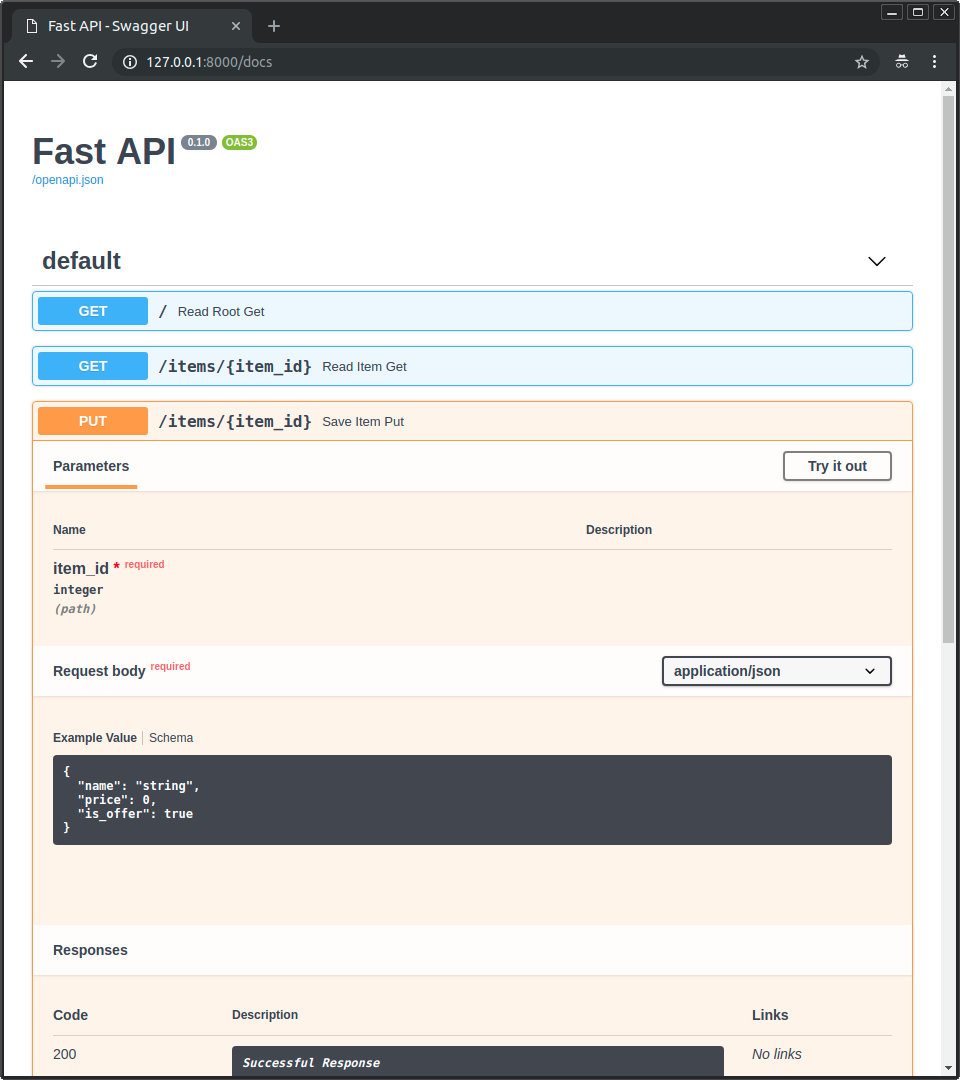
|
||||
|
||||
* Alternatieve API-documentatie met <a href="https://github.com/Rebilly/ReDoc" class="external-link" target="_blank"><strong>ReDoc</strong></a>.
|
||||
|
||||

|
||||
|
||||
### Gewoon Moderne Python
|
||||
|
||||
Het is allemaal gebaseerd op standaard **Python type** declaraties (dankzij Pydantic). Je hoeft dus geen nieuwe syntax te leren. Het is gewoon standaard moderne Python.
|
||||
|
||||
Als je een opfriscursus van 2 minuten nodig hebt over het gebruik van Python types (zelfs als je FastAPI niet gebruikt), bekijk dan deze korte tutorial: [Python Types](python-types.md){.internal-link target=_blank}.
|
||||
|
||||
Je schrijft gewoon standaard Python met types:
|
||||
|
||||
```Python
|
||||
from datetime import date
|
||||
|
||||
from pydantic import BaseModel
|
||||
|
||||
# Declareer een variabele als een str
|
||||
# en krijg editorondersteuning in de functie
|
||||
def main(user_id: str):
|
||||
return user_id
|
||||
|
||||
|
||||
# Een Pydantic model
|
||||
class User(BaseModel):
|
||||
id: int
|
||||
name: str
|
||||
joined: date
|
||||
```
|
||||
|
||||
Vervolgens kan je het op deze manier gebruiken:
|
||||
|
||||
```Python
|
||||
my_user: User = User(id=3, name="John Doe", joined="2018-07-19")
|
||||
|
||||
second_user_data = {
|
||||
"id": 4,
|
||||
"name": "Mary",
|
||||
"joined": "2018-11-30",
|
||||
}
|
||||
|
||||
my_second_user: User = User(**second_user_data)
|
||||
```
|
||||
|
||||
/// info
|
||||
|
||||
`**second_user_data` betekent:
|
||||
|
||||
Geef de sleutels (keys) en waarden (values) van de `second_user_data` dict direct door als sleutel-waarden argumenten, gelijk aan: `User(id=4, name=“Mary”, joined=“2018-11-30”)`
|
||||
|
||||
///
|
||||
|
||||
### Editor-ondersteuning
|
||||
|
||||
Het gehele framework is ontworpen om eenvoudig en intuïtief te zijn in gebruik. Alle beslissingen zijn getest op meerdere code-editors nog voordat het daadwerkelijke ontwikkelen begon, om zo de beste ontwikkelervaring te garanderen.
|
||||
|
||||
Uit enquêtes onder Python ontwikkelaars blijkt maar al te duidelijk dat "(automatische) code aanvulling" <a href="https://www.jetbrains.com/research/python-developers-survey-2017/#tools-and-features" class="external-link" target="_blank">een van de meest gebruikte functionaliteiten is</a>.
|
||||
|
||||
Het hele **FastAPI** framework is daarop gebaseerd. Automatische code aanvulling werkt overal.
|
||||
|
||||
Je hoeft zelden terug te vallen op de documentatie.
|
||||
|
||||
Zo kan je editor je helpen:
|
||||
|
||||
* in <a href="https://code.visualstudio.com/" class="external-link" target="_blank">Visual Studio Code</a>:
|
||||
|
||||

|
||||
|
||||
* in <a href="https://www.jetbrains.com/pycharm/" class="external-link" target="_blank">PyCharm</a>:
|
||||
|
||||
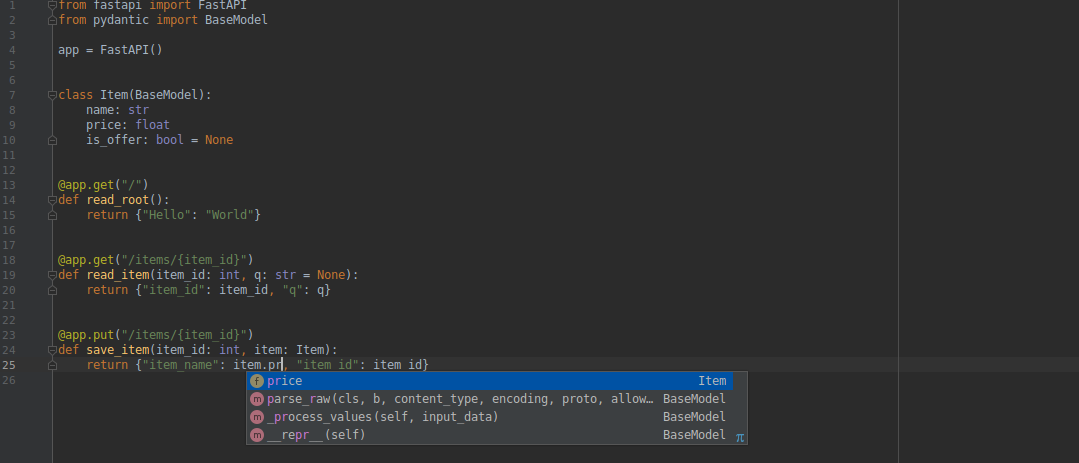
|
||||
|
||||
Je krijgt autocomletion die je voorheen misschien zelfs voor onmogelijk had gehouden. Zoals bijvoorbeeld de `price` key in een JSON body (die genest had kunnen zijn) die afkomstig is van een request.
|
||||
|
||||
Je hoeft niet langer de verkeerde keys in te typen, op en neer te gaan tussen de documentatie, of heen en weer te scrollen om te checken of je `username` of toch `user_name` had gebruikt.
|
||||
|
||||
### Kort
|
||||
|
||||
Dit framework heeft voor alles verstandige **standaardinstellingen**, met overal optionele configuraties. Alle parameters kunnen worden verfijnd zodat het past bij wat je nodig hebt, om zo de API te kunnen definiëren die jij nodig hebt.
|
||||
|
||||
Maar standaard werkt alles **“gewoon”**.
|
||||
|
||||
### Validatie
|
||||
|
||||
* Validatie voor de meeste (of misschien wel alle?) Python **datatypes**, inclusief:
|
||||
* JSON objecten (`dict`).
|
||||
* JSON array (`list`) die itemtypes definiëren.
|
||||
* String (`str`) velden, die min en max lengtes hebben.
|
||||
* Getallen (`int`, `float`) met min en max waarden, enz.
|
||||
|
||||
* Validatie voor meer exotische typen, zoals:
|
||||
* URL.
|
||||
* E-mail.
|
||||
* UUID.
|
||||
* ...en anderen.
|
||||
|
||||
Alle validatie wordt uitgevoerd door het beproefde en robuuste **Pydantic**.
|
||||
|
||||
### Beveiliging en authenticatie
|
||||
|
||||
Beveiliging en authenticatie is geïntegreerd. Zonder compromissen te doen naar databases of datamodellen.
|
||||
|
||||
Alle beveiligingsschema's gedefinieerd in OpenAPI, inclusief:
|
||||
|
||||
* HTTP Basic.
|
||||
* **OAuth2** (ook met **JWT tokens**). Bekijk de tutorial over [OAuth2 with JWT](tutorial/security/oauth2-jwt.md){.internal-link target=_blank}.
|
||||
* API keys in:
|
||||
* Headers.
|
||||
* Query parameters.
|
||||
* Cookies, enz.
|
||||
|
||||
Plus alle beveiligingsfuncties van Starlette (inclusief **sessiecookies**).
|
||||
|
||||
Gebouwd als een herbruikbare tool met componenten die makkelijk te integreren zijn in en met je systemen, datastores, relationele en NoSQL databases, enz.
|
||||
|
||||
### Dependency Injection
|
||||
|
||||
FastAPI bevat een uiterst eenvoudig, maar uiterst krachtig <abbr title='ook bekend als "componenten", "bronnen", "diensten", "aanbieders"'><strong>Dependency Injection</strong></abbr> systeem.
|
||||
|
||||
* Zelfs dependencies kunnen dependencies hebben, waardoor een hiërarchie of **“graph” van dependencies** ontstaat.
|
||||
* Allemaal **automatisch afgehandeld** door het framework.
|
||||
* Alle dependencies kunnen data nodig hebben van request, de vereiste **padoperaties veranderen** en automatische documentatie verstrekken.
|
||||
* **Automatische validatie** zelfs voor *padoperatie* parameters gedefinieerd in dependencies.
|
||||
* Ondersteuning voor complexe gebruikersauthenticatiesystemen, **databaseverbindingen**, enz.
|
||||
* **Geen compromisen** met databases, gebruikersinterfaces, enz. Maar eenvoudige integratie met ze allemaal.
|
||||
|
||||
### Ongelimiteerde "plug-ins"
|
||||
|
||||
Of anders gezegd, je hebt ze niet nodig, importeer en gebruik de code die je nodig hebt.
|
||||
|
||||
Elke integratie is ontworpen om eenvoudig te gebruiken (met afhankelijkheden), zodat je een “plug-in" kunt maken in 2 regels code, met dezelfde structuur en syntax die wordt gebruikt voor je *padbewerkingen*.
|
||||
|
||||
### Getest
|
||||
|
||||
* 100% <abbr title="De hoeveelheid code die automatisch wordt getest">van de code is getest</abbr>.
|
||||
* 100% <abbr title="Python type annotaties, hiermee kunnen je editor en externe tools je beter ondersteunen">type geannoteerde</abbr> codebase.
|
||||
* Wordt gebruikt in productietoepassingen.
|
||||
|
||||
## Starlette functies
|
||||
|
||||
**FastAPI** is volledig verenigbaar met (en gebaseerd op) <a href="https://www.starlette.io/" class="external-link" target="_blank"><strong>Starlette</strong></a>.
|
||||
|
||||
`FastAPI` is eigenlijk een subklasse van `Starlette`. Dus als je Starlette al kent of gebruikt, zal de meeste functionaliteit op dezelfde manier werken.
|
||||
|
||||
Met **FastAPI** krijg je alle functies van **Starlette** (FastAPI is gewoon Starlette op steroïden):
|
||||
|
||||
* Zeer indrukwekkende prestaties. Het is <a href="https://github.com/encode/starlette#performance" class="external-link" target="_blank">een van de snelste Python frameworks, vergelijkbaar met **NodeJS** en **Go**</a>.
|
||||
* **WebSocket** ondersteuning.
|
||||
* Taken in de achtergrond tijdens het proces.
|
||||
* Opstart- en afsluit events.
|
||||
* Test client gebouwd op HTTPX.
|
||||
* **CORS**, GZip, Statische bestanden, Streaming reacties.
|
||||
* **Sessie en Cookie** ondersteuning.
|
||||
* 100% van de code is getest.
|
||||
* 100% type geannoteerde codebase.
|
||||
|
||||
## Pydantic functionaliteit
|
||||
|
||||
**FastAPI** is volledig verenigbaar met (en gebaseerd op) Pydantic. Dus alle extra <a href="https://docs.pydantic.dev/" class="external-link" target="_blank"><strong>Pydantic</strong></a> code die je nog hebt werkt ook.
|
||||
|
||||
Inclusief externe pakketten die ook gebaseerd zijn op Pydantic, zoals <abbr title="Object-Relational Mapper">ORM</abbr>s, <abbr title="Object-Document Mapper">ODM</abbr>s voor databases.
|
||||
|
||||
Dit betekent ook dat je in veel gevallen het object dat je van een request krijgt **direct naar je database** kunt sturen, omdat alles automatisch wordt gevalideerd.
|
||||
|
||||
Hetzelfde geldt ook andersom, in veel gevallen kun je dus het object dat je krijgt van de database **direct doorgeven aan de client**.
|
||||
|
||||
Met **FastAPI** krijg je alle functionaliteit van **Pydantic** (omdat FastAPI is gebaseerd op Pydantic voor alle dataverwerking):
|
||||
|
||||
* **Geen brainfucks**:
|
||||
* Je hoeft geen nieuwe microtaal voor schemadefinities te leren.
|
||||
* Als je bekend bent Python types, weet je hoe je Pydantic moet gebruiken.
|
||||
* Werkt goed samen met je **<abbr title=“Integrated Development Environment, vergelijkbaar met een code editor”>IDE</abbr>/<abbr title=“Een programma dat controleert op fouten in de code”>linter</abbr>/hersenen**:
|
||||
* Doordat pydantic's datastructuren enkel instanties zijn van klassen, die je definieert, werkt automatische aanvulling, linting, mypy en je intuïtie allemaal goed met je gevalideerde data.
|
||||
* Valideer **complexe structuren**:
|
||||
* Gebruik van hiërarchische Pydantic modellen, Python `typing`'s `List` en `Dict`, enz.
|
||||
* Met validators kunnen complexe dataschema's duidelijk en eenvoudig worden gedefinieerd, gecontroleerd en gedocumenteerd als JSON Schema.
|
||||
* Je kunt diep **geneste JSON** objecten laten valideren en annoteren.
|
||||
* **Uitbreidbaar**:
|
||||
* Met Pydantic kunnen op maat gemaakte datatypen worden gedefinieerd of je kunt validatie uitbreiden met methoden op een model dat is ingericht met de decorator validator.
|
||||
* 100% van de code is getest.
|
||||
494
docs/nl/docs/index.md
Normal file
494
docs/nl/docs/index.md
Normal file
@@ -0,0 +1,494 @@
|
||||
# FastAPI
|
||||
|
||||
<style>
|
||||
.md-content .md-typeset h1 { display: none; }
|
||||
</style>
|
||||
|
||||
<p align="center">
|
||||
<a href="https://fastapi.tiangolo.com"><img src="https://fastapi.tiangolo.com/img/logo-margin/logo-teal.png" alt="FastAPI"></a>
|
||||
</p>
|
||||
<p align="center">
|
||||
<em>FastAPI framework, zeer goede prestaties, eenvoudig te leren, snel te programmeren, klaar voor productie</em>
|
||||
</p>
|
||||
<p align="center">
|
||||
<a href="https://github.com/fastapi/fastapi/actions?query=workflow%3ATest+event%3Apush+branch%3Amaster" target="_blank">
|
||||
<img src="https://github.com/fastapi/fastapi/workflows/Test/badge.svg?event=push&branch=master" alt="Test">
|
||||
</a>
|
||||
<a href="https://coverage-badge.samuelcolvin.workers.dev/redirect/fastapi/fastapi" target="_blank">
|
||||
<img src="https://coverage-badge.samuelcolvin.workers.dev/fastapi/fastapi.svg" alt="Coverage">
|
||||
</a>
|
||||
<a href="https://pypi.org/project/fastapi" target="_blank">
|
||||
<img src="https://img.shields.io/pypi/v/fastapi?color=%2334D058&label=pypi%20package" alt="Package version">
|
||||
</a>
|
||||
<a href="https://pypi.org/project/fastapi" target="_blank">
|
||||
<img src="https://img.shields.io/pypi/pyversions/fastapi.svg?color=%2334D058" alt="Supported Python versions">
|
||||
</a>
|
||||
</p>
|
||||
|
||||
---
|
||||
|
||||
**Documentatie**: <a href="https://fastapi.tiangolo.com" target="_blank">https://fastapi.tiangolo.com</a>
|
||||
|
||||
**Broncode**: <a href="https://github.com/fastapi/fastapi" target="_blank">https://github.com/tiangolo/fastapi</a>
|
||||
|
||||
---
|
||||
|
||||
FastAPI is een modern, snel (zeer goede prestaties), web framework voor het bouwen van API's in Python, gebruikmakend van standaard Python type-hints.
|
||||
|
||||
De belangrijkste kenmerken zijn:
|
||||
|
||||
* **Snel**: Zeer goede prestaties, vergelijkbaar met **NodeJS** en **Go** (dankzij Starlette en Pydantic). [Een van de snelste beschikbare Python frameworks](#prestaties).
|
||||
* **Snel te programmeren**: Verhoog de snelheid om functionaliteit te ontwikkelen met ongeveer 200% tot 300%. *
|
||||
* **Minder bugs**: Verminder ongeveer 40% van de door mensen (ontwikkelaars) veroorzaakte fouten. *
|
||||
* **Intuïtief**: Buitengewoon goede ondersteuning voor editors. <abbr title="ook bekend als automatisch aanvullen, automatisch aanvullen, IntelliSense">Overal automische code aanvulling</abbr>. Minder tijd kwijt aan debuggen.
|
||||
* **Eenvoudig**: Ontworpen om gemakkelijk te gebruiken en te leren. Minder tijd nodig om documentatie te lezen.
|
||||
* **Kort**: Minimaliseer codeduplicatie. Elke parameterdeclaratie ondersteunt meerdere functionaliteiten. Minder bugs.
|
||||
* **Robust**: Code gereed voor productie. Met automatische interactieve documentatie.
|
||||
* **Standards-based**: Gebaseerd op (en volledig verenigbaar met) open standaarden voor API's: <a href="https://github.com/OAI/OpenAPI-Specification" class="external-link" target="_blank">OpenAPI</a> (voorheen bekend als Swagger) en <a href="https://json-schema.org/" class="external-link" target="_blank">JSON Schema</a>.
|
||||
|
||||
<small>* schatting op basis van testen met een intern ontwikkelteam en bouwen van productieapplicaties.</small>
|
||||
|
||||
## Sponsors
|
||||
|
||||
<!-- sponsors -->
|
||||
|
||||
{% if sponsors %}
|
||||
{% for sponsor in sponsors.gold -%}
|
||||
<a href="{{ sponsor.url }}" target="_blank" title="{{ sponsor.title }}"><img src="{{ sponsor.img }}" style="border-radius:15px"></a>
|
||||
{% endfor -%}
|
||||
{%- for sponsor in sponsors.silver -%}
|
||||
<a href="{{ sponsor.url }}" target="_blank" title="{{ sponsor.title }}"><img src="{{ sponsor.img }}" style="border-radius:15px"></a>
|
||||
{% endfor %}
|
||||
{% endif %}
|
||||
|
||||
<!-- /sponsors -->
|
||||
|
||||
<a href="https://fastapi.tiangolo.com/fastapi-people/#sponsors" class="external-link" target="_blank">Overige sponsoren</a>
|
||||
|
||||
## Meningen
|
||||
|
||||
"_[...] Ik gebruik **FastAPI** heel vaak tegenwoordig. [...] Ik ben van plan om het te gebruiken voor alle **ML-services van mijn team bij Microsoft**. Sommige van deze worden geïntegreerd in het kernproduct van **Windows** en sommige **Office**-producten._"
|
||||
|
||||
<div style="text-align: right; margin-right: 10%;">Kabir Khan - <strong>Microsoft</strong> <a href="https://github.com/fastapi/fastapi/pull/26" target="_blank"><small>(ref)</small></a></div>
|
||||
|
||||
---
|
||||
|
||||
"_We hebben de **FastAPI** library gebruikt om een **REST** server te maken die bevraagd kan worden om **voorspellingen** te maken. [voor Ludwig]_"
|
||||
|
||||
<div style="text-align: right; margin-right: 10%;">Piero Molino, Yaroslav Dudin en Sai Sumanth Miryala - <strong>Uber</strong> <a href="https://eng.uber.com/ludwig-v0-2/" target="_blank"><small>(ref)</small></a></div>
|
||||
|
||||
---
|
||||
|
||||
"_**Netflix** is verheugd om een open-source release aan te kondigen van ons **crisismanagement**-orkestratieframework: **Dispatch**! [gebouwd met **FastAPI**]_"
|
||||
|
||||
<div style="text-align: right; margin-right: 10%;">Kevin Glisson, Marc Vilanova, Forest Monsen - <strong>Netflix</strong> <a href="https://netflixtechblog.com/introducing-dispatch-da4b8a2a8072" target="_blank"><small>(ref)</small></a></div>
|
||||
|
||||
---
|
||||
|
||||
"_Ik ben super enthousiast over **FastAPI**. Het is zo leuk!_"
|
||||
|
||||
<div style="text-align: right; margin-right: 10%;">Brian Okken - <strong><a href="https://pythonbytes.fm/episodes/show/123/time-to-right-the-py-wrongs?time_in_sec=855" target="_blank">Python Bytes</a> podcast presentator</strong> <a href="https://twitter.com/brianokken/status/1112220079972728832" target="_blank"><small>(ref)</small></a></div>
|
||||
|
||||
---
|
||||
|
||||
"_Wat je hebt gebouwd ziet er echt super solide en gepolijst uit. In veel opzichten is het wat ik wilde dat **Hug** kon zijn - het is echt inspirerend om iemand dit te zien bouwen._"
|
||||
|
||||
<div style="text-align: right; margin-right: 10%;">Timothy Crosley - <strong><a href="https://www.hug.rest/" target="_blank">Hug</a> creator</strong> <a href="https://news.ycombinator.com/item?id=19455465" target="_blank"><small>(ref)</small></a></div>
|
||||
|
||||
---
|
||||
|
||||
"Wie geïnteresseerd is in een **modern framework** voor het bouwen van REST API's, bekijkt best eens **FastAPI** [...] Het is snel, gebruiksvriendelijk en gemakkelijk te leren [...]_"
|
||||
|
||||
"_We zijn overgestapt naar **FastAPI** voor onze **API's** [...] Het gaat jou vast ook bevallen [...]_"
|
||||
|
||||
<div style="text-align: right; margin-right: 10%;">Ines Montani - Matthew Honnibal - <strong><a href="https://explosion.ai" target="_blank">Explosion AI</a> oprichters - <a href="https://spacy.io" target="_blank">spaCy</a> ontwikkelaars</strong> <a href="https://twitter.com/_inesmontani/status/1144173225322143744" target="_blank"><small>(ref)</small></a> - <a href="https://twitter.com/honnibal/status/1144031421859655680" target="_blank"><small>(ref)</small></a></div>
|
||||
|
||||
---
|
||||
|
||||
"_Wie een Python API wil bouwen voor productie, kan ik ten stelligste **FastAPI** aanraden. Het is **prachtig ontworpen**, **eenvoudig te gebruiken** en **gemakkelijk schaalbaar**, het is een **cruciale component** geworden in onze strategie om API's centraal te zetten, en het vereenvoudigt automatisering en diensten zoals onze Virtual TAC Engineer._"
|
||||
|
||||
<div style="text-align: right; margin-right: 10%;">Deon Pillsbury - <strong>Cisco</strong> <a href="https://www.linkedin.com/posts/deonpillsbury_cisco-cx-python-activity-6963242628536487936-trAp/" target="_blank"><small>(ref)</small></a></div>
|
||||
|
||||
---
|
||||
|
||||
## **Typer**, de FastAPI van CLIs
|
||||
|
||||
<a href="https://typer.tiangolo.com" target="_blank"><img src="https://typer.tiangolo.com/img/logo-margin/logo-margin-vector.svg" style="width: 20%;"></a>
|
||||
|
||||
Als je een <abbr title="Command Line Interface">CLI</abbr>-app bouwt die in de terminal moet worden gebruikt in plaats van een web-API, gebruik dan <a href="https://typer.tiangolo.com/ " class="external-link" target="_blank">**Typer**</a>.
|
||||
|
||||
**Typer** is het kleine broertje van FastAPI. En het is bedoeld als de **FastAPI van CLI's**. ️
|
||||
|
||||
## Vereisten
|
||||
|
||||
FastAPI staat op de schouders van reuzen:
|
||||
|
||||
* <a href="https://www.starlette.io/" class="external-link" target="_blank">Starlette</a> voor de webonderdelen.
|
||||
* <a href="https://docs.pydantic.dev/" class="external-link" target="_blank">Pydantic</a> voor de datadelen.
|
||||
|
||||
## Installatie
|
||||
|
||||
<div class="termy">
|
||||
|
||||
```console
|
||||
$ pip install "fastapi[standard]"
|
||||
|
||||
---> 100%
|
||||
```
|
||||
|
||||
</div>
|
||||
|
||||
**Opmerking**: Zet `"fastapi[standard]"` tussen aanhalingstekens om ervoor te zorgen dat het werkt in alle terminals.
|
||||
|
||||
## Voorbeeld
|
||||
|
||||
### Creëer het
|
||||
|
||||
* Maak het bestand `main.py` aan met daarin:
|
||||
|
||||
```Python
|
||||
from typing import Union
|
||||
|
||||
from fastapi import FastAPI
|
||||
|
||||
app = FastAPI()
|
||||
|
||||
|
||||
@app.get("/")
|
||||
def read_root():
|
||||
return {"Hello": "World"}
|
||||
|
||||
|
||||
@app.get("/items/{item_id}")
|
||||
def read_item(item_id: int, q: Union[str, None] = None):
|
||||
return {"item_id": item_id, "q": q}
|
||||
```
|
||||
|
||||
<details markdown="1">
|
||||
<summary>Of maak gebruik van <code>async def</code>...</summary>
|
||||
|
||||
Als je code gebruik maakt van `async` / `await`, gebruik dan `async def`:
|
||||
|
||||
```Python hl_lines="9 14"
|
||||
from typing import Union
|
||||
|
||||
from fastapi import FastAPI
|
||||
|
||||
app = FastAPI()
|
||||
|
||||
|
||||
@app.get("/")
|
||||
async def read_root():
|
||||
return {"Hello": "World"}
|
||||
|
||||
|
||||
@app.get("/items/{item_id}")
|
||||
async def read_item(item_id: int, q: Union[str, None] = None):
|
||||
return {"item_id": item_id, "q": q}
|
||||
```
|
||||
|
||||
**Opmerking**:
|
||||
|
||||
Als je het niet weet, kijk dan in het gedeelte _"Heb je haast?"_ over <a href="https://fastapi.tiangolo.com/async/#in-a-hurry" target="_blank">`async` en `await` in de documentatie</a>.
|
||||
|
||||
</details>
|
||||
|
||||
### Voer het uit
|
||||
|
||||
Run de server met:
|
||||
|
||||
<div class="termy">
|
||||
|
||||
```console
|
||||
$ fastapi dev main.py
|
||||
|
||||
╭────────── FastAPI CLI - Development mode ───────────╮
|
||||
│ │
|
||||
│ Serving at: http://127.0.0.1:8000 │
|
||||
│ │
|
||||
│ API docs: http://127.0.0.1:8000/docs │
|
||||
│ │
|
||||
│ Running in development mode, for production use: │
|
||||
│ │
|
||||
│ fastapi run │
|
||||
│ │
|
||||
╰─────────────────────────────────────────────────────╯
|
||||
|
||||
INFO: Will watch for changes in these directories: ['/home/user/code/awesomeapp']
|
||||
INFO: Uvicorn running on http://127.0.0.1:8000 (Press CTRL+C to quit)
|
||||
INFO: Started reloader process [2248755] using WatchFiles
|
||||
INFO: Started server process [2248757]
|
||||
INFO: Waiting for application startup.
|
||||
INFO: Application startup complete.
|
||||
```
|
||||
|
||||
</div>
|
||||
|
||||
<details markdown="1">
|
||||
<summary>Over het commando <code>fastapi dev main.py</code>...</summary>
|
||||
|
||||
Het commando `fastapi dev` leest het `main.py` bestand, detecteert de **FastAPI** app, en start een server met <a href="https://www.uvicorn.org" class="external-link" target="_blank">Uvicorn</a>.
|
||||
|
||||
Standaard zal dit commando `fastapi dev` starten met "auto-reload" geactiveerd voor ontwikkeling op het lokale systeem.
|
||||
|
||||
Je kan hier meer over lezen in de <a href="https://fastapi.tiangolo.com/fastapi-cli/" target="_blank">FastAPI CLI documentatie</a>.
|
||||
|
||||
</details>
|
||||
|
||||
### Controleer het
|
||||
|
||||
Open je browser op <a href="http://127.0.0.1:8000/items/5?q=somequery" class="external-link" target="_blank">http://127.0.0.1:8000/items/5?q=somequery</a>.
|
||||
|
||||
Je zult een JSON response zien:
|
||||
|
||||
```JSON
|
||||
{"item_id": 5, "q": "somequery"}
|
||||
```
|
||||
|
||||
Je hebt een API gemaakt die:
|
||||
|
||||
* HTTP verzoeken kan ontvangen op de _paden_ `/` en `/items/{item_id}`.
|
||||
* Beide _paden_ hebben `GET` <em>operaties</em> (ook bekend als HTTP _methoden_).
|
||||
* Het _pad_ `/items/{item_id}` heeft een _pad parameter_ `item_id` dat een `int` moet zijn.
|
||||
* Het _pad_ `/items/{item_id}` heeft een optionele `str` _query parameter_ `q`.
|
||||
|
||||
### Interactieve API documentatie
|
||||
|
||||
Ga naar <a href="http://127.0.0.1:8000/docs" class="external-link" target="_blank">http://127.0.0.1:8000/docs</a>.
|
||||
|
||||
Je ziet de automatische interactieve API documentatie (verstrekt door <a href="https://github.com/swagger-api/swagger-ui" class="external-link" target="_blank">Swagger UI</a>):
|
||||
|
||||

|
||||
|
||||
### Alternatieve API documentatie
|
||||
|
||||
Ga vervolgens naar <a href="http://127.0.0.1:8000/redoc" class="external-link" target="_blank">http://127.0.0.1:8000/redoc</a>.
|
||||
|
||||
Je ziet de automatische interactieve API documentatie (verstrekt door <a href="https://github.com/Rebilly/ReDoc" class="external-link" target="_blank">ReDoc</a>):
|
||||
|
||||

|
||||
|
||||
## Voorbeeld upgrade
|
||||
|
||||
Pas nu het bestand `main.py` aan om de body van een `PUT` request te ontvangen.
|
||||
|
||||
Dankzij Pydantic kunnen we de body declareren met standaard Python types.
|
||||
|
||||
```Python hl_lines="4 9-12 25-27"
|
||||
from typing import Union
|
||||
|
||||
from fastapi import FastAPI
|
||||
from pydantic import BaseModel
|
||||
|
||||
app = FastAPI()
|
||||
|
||||
|
||||
class Item(BaseModel):
|
||||
name: str
|
||||
price: float
|
||||
is_offer: Union[bool, None] = None
|
||||
|
||||
|
||||
@app.get("/")
|
||||
def read_root():
|
||||
return {"Hello": "World"}
|
||||
|
||||
|
||||
@app.get("/items/{item_id}")
|
||||
def read_item(item_id: int, q: Union[str, None] = None):
|
||||
return {"item_id": item_id, "q": q}
|
||||
|
||||
|
||||
@app.put("/items/{item_id}")
|
||||
def update_item(item_id: int, item: Item):
|
||||
return {"item_name": item.name, "item_id": item_id}
|
||||
```
|
||||
|
||||
De `fastapi dev` server zou automatisch moeten herladen.
|
||||
|
||||
### Interactieve API documentatie upgrade
|
||||
|
||||
Ga nu naar <a href="http://127.0.0.1:8000/docs" class="external-link" target="_blank">http://127.0.0.1:8000/docs</a>.
|
||||
|
||||
* De interactieve API-documentatie wordt automatisch bijgewerkt, inclusief de nieuwe body:
|
||||
|
||||

|
||||
|
||||
* Klik op de knop "Try it out", hiermee kan je de parameters invullen en direct met de API interacteren:
|
||||
|
||||
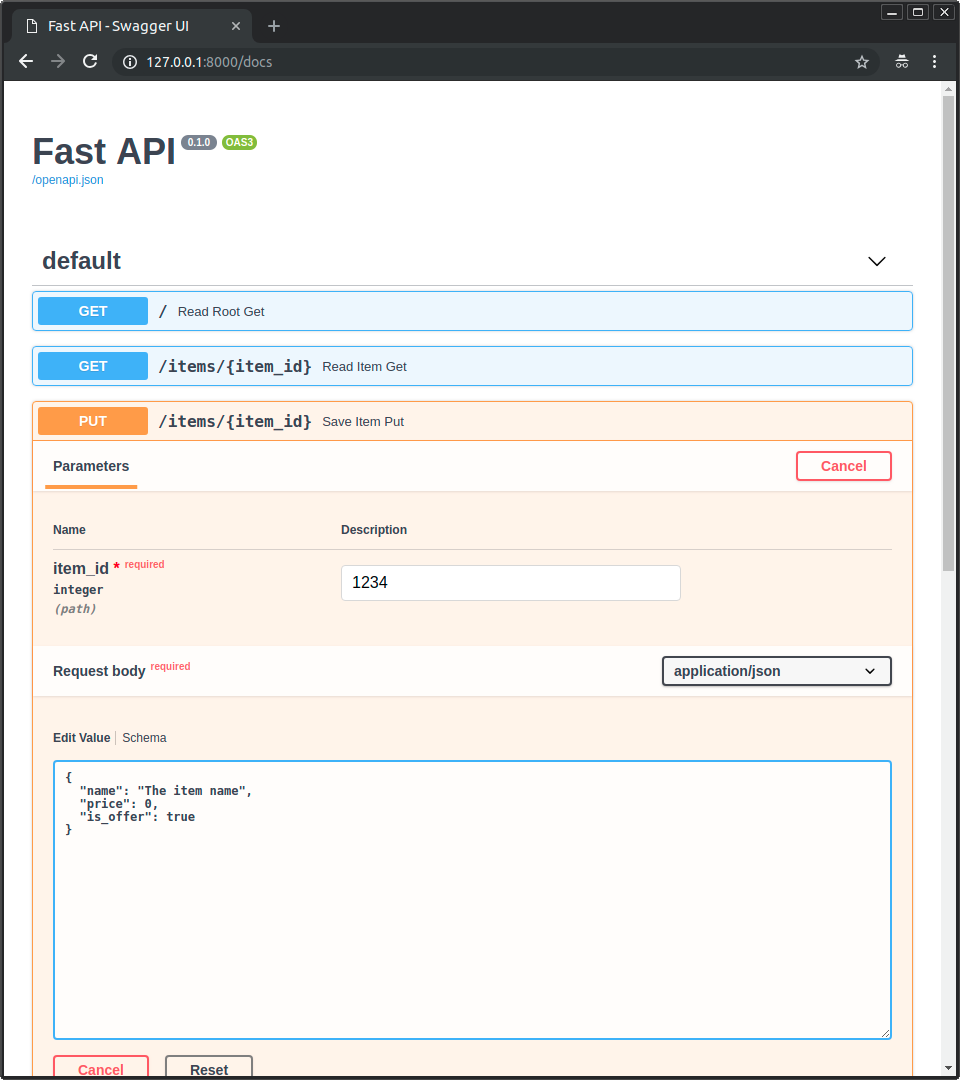
|
||||
|
||||
* Klik vervolgens op de knop "Execute", de gebruikersinterface zal communiceren met jouw API, de parameters verzenden, de resultaten ophalen en deze op het scherm tonen:
|
||||
|
||||
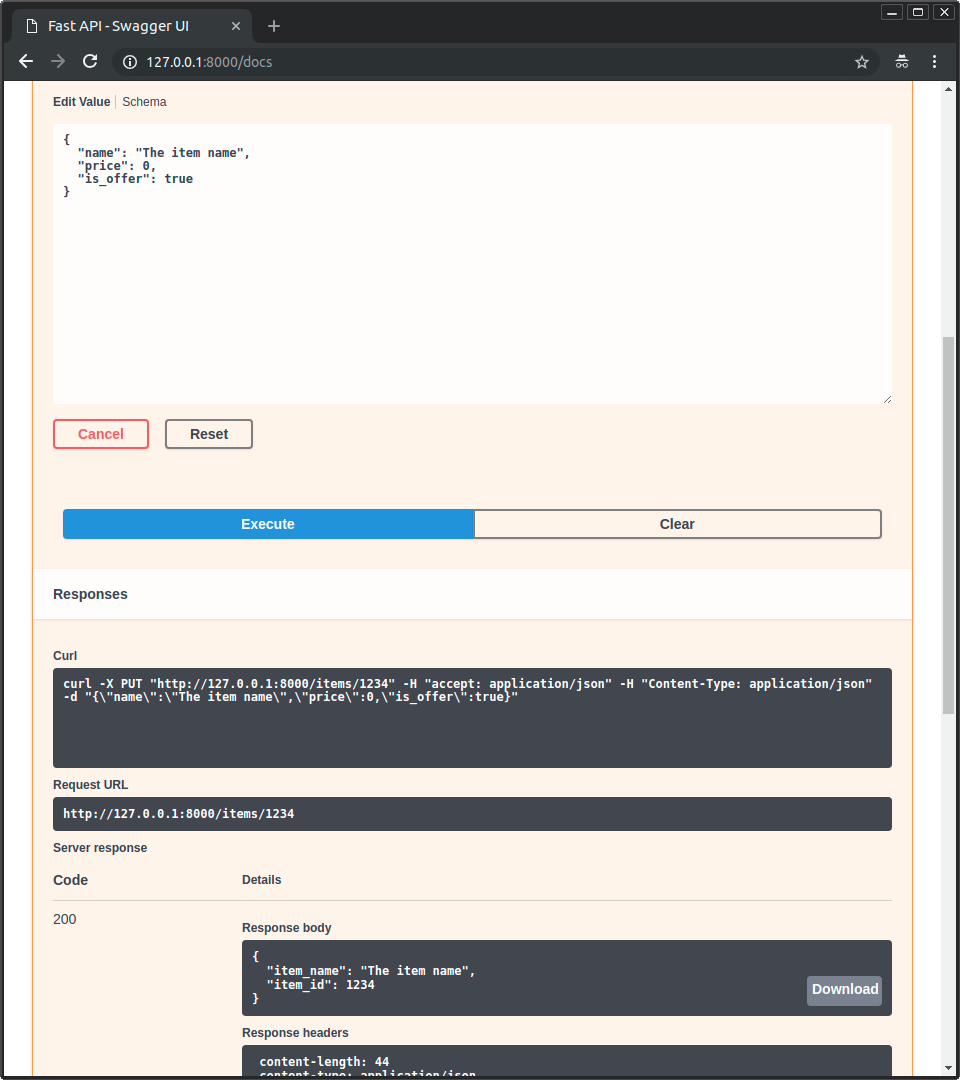
|
||||
|
||||
### Alternatieve API documentatie upgrade
|
||||
|
||||
Ga vervolgens naar <a href="http://127.0.0.1:8000/redoc" class="external-link" target="_blank">http://127.0.0.1:8000/redoc</a>.
|
||||
|
||||
* De alternatieve documentatie zal ook de nieuwe queryparameter en body weergeven:
|
||||
|
||||

|
||||
|
||||
### Samenvatting
|
||||
|
||||
Samengevat declareer je **eenmalig** de types van parameters, body, etc. als functieparameters.
|
||||
|
||||
Dat doe je met standaard moderne Python types.
|
||||
|
||||
Je hoeft geen nieuwe syntax te leren, de methods of klassen van een specifieke bibliotheek, etc.
|
||||
|
||||
Gewoon standaard **Python**.
|
||||
|
||||
Bijvoorbeeld, voor een `int`:
|
||||
|
||||
```Python
|
||||
item_id: int
|
||||
```
|
||||
|
||||
of voor een complexer `Item` model:
|
||||
|
||||
```Python
|
||||
item: Item
|
||||
```
|
||||
|
||||
...en met die ene verklaring krijg je:
|
||||
|
||||
* Editor ondersteuning, inclusief:
|
||||
* Code aanvulling.
|
||||
* Type validatie.
|
||||
* Validatie van data:
|
||||
* Automatische en duidelijke foutboodschappen wanneer de data ongeldig is.
|
||||
* Validatie zelfs voor diep geneste JSON objecten.
|
||||
* <abbr title="ook bekend als: serialisatie, parsing, marshalling">Conversie</abbr> van invoergegevens: afkomstig van het netwerk naar Python-data en -types. Zoals:
|
||||
* JSON.
|
||||
* Pad parameters.
|
||||
* Query parameters.
|
||||
* Cookies.
|
||||
* Headers.
|
||||
* Formulieren.
|
||||
* Bestanden.
|
||||
* <abbr title="ook bekend als: serialisatie, parsing, marshalling">Conversie</abbr> van uitvoergegevens: converstie van Python-data en -types naar netwerkgegevens (zoals JSON):
|
||||
* Converteer Python types (`str`, `int`, `float`, `bool`, `list`, etc).
|
||||
* `datetime` objecten.
|
||||
* `UUID` objecten.
|
||||
* Database modellen.
|
||||
* ...en nog veel meer.
|
||||
* Automatische interactieve API-documentatie, inclusief 2 alternatieve gebruikersinterfaces:
|
||||
* Swagger UI.
|
||||
* ReDoc.
|
||||
|
||||
---
|
||||
|
||||
Terugkomend op het vorige code voorbeeld, **FastAPI** zal:
|
||||
|
||||
* Valideren dat er een `item_id` bestaat in het pad voor `GET` en `PUT` verzoeken.
|
||||
* Valideren dat het `item_id` van het type `int` is voor `GET` en `PUT` verzoeken.
|
||||
* Wanneer dat niet het geval is, krijgt de cliënt een nuttige, duidelijke foutmelding.
|
||||
* Controleren of er een optionele query parameter is met de naam `q` (zoals in `http://127.0.0.1:8000/items/foo?q=somequery`) voor `GET` verzoeken.
|
||||
* Aangezien de `q` parameter werd gedeclareerd met `= None`, is deze optioneel.
|
||||
* Zonder de `None` declaratie zou deze verplicht zijn (net als bij de body in het geval met `PUT`).
|
||||
* Voor `PUT` verzoeken naar `/items/{item_id}`, lees de body als JSON:
|
||||
* Controleer of het een verplicht attribuut `naam` heeft en dat dat een `str` is.
|
||||
* Controleer of het een verplicht attribuut `price` heeft en dat dat een`float` is.
|
||||
* Controleer of het een optioneel attribuut `is_offer` heeft, dat een `bool` is wanneer het aanwezig is.
|
||||
* Dit alles werkt ook voor diep geneste JSON objecten.
|
||||
* Converteer automatisch van en naar JSON.
|
||||
* Documenteer alles met OpenAPI, dat gebruikt kan worden door:
|
||||
* Interactieve documentatiesystemen.
|
||||
* Automatische client code generatie systemen, voor vele talen.
|
||||
* Biedt 2 interactieve documentatie-webinterfaces aan.
|
||||
|
||||
---
|
||||
|
||||
Dit was nog maar een snel overzicht, maar je zou nu toch al een idee moeten hebben over hoe het allemaal werkt.
|
||||
|
||||
Probeer deze regel te veranderen:
|
||||
|
||||
```Python
|
||||
return {"item_name": item.name, "item_id": item_id}
|
||||
```
|
||||
|
||||
...van:
|
||||
|
||||
```Python
|
||||
... "item_name": item.name ...
|
||||
```
|
||||
|
||||
...naar:
|
||||
|
||||
```Python
|
||||
... "item_price": item.price ...
|
||||
```
|
||||
|
||||
...en zie hoe je editor de attributen automatisch invult en hun types herkent:
|
||||
|
||||

|
||||
|
||||
Voor een vollediger voorbeeld met meer mogelijkheden, zie de <a href="https://fastapi.tiangolo.com/tutorial/">Tutorial - Gebruikershandleiding</a>.
|
||||
|
||||
**Spoiler alert**: de tutorial - gebruikershandleiding bevat:
|
||||
|
||||
* Declaratie van **parameters** op andere plaatsen zoals: **headers**, **cookies**, **formuliervelden** en **bestanden**.
|
||||
* Hoe stel je **validatie restricties** in zoals `maximum_length` of een `regex`.
|
||||
* Een zeer krachtig en eenvoudig te gebruiken **<abbr title="ook bekend als componenten, middelen, verstrekkers, diensten, injectables">Dependency Injection</abbr>** systeem.
|
||||
* Beveiliging en authenticatie, inclusief ondersteuning voor **OAuth2** met **JWT-tokens** en **HTTP Basic** auth.
|
||||
* Meer geavanceerde (maar even eenvoudige) technieken voor het declareren van **diep geneste JSON modellen** (dankzij Pydantic).
|
||||
* **GraphQL** integratie met <a href="https://strawberry.rocks" class="external-link" target="_blank">Strawberry</a> en andere packages.
|
||||
* Veel extra functies (dankzij Starlette) zoals:
|
||||
* **WebSockets**
|
||||
* uiterst gemakkelijke tests gebaseerd op HTTPX en `pytest`
|
||||
* **CORS**
|
||||
* **Cookie Sessions**
|
||||
* ...en meer.
|
||||
|
||||
## Prestaties
|
||||
|
||||
Onafhankelijke TechEmpower benchmarks tonen **FastAPI** applicaties draaiend onder Uvicorn aan als <a href="https://www.techempower.com/benchmarks/#section=test&runid=7464e520-0dc2-473d-bd34-dbdfd7e85911&hw=ph&test=query&l=zijzen-7" class="external-link" target="_blank">een van de snelste Python frameworks beschikbaar</a>, alleen onder Starlette en Uvicorn zelf (intern gebruikt door FastAPI). (*)
|
||||
|
||||
Zie de sectie <a href="https://fastapi.tiangolo.com/benchmarks/" class="internal-link" target="_blank">Benchmarks</a> om hier meer over te lezen.
|
||||
|
||||
## Afhankelijkheden
|
||||
|
||||
FastAPI maakt gebruik van Pydantic en Starlette.
|
||||
|
||||
### `standard` Afhankelijkheden
|
||||
|
||||
Wanneer je FastAPI installeert met `pip install "fastapi[standard]"`, worden de volgende `standard` optionele afhankelijkheden geïnstalleerd:
|
||||
|
||||
Gebruikt door Pydantic:
|
||||
|
||||
* <a href="https://github.com/JoshData/python-email-validator" target="_blank"><code>email_validator</code></a> - voor email validatie.
|
||||
|
||||
Gebruikt door Starlette:
|
||||
|
||||
* <a href="https://www.python-httpx.org" target="_blank"><code>httpx</code></a> - Vereist indien je de `TestClient` wil gebruiken.
|
||||
* <a href="https://jinja.palletsprojects.com" target="_blank"><code>jinja2</code></a> - Vereist als je de standaard templateconfiguratie wil gebruiken.
|
||||
* <a href="https://github.com/Kludex/python-multipart" target="_blank"><code>python-multipart</code></a> - Vereist indien je <abbr title="het omzetten van de string die uit een HTTP verzoek komt in Python data">"parsen"</abbr> van formulieren wil ondersteunen met `requests.form()`.
|
||||
|
||||
Gebruikt door FastAPI / Starlette:
|
||||
|
||||
* <a href="https://www.uvicorn.org" target="_blank"><code>uvicorn</code></a> - voor de server die jouw applicatie laadt en bedient.
|
||||
* `fastapi-cli` - om het `fastapi` commando te voorzien.
|
||||
|
||||
### Zonder `standard` Afhankelijkheden
|
||||
|
||||
Indien je de optionele `standard` afhankelijkheden niet wenst te installeren, kan je installeren met `pip install fastapi` in plaats van `pip install "fastapi[standard]"`.
|
||||
|
||||
### Bijkomende Optionele Afhankelijkheden
|
||||
|
||||
Er zijn nog een aantal bijkomende afhankelijkheden die je eventueel kan installeren.
|
||||
|
||||
Bijkomende optionele afhankelijkheden voor Pydantic:
|
||||
|
||||
* <a href="https://docs.pydantic.dev/latest/usage/pydantic_settings/" target="_blank"><code>pydantic-settings</code></a> - voor het beheren van settings.
|
||||
* <a href="https://docs.pydantic.dev/latest/usage/types/extra_types/extra_types/" target="_blank"><code>pydantic-extra-types</code></a> - voor extra data types die gebruikt kunnen worden met Pydantic.
|
||||
|
||||
Bijkomende optionele afhankelijkheden voor FastAPI:
|
||||
|
||||
* <a href="https://github.com/ijl/orjson" target="_blank"><code>orjson</code></a> - Vereist indien je `ORJSONResponse` wil gebruiken.
|
||||
* <a href="https://github.com/esnme/ultrajson" target="_blank"><code>ujson</code></a> - Vereist indien je `UJSONResponse` wil gebruiken.
|
||||
|
||||
## Licentie
|
||||
|
||||
Dit project is gelicenseerd onder de voorwaarden van de MIT licentie.
|
||||
1
docs/nl/mkdocs.yml
Normal file
1
docs/nl/mkdocs.yml
Normal file
@@ -0,0 +1 @@
|
||||
INHERIT: ../en/mkdocs.yml
|
||||
@@ -72,7 +72,7 @@ Note que a função de teste é `async def` agora, no lugar de apenas `def` como
|
||||
|
||||
Então podemos criar um `AsyncClient` com a aplicação, e enviar requisições assíncronas para ela utilizando `await`.
|
||||
|
||||
```Python hl_lines="9-10"
|
||||
```Python hl_lines="9-12"
|
||||
{!../../../docs_src/async_tests/test_main.py!}
|
||||
```
|
||||
|
||||
|
||||
19
docs/pt/docs/advanced/security/index.md
Normal file
19
docs/pt/docs/advanced/security/index.md
Normal file
@@ -0,0 +1,19 @@
|
||||
# Segurança Avançada
|
||||
|
||||
## Funcionalidades Adicionais
|
||||
|
||||
Existem algumas funcionalidades adicionais para lidar com segurança além das cobertas em [Tutorial - Guia de Usuário: Segurança](../../tutorial/security/index.md){.internal-link target=_blank}.
|
||||
|
||||
/// tip | "Dica"
|
||||
|
||||
As próximas seções **não são necessariamente "avançadas"**.
|
||||
|
||||
E é possível que para o seu caso de uso, a solução está em uma delas.
|
||||
|
||||
///
|
||||
|
||||
## Leia o Tutorial primeiro
|
||||
|
||||
As próximas seções pressupõem que você já leu o principal [Tutorial - Guia de Usuário: Segurança](../../tutorial/security/index.md){.internal-link target=_blank}.
|
||||
|
||||
Todas elas são baseadas nos mesmos conceitos, mas permitem algumas funcionalidades extras.
|
||||
7
docs/pt/docs/advanced/testing-events.md
Normal file
7
docs/pt/docs/advanced/testing-events.md
Normal file
@@ -0,0 +1,7 @@
|
||||
# Testando Eventos: inicialização - encerramento
|
||||
|
||||
Quando você precisa que os seus manipuladores de eventos (`startup` e `shutdown`) sejam executados em seus testes, você pode utilizar o `TestClient` usando a instrução `with`:
|
||||
|
||||
```Python hl_lines="9-12 20-24"
|
||||
{!../../../docs_src/app_testing/tutorial003.py!}
|
||||
```
|
||||
@@ -6,7 +6,7 @@
|
||||
|
||||
如果某些内容看起来对你的项目有用,请继续查阅,否则请直接跳过它们。
|
||||
|
||||
/// 小技巧
|
||||
/// tip | 小技巧
|
||||
|
||||
如果你想以系统的方式**学习 FastAPI**(推荐),请阅读 [教程 - 用户指南](../tutorial/index.md){.internal-link target=_blank} 的每一章节。
|
||||
|
||||
|
||||
@@ -1,12 +1,14 @@
|
||||
import pytest
|
||||
from httpx import AsyncClient
|
||||
from httpx import ASGITransport, AsyncClient
|
||||
|
||||
from .main import app
|
||||
|
||||
|
||||
@pytest.mark.anyio
|
||||
async def test_root():
|
||||
async with AsyncClient(app=app, base_url="http://test") as ac:
|
||||
async with AsyncClient(
|
||||
transport=ASGITransport(app=app), base_url="http://test"
|
||||
) as ac:
|
||||
response = await ac.get("/")
|
||||
assert response.status_code == 200
|
||||
assert response.json() == {"message": "Tomato"}
|
||||
|
||||
@@ -7,8 +7,8 @@ app = FastAPI()
|
||||
|
||||
@app.middleware("http")
|
||||
async def add_process_time_header(request: Request, call_next):
|
||||
start_time = time.time()
|
||||
start_time = time.perf_counter()
|
||||
response = await call_next(request)
|
||||
process_time = time.time() - start_time
|
||||
process_time = time.perf_counter() - start_time
|
||||
response.headers["X-Process-Time"] = str(process_time)
|
||||
return response
|
||||
|
||||
@@ -13,4 +13,6 @@ async def read_items(
|
||||
results = {"item_id": item_id}
|
||||
if q:
|
||||
results.update({"q": q})
|
||||
if size:
|
||||
results.update({"size": size})
|
||||
return results
|
||||
|
||||
@@ -14,4 +14,6 @@ async def read_items(
|
||||
results = {"item_id": item_id}
|
||||
if q:
|
||||
results.update({"q": q})
|
||||
if size:
|
||||
results.update({"size": size})
|
||||
return results
|
||||
|
||||
@@ -15,4 +15,6 @@ async def read_items(
|
||||
results = {"item_id": item_id}
|
||||
if q:
|
||||
results.update({"q": q})
|
||||
if size:
|
||||
results.update({"size": size})
|
||||
return results
|
||||
|
||||
@@ -1,6 +1,6 @@
|
||||
"""FastAPI framework, high performance, easy to learn, fast to code, ready for production"""
|
||||
|
||||
__version__ = "0.112.2"
|
||||
__version__ = "0.112.3"
|
||||
|
||||
from starlette import status as status
|
||||
|
||||
|
||||
@@ -1,58 +1,37 @@
|
||||
from typing import Any, Callable, List, Optional, Sequence
|
||||
from dataclasses import dataclass, field
|
||||
from typing import Any, Callable, List, Optional, Sequence, Tuple
|
||||
|
||||
from fastapi._compat import ModelField
|
||||
from fastapi.security.base import SecurityBase
|
||||
|
||||
|
||||
@dataclass
|
||||
class SecurityRequirement:
|
||||
def __init__(
|
||||
self, security_scheme: SecurityBase, scopes: Optional[Sequence[str]] = None
|
||||
):
|
||||
self.security_scheme = security_scheme
|
||||
self.scopes = scopes
|
||||
security_scheme: SecurityBase
|
||||
scopes: Optional[Sequence[str]] = None
|
||||
|
||||
|
||||
@dataclass
|
||||
class Dependant:
|
||||
def __init__(
|
||||
self,
|
||||
*,
|
||||
path_params: Optional[List[ModelField]] = None,
|
||||
query_params: Optional[List[ModelField]] = None,
|
||||
header_params: Optional[List[ModelField]] = None,
|
||||
cookie_params: Optional[List[ModelField]] = None,
|
||||
body_params: Optional[List[ModelField]] = None,
|
||||
dependencies: Optional[List["Dependant"]] = None,
|
||||
security_schemes: Optional[List[SecurityRequirement]] = None,
|
||||
name: Optional[str] = None,
|
||||
call: Optional[Callable[..., Any]] = None,
|
||||
request_param_name: Optional[str] = None,
|
||||
websocket_param_name: Optional[str] = None,
|
||||
http_connection_param_name: Optional[str] = None,
|
||||
response_param_name: Optional[str] = None,
|
||||
background_tasks_param_name: Optional[str] = None,
|
||||
security_scopes_param_name: Optional[str] = None,
|
||||
security_scopes: Optional[List[str]] = None,
|
||||
use_cache: bool = True,
|
||||
path: Optional[str] = None,
|
||||
) -> None:
|
||||
self.path_params = path_params or []
|
||||
self.query_params = query_params or []
|
||||
self.header_params = header_params or []
|
||||
self.cookie_params = cookie_params or []
|
||||
self.body_params = body_params or []
|
||||
self.dependencies = dependencies or []
|
||||
self.security_requirements = security_schemes or []
|
||||
self.request_param_name = request_param_name
|
||||
self.websocket_param_name = websocket_param_name
|
||||
self.http_connection_param_name = http_connection_param_name
|
||||
self.response_param_name = response_param_name
|
||||
self.background_tasks_param_name = background_tasks_param_name
|
||||
self.security_scopes = security_scopes
|
||||
self.security_scopes_param_name = security_scopes_param_name
|
||||
self.name = name
|
||||
self.call = call
|
||||
self.use_cache = use_cache
|
||||
# Store the path to be able to re-generate a dependable from it in overrides
|
||||
self.path = path
|
||||
# Save the cache key at creation to optimize performance
|
||||
path_params: List[ModelField] = field(default_factory=list)
|
||||
query_params: List[ModelField] = field(default_factory=list)
|
||||
header_params: List[ModelField] = field(default_factory=list)
|
||||
cookie_params: List[ModelField] = field(default_factory=list)
|
||||
body_params: List[ModelField] = field(default_factory=list)
|
||||
dependencies: List["Dependant"] = field(default_factory=list)
|
||||
security_requirements: List[SecurityRequirement] = field(default_factory=list)
|
||||
name: Optional[str] = None
|
||||
call: Optional[Callable[..., Any]] = None
|
||||
request_param_name: Optional[str] = None
|
||||
websocket_param_name: Optional[str] = None
|
||||
http_connection_param_name: Optional[str] = None
|
||||
response_param_name: Optional[str] = None
|
||||
background_tasks_param_name: Optional[str] = None
|
||||
security_scopes_param_name: Optional[str] = None
|
||||
security_scopes: Optional[List[str]] = None
|
||||
use_cache: bool = True
|
||||
path: Optional[str] = None
|
||||
cache_key: Tuple[Optional[Callable[..., Any]], Tuple[str, ...]] = field(init=False)
|
||||
|
||||
def __post_init__(self) -> None:
|
||||
self.cache_key = (self.call, tuple(sorted(set(self.security_scopes or []))))
|
||||
|
||||
@@ -1,6 +1,7 @@
|
||||
import inspect
|
||||
from contextlib import AsyncExitStack, contextmanager
|
||||
from copy import copy, deepcopy
|
||||
from dataclasses import dataclass
|
||||
from typing import (
|
||||
Any,
|
||||
Callable,
|
||||
@@ -54,7 +55,7 @@ from fastapi.logger import logger
|
||||
from fastapi.security.base import SecurityBase
|
||||
from fastapi.security.oauth2 import OAuth2, SecurityScopes
|
||||
from fastapi.security.open_id_connect_url import OpenIdConnect
|
||||
from fastapi.utils import create_response_field, get_path_param_names
|
||||
from fastapi.utils import create_model_field, get_path_param_names
|
||||
from pydantic.fields import FieldInfo
|
||||
from starlette.background import BackgroundTasks as StarletteBackgroundTasks
|
||||
from starlette.concurrency import run_in_threadpool
|
||||
@@ -79,25 +80,23 @@ multipart_incorrect_install_error = (
|
||||
)
|
||||
|
||||
|
||||
def check_file_field(field: ModelField) -> None:
|
||||
field_info = field.field_info
|
||||
if isinstance(field_info, params.Form):
|
||||
def ensure_multipart_is_installed() -> None:
|
||||
try:
|
||||
# __version__ is available in both multiparts, and can be mocked
|
||||
from multipart import __version__ # type: ignore
|
||||
|
||||
assert __version__
|
||||
try:
|
||||
# __version__ is available in both multiparts, and can be mocked
|
||||
from multipart import __version__ # type: ignore
|
||||
# parse_options_header is only available in the right multipart
|
||||
from multipart.multipart import parse_options_header # type: ignore
|
||||
|
||||
assert __version__
|
||||
try:
|
||||
# parse_options_header is only available in the right multipart
|
||||
from multipart.multipart import parse_options_header # type: ignore
|
||||
|
||||
assert parse_options_header
|
||||
except ImportError:
|
||||
logger.error(multipart_incorrect_install_error)
|
||||
raise RuntimeError(multipart_incorrect_install_error) from None
|
||||
assert parse_options_header
|
||||
except ImportError:
|
||||
logger.error(multipart_not_installed_error)
|
||||
raise RuntimeError(multipart_not_installed_error) from None
|
||||
logger.error(multipart_incorrect_install_error)
|
||||
raise RuntimeError(multipart_incorrect_install_error) from None
|
||||
except ImportError:
|
||||
logger.error(multipart_not_installed_error)
|
||||
raise RuntimeError(multipart_not_installed_error) from None
|
||||
|
||||
|
||||
def get_param_sub_dependant(
|
||||
@@ -175,7 +174,7 @@ def get_flat_dependant(
|
||||
header_params=dependant.header_params.copy(),
|
||||
cookie_params=dependant.cookie_params.copy(),
|
||||
body_params=dependant.body_params.copy(),
|
||||
security_schemes=dependant.security_requirements.copy(),
|
||||
security_requirements=dependant.security_requirements.copy(),
|
||||
use_cache=dependant.use_cache,
|
||||
path=dependant.path,
|
||||
)
|
||||
@@ -258,16 +257,16 @@ def get_dependant(
|
||||
)
|
||||
for param_name, param in signature_params.items():
|
||||
is_path_param = param_name in path_param_names
|
||||
type_annotation, depends, param_field = analyze_param(
|
||||
param_details = analyze_param(
|
||||
param_name=param_name,
|
||||
annotation=param.annotation,
|
||||
value=param.default,
|
||||
is_path_param=is_path_param,
|
||||
)
|
||||
if depends is not None:
|
||||
if param_details.depends is not None:
|
||||
sub_dependant = get_param_sub_dependant(
|
||||
param_name=param_name,
|
||||
depends=depends,
|
||||
depends=param_details.depends,
|
||||
path=path,
|
||||
security_scopes=security_scopes,
|
||||
)
|
||||
@@ -275,18 +274,18 @@ def get_dependant(
|
||||
continue
|
||||
if add_non_field_param_to_dependency(
|
||||
param_name=param_name,
|
||||
type_annotation=type_annotation,
|
||||
type_annotation=param_details.type_annotation,
|
||||
dependant=dependant,
|
||||
):
|
||||
assert (
|
||||
param_field is None
|
||||
param_details.field is None
|
||||
), f"Cannot specify multiple FastAPI annotations for {param_name!r}"
|
||||
continue
|
||||
assert param_field is not None
|
||||
if is_body_param(param_field=param_field, is_path_param=is_path_param):
|
||||
dependant.body_params.append(param_field)
|
||||
assert param_details.field is not None
|
||||
if is_body_param(param_field=param_details.field, is_path_param=is_path_param):
|
||||
dependant.body_params.append(param_details.field)
|
||||
else:
|
||||
add_param_to_fields(field=param_field, dependant=dependant)
|
||||
add_param_to_fields(field=param_details.field, dependant=dependant)
|
||||
return dependant
|
||||
|
||||
|
||||
@@ -314,13 +313,20 @@ def add_non_field_param_to_dependency(
|
||||
return None
|
||||
|
||||
|
||||
@dataclass
|
||||
class ParamDetails:
|
||||
type_annotation: Any
|
||||
depends: Optional[params.Depends]
|
||||
field: Optional[ModelField]
|
||||
|
||||
|
||||
def analyze_param(
|
||||
*,
|
||||
param_name: str,
|
||||
annotation: Any,
|
||||
value: Any,
|
||||
is_path_param: bool,
|
||||
) -> Tuple[Any, Optional[params.Depends], Optional[ModelField]]:
|
||||
) -> ParamDetails:
|
||||
field_info = None
|
||||
depends = None
|
||||
type_annotation: Any = Any
|
||||
@@ -328,6 +334,7 @@ def analyze_param(
|
||||
if annotation is not inspect.Signature.empty:
|
||||
use_annotation = annotation
|
||||
type_annotation = annotation
|
||||
# Extract Annotated info
|
||||
if get_origin(use_annotation) is Annotated:
|
||||
annotated_args = get_args(annotation)
|
||||
type_annotation = annotated_args[0]
|
||||
@@ -347,6 +354,7 @@ def analyze_param(
|
||||
)
|
||||
else:
|
||||
fastapi_annotation = None
|
||||
# Set default for Annotated FieldInfo
|
||||
if isinstance(fastapi_annotation, FieldInfo):
|
||||
# Copy `field_info` because we mutate `field_info.default` below.
|
||||
field_info = copy_field_info(
|
||||
@@ -361,9 +369,10 @@ def analyze_param(
|
||||
field_info.default = value
|
||||
else:
|
||||
field_info.default = Required
|
||||
# Get Annotated Depends
|
||||
elif isinstance(fastapi_annotation, params.Depends):
|
||||
depends = fastapi_annotation
|
||||
|
||||
# Get Depends from default value
|
||||
if isinstance(value, params.Depends):
|
||||
assert depends is None, (
|
||||
"Cannot specify `Depends` in `Annotated` and default value"
|
||||
@@ -374,6 +383,7 @@ def analyze_param(
|
||||
f" default value together for {param_name!r}"
|
||||
)
|
||||
depends = value
|
||||
# Get FieldInfo from default value
|
||||
elif isinstance(value, FieldInfo):
|
||||
assert field_info is None, (
|
||||
"Cannot specify FastAPI annotations in `Annotated` and default value"
|
||||
@@ -383,11 +393,13 @@ def analyze_param(
|
||||
if PYDANTIC_V2:
|
||||
field_info.annotation = type_annotation
|
||||
|
||||
# Get Depends from type annotation
|
||||
if depends is not None and depends.dependency is None:
|
||||
# Copy `depends` before mutating it
|
||||
depends = copy(depends)
|
||||
depends.dependency = type_annotation
|
||||
|
||||
# Handle non-param type annotations like Request
|
||||
if lenient_issubclass(
|
||||
type_annotation,
|
||||
(
|
||||
@@ -403,6 +415,7 @@ def analyze_param(
|
||||
assert (
|
||||
field_info is None
|
||||
), f"Cannot specify FastAPI annotation for type {type_annotation!r}"
|
||||
# Handle default assignations, neither field_info nor depends was not found in Annotated nor default value
|
||||
elif field_info is None and depends is None:
|
||||
default_value = value if value is not inspect.Signature.empty else Required
|
||||
if is_path_param:
|
||||
@@ -420,7 +433,9 @@ def analyze_param(
|
||||
field_info = params.Query(annotation=use_annotation, default=default_value)
|
||||
|
||||
field = None
|
||||
# It's a field_info, not a dependency
|
||||
if field_info is not None:
|
||||
# Handle field_info.in_
|
||||
if is_path_param:
|
||||
assert isinstance(field_info, params.Path), (
|
||||
f"Cannot use `{field_info.__class__.__name__}` for path param"
|
||||
@@ -436,12 +451,14 @@ def analyze_param(
|
||||
field_info,
|
||||
param_name,
|
||||
)
|
||||
if isinstance(field_info, params.Form):
|
||||
ensure_multipart_is_installed()
|
||||
if not field_info.alias and getattr(field_info, "convert_underscores", None):
|
||||
alias = param_name.replace("_", "-")
|
||||
else:
|
||||
alias = field_info.alias or param_name
|
||||
field_info.alias = alias
|
||||
field = create_response_field(
|
||||
field = create_model_field(
|
||||
name=param_name,
|
||||
type_=use_annotation_from_field_info,
|
||||
default=field_info.default,
|
||||
@@ -450,7 +467,7 @@ def analyze_param(
|
||||
field_info=field_info,
|
||||
)
|
||||
|
||||
return type_annotation, depends, field
|
||||
return ParamDetails(type_annotation=type_annotation, depends=depends, field=field)
|
||||
|
||||
|
||||
def is_body_param(*, param_field: ModelField, is_path_param: bool) -> bool:
|
||||
@@ -521,6 +538,15 @@ async def solve_generator(
|
||||
return await stack.enter_async_context(cm)
|
||||
|
||||
|
||||
@dataclass
|
||||
class SolvedDependency:
|
||||
values: Dict[str, Any]
|
||||
errors: List[Any]
|
||||
background_tasks: Optional[StarletteBackgroundTasks]
|
||||
response: Response
|
||||
dependency_cache: Dict[Tuple[Callable[..., Any], Tuple[str]], Any]
|
||||
|
||||
|
||||
async def solve_dependencies(
|
||||
*,
|
||||
request: Union[Request, WebSocket],
|
||||
@@ -531,13 +557,7 @@ async def solve_dependencies(
|
||||
dependency_overrides_provider: Optional[Any] = None,
|
||||
dependency_cache: Optional[Dict[Tuple[Callable[..., Any], Tuple[str]], Any]] = None,
|
||||
async_exit_stack: AsyncExitStack,
|
||||
) -> Tuple[
|
||||
Dict[str, Any],
|
||||
List[Any],
|
||||
Optional[StarletteBackgroundTasks],
|
||||
Response,
|
||||
Dict[Tuple[Callable[..., Any], Tuple[str]], Any],
|
||||
]:
|
||||
) -> SolvedDependency:
|
||||
values: Dict[str, Any] = {}
|
||||
errors: List[Any] = []
|
||||
if response is None:
|
||||
@@ -579,27 +599,21 @@ async def solve_dependencies(
|
||||
dependency_cache=dependency_cache,
|
||||
async_exit_stack=async_exit_stack,
|
||||
)
|
||||
(
|
||||
sub_values,
|
||||
sub_errors,
|
||||
background_tasks,
|
||||
_, # the subdependency returns the same response we have
|
||||
sub_dependency_cache,
|
||||
) = solved_result
|
||||
dependency_cache.update(sub_dependency_cache)
|
||||
if sub_errors:
|
||||
errors.extend(sub_errors)
|
||||
background_tasks = solved_result.background_tasks
|
||||
dependency_cache.update(solved_result.dependency_cache)
|
||||
if solved_result.errors:
|
||||
errors.extend(solved_result.errors)
|
||||
continue
|
||||
if sub_dependant.use_cache and sub_dependant.cache_key in dependency_cache:
|
||||
solved = dependency_cache[sub_dependant.cache_key]
|
||||
elif is_gen_callable(call) or is_async_gen_callable(call):
|
||||
solved = await solve_generator(
|
||||
call=call, stack=async_exit_stack, sub_values=sub_values
|
||||
call=call, stack=async_exit_stack, sub_values=solved_result.values
|
||||
)
|
||||
elif is_coroutine_callable(call):
|
||||
solved = await call(**sub_values)
|
||||
solved = await call(**solved_result.values)
|
||||
else:
|
||||
solved = await run_in_threadpool(call, **sub_values)
|
||||
solved = await run_in_threadpool(call, **solved_result.values)
|
||||
if sub_dependant.name is not None:
|
||||
values[sub_dependant.name] = solved
|
||||
if sub_dependant.cache_key not in dependency_cache:
|
||||
@@ -646,7 +660,13 @@ async def solve_dependencies(
|
||||
values[dependant.security_scopes_param_name] = SecurityScopes(
|
||||
scopes=dependant.security_scopes
|
||||
)
|
||||
return values, errors, background_tasks, response, dependency_cache
|
||||
return SolvedDependency(
|
||||
values=values,
|
||||
errors=errors,
|
||||
background_tasks=background_tasks,
|
||||
response=response,
|
||||
dependency_cache=dependency_cache,
|
||||
)
|
||||
|
||||
|
||||
def request_params_to_args(
|
||||
@@ -775,7 +795,6 @@ def get_body_field(*, dependant: Dependant, name: str) -> Optional[ModelField]:
|
||||
embed = getattr(field_info, "embed", None)
|
||||
body_param_names_set = {param.name for param in flat_dependant.body_params}
|
||||
if len(body_param_names_set) == 1 and not embed:
|
||||
check_file_field(first_param)
|
||||
return first_param
|
||||
# If one field requires to embed, all have to be embedded
|
||||
# in case a sub-dependency is evaluated with a single unique body field
|
||||
@@ -807,12 +826,11 @@ def get_body_field(*, dependant: Dependant, name: str) -> Optional[ModelField]:
|
||||
]
|
||||
if len(set(body_param_media_types)) == 1:
|
||||
BodyFieldInfo_kwargs["media_type"] = body_param_media_types[0]
|
||||
final_field = create_response_field(
|
||||
final_field = create_model_field(
|
||||
name="body",
|
||||
type_=BodyModel,
|
||||
required=required,
|
||||
alias="body",
|
||||
field_info=BodyFieldInfo(**BodyFieldInfo_kwargs),
|
||||
)
|
||||
check_file_field(final_field)
|
||||
return final_field
|
||||
|
||||
@@ -49,7 +49,7 @@ from fastapi.exceptions import (
|
||||
from fastapi.types import DecoratedCallable, IncEx
|
||||
from fastapi.utils import (
|
||||
create_cloned_field,
|
||||
create_response_field,
|
||||
create_model_field,
|
||||
generate_unique_id,
|
||||
get_value_or_default,
|
||||
is_body_allowed_for_status_code,
|
||||
@@ -292,26 +292,34 @@ def get_request_handler(
|
||||
dependency_overrides_provider=dependency_overrides_provider,
|
||||
async_exit_stack=async_exit_stack,
|
||||
)
|
||||
values, errors, background_tasks, sub_response, _ = solved_result
|
||||
errors = solved_result.errors
|
||||
if not errors:
|
||||
raw_response = await run_endpoint_function(
|
||||
dependant=dependant, values=values, is_coroutine=is_coroutine
|
||||
dependant=dependant,
|
||||
values=solved_result.values,
|
||||
is_coroutine=is_coroutine,
|
||||
)
|
||||
if isinstance(raw_response, Response):
|
||||
if raw_response.background is None:
|
||||
raw_response.background = background_tasks
|
||||
raw_response.background = solved_result.background_tasks
|
||||
response = raw_response
|
||||
else:
|
||||
response_args: Dict[str, Any] = {"background": background_tasks}
|
||||
response_args: Dict[str, Any] = {
|
||||
"background": solved_result.background_tasks
|
||||
}
|
||||
# If status_code was set, use it, otherwise use the default from the
|
||||
# response class, in the case of redirect it's 307
|
||||
current_status_code = (
|
||||
status_code if status_code else sub_response.status_code
|
||||
status_code
|
||||
if status_code
|
||||
else solved_result.response.status_code
|
||||
)
|
||||
if current_status_code is not None:
|
||||
response_args["status_code"] = current_status_code
|
||||
if sub_response.status_code:
|
||||
response_args["status_code"] = sub_response.status_code
|
||||
if solved_result.response.status_code:
|
||||
response_args["status_code"] = (
|
||||
solved_result.response.status_code
|
||||
)
|
||||
content = await serialize_response(
|
||||
field=response_field,
|
||||
response_content=raw_response,
|
||||
@@ -326,7 +334,7 @@ def get_request_handler(
|
||||
response = actual_response_class(content, **response_args)
|
||||
if not is_body_allowed_for_status_code(response.status_code):
|
||||
response.body = b""
|
||||
response.headers.raw.extend(sub_response.headers.raw)
|
||||
response.headers.raw.extend(solved_result.response.headers.raw)
|
||||
if errors:
|
||||
validation_error = RequestValidationError(
|
||||
_normalize_errors(errors), body=body
|
||||
@@ -360,11 +368,12 @@ def get_websocket_app(
|
||||
dependency_overrides_provider=dependency_overrides_provider,
|
||||
async_exit_stack=async_exit_stack,
|
||||
)
|
||||
values, errors, _, _2, _3 = solved_result
|
||||
if errors:
|
||||
raise WebSocketRequestValidationError(_normalize_errors(errors))
|
||||
if solved_result.errors:
|
||||
raise WebSocketRequestValidationError(
|
||||
_normalize_errors(solved_result.errors)
|
||||
)
|
||||
assert dependant.call is not None, "dependant.call must be a function"
|
||||
await dependant.call(**values)
|
||||
await dependant.call(**solved_result.values)
|
||||
|
||||
return app
|
||||
|
||||
@@ -488,7 +497,7 @@ class APIRoute(routing.Route):
|
||||
status_code
|
||||
), f"Status code {status_code} must not have a response body"
|
||||
response_name = "Response_" + self.unique_id
|
||||
self.response_field = create_response_field(
|
||||
self.response_field = create_model_field(
|
||||
name=response_name,
|
||||
type_=self.response_model,
|
||||
mode="serialization",
|
||||
@@ -521,7 +530,7 @@ class APIRoute(routing.Route):
|
||||
additional_status_code
|
||||
), f"Status code {additional_status_code} must not have a response body"
|
||||
response_name = f"Response_{additional_status_code}_{self.unique_id}"
|
||||
response_field = create_response_field(name=response_name, type_=model)
|
||||
response_field = create_model_field(name=response_name, type_=model)
|
||||
response_fields[additional_status_code] = response_field
|
||||
if response_fields:
|
||||
self.response_fields: Dict[Union[int, str], ModelField] = response_fields
|
||||
|
||||
@@ -60,9 +60,9 @@ def get_path_param_names(path: str) -> Set[str]:
|
||||
return set(re.findall("{(.*?)}", path))
|
||||
|
||||
|
||||
def create_response_field(
|
||||
def create_model_field(
|
||||
name: str,
|
||||
type_: Type[Any],
|
||||
type_: Any,
|
||||
class_validators: Optional[Dict[str, Validator]] = None,
|
||||
default: Optional[Any] = Undefined,
|
||||
required: Union[bool, UndefinedType] = Undefined,
|
||||
@@ -71,9 +71,6 @@ def create_response_field(
|
||||
alias: Optional[str] = None,
|
||||
mode: Literal["validation", "serialization"] = "validation",
|
||||
) -> ModelField:
|
||||
"""
|
||||
Create a new response field. Raises if type_ is invalid.
|
||||
"""
|
||||
class_validators = class_validators or {}
|
||||
if PYDANTIC_V2:
|
||||
field_info = field_info or FieldInfo(
|
||||
@@ -135,7 +132,7 @@ def create_cloned_field(
|
||||
use_type.__fields__[f.name] = create_cloned_field(
|
||||
f, cloned_types=cloned_types
|
||||
)
|
||||
new_field = create_response_field(name=field.name, type_=use_type)
|
||||
new_field = create_model_field(name=field.name, type_=use_type)
|
||||
new_field.has_alias = field.has_alias # type: ignore[attr-defined]
|
||||
new_field.alias = field.alias # type: ignore[misc]
|
||||
new_field.class_validators = field.class_validators # type: ignore[attr-defined]
|
||||
|
||||
@@ -8,7 +8,7 @@ pyyaml >=5.3.1,<7.0.0
|
||||
# For Material for MkDocs, Chinese search
|
||||
jieba==0.42.1
|
||||
# For image processing by Material for MkDocs
|
||||
pillow==10.3.0
|
||||
pillow==10.4.0
|
||||
# For image processing by Material for MkDocs
|
||||
cairosvg==2.7.1
|
||||
mkdocstrings[python]==0.25.1
|
||||
|
||||
@@ -3,7 +3,7 @@
|
||||
pytest >=7.1.3,<8.0.0
|
||||
coverage[toml] >= 6.5.0,< 8.0
|
||||
mypy ==1.8.0
|
||||
ruff ==0.6.1
|
||||
ruff ==0.6.3
|
||||
dirty-equals ==0.6.0
|
||||
# TODO: once removing databases from tutorial, upgrade SQLAlchemy
|
||||
# probably when including SQLModel
|
||||
|
||||
Reference in New Issue
Block a user