mirror of
https://github.com/meshtastic/firmware.git
synced 2026-10-31 04:19:58 -04:00
 Jonathan BennettandClaude Opus 5
dc9999280f
* Don't let a stale HEADER_ERR re-arm RX over a live frame

Before: a header that fails on noise, a collision or a foreign frame
latches HEADER_ERR and no RX_DONE follows it. `checkStaleRxFlags()`
counts HEADER_VALID and HEADER_ERR as one boolean, so the error starts
the max-packet window that re-arms RX. A good frame arriving inside that
window raises HEADER_VALID beside the error, which does not restart the
window - a header was already up. One max packet after the error was
first seen, the poll re-arms, and `startReceive()`'s standby aborts the
frame still on the air.

After: the window is timed from the valid header alone. A HEADER_ERR
beside a HEADER_VALID is retired at once and decides nothing, because one
header raises one flag or the other (SX1262 DS rev 2.1 table 13-29), so
the two together are two frames and the error is the older one.

A lone stale HEADER_ERR past its window is now cleared rather than
re-armed on every chip but SX128x. The re-arm exists for the SX1280 wedge
of DS rev 3.3 16.2, which a clear does not unwedge; on SX126x, LR11x0 and
LR20x0 the demodulator is already hunting for a preamble again, and a
clear never aborts a frame that may be in one. `headerErrWedgesRx()` is
the per-chip hook, true only on SX128x. SX126x already clears HEADER_ERR
unconditionally in `resumeRunningReceive()` for the same reason.

The busy decision is unaffected: `receiveDetected()` reads only
HEADER_VALID and PREAMBLE_DETECTED, so the cost of the bug was a dropped
reception, never a talk-over.

How: `staleRxFlagAction()` takes HEADER_VALID and HEADER_ERR separately
plus the per-chip wedge flag, and gains a ClearHeaderErr verdict.
`checkStaleRxFlags()` keeps a second stamp bit for "the window was
started by a valid header", so a valid header restarts a failed one's
window the way develop already has a header restart a bare preamble's.
Five native cases cover it, two of them the regression itself.

Found and analysed by Tom (NomDeTom), who also wrote the commit the
behaviour came from, 45262f825 in #11137.

Claude-Session: https://claude.ai/code/session_01DLRPmdJQTu6MDG7o2QLceR

Co-authored-by: Claude Opus 5 <noreply@anthropic.com>

* Retire a dead frame's preamble with its stale header error

A failed header latches PREAMBLE_DETECTED beside HEADER_ERR, and both belong to
the frame that died. Clearing only the error leaves the preamble up, so the next
send's receiveDetected() holds TX for one max packet time over a frame that is
already gone - a wait the re-arm this path replaces never cost, because
startReceive()'s standby cleared the whole flag register at once.

Clear both when no valid header stands beside the error. A valid header's own
window is untouched, as before.

Found by NomDeTom while reviewing the parent change.

Co-Authored-By: Claude Opus 5 <noreply@anthropic.com>
Claude-Session: https://claude.ai/code/session_01DLRPmdJQTu6MDG7o2QLceR

* Re-arm on a wedging chip when both header flags are latched

Where a header error wedges RX (SX1280 DS rev 3.3 16.2), HEADER_VALID and
HEADER_ERR latched together do not mean what they mean elsewhere. RX cannot
reach a later frame's header while wedged, so the error is the newer of the
two: the frame behind that valid header is already dead and the chip is deaf.
Retiring the error and leaving the valid header's window to expire kept it deaf
for another poll tick. Re-arm instead - there is nothing left for the standby
to abort.

Every other chip keeps hunting for a preamble after a header error, so there
the error is the older flag and a clear is still right.

Found by NomDeTom reviewing the parent commits.

Co-Authored-By: Claude Opus 5 <noreply@anthropic.com>
Claude-Session: https://claude.ai/code/session_01DLRPmdJQTu6MDG7o2QLceR

* Retire a dropped frame's RX flags, not just its RX_DONE

clearReadIrqs() is the give-up path: a frame has completed, nobody will
read it out, and its flags are cleared so the next RX_DONE raises a fresh
edge. It cleared RX_DONE and CRC_ERR only, leaving HEADER_VALID and
PREAMBLE_DETECTED latched for a frame that no longer exists.

checkStaleRxFlags() then times its max-packet window from that dead
frame. The next frame's own HEADER_VALID lands on a bit that is already
set, so the window is never restarted - the same shape as the stale
HEADER_ERR bug this PR fixes, one step earlier in the path - and when it
expires startReceive()'s standby aborts the live frame. The valid-header
restart cannot help here: the stale flag and the live frame's flag are
the same bit.

readData() clears every flag on a successful read, so a drop now clears
what a read would have. That takes the same risk a read takes: a frame
arriving during the drop loses its latched preamble, so LBT is blind to
it until its header. The alternative is the frame being aborted outright,
which is what happens today.

Found by Tom (@NomDeTom) reviewing this PR.

Co-Authored-By: Claude Opus 5 <noreply@anthropic.com>
Claude-Session: https://claude.ai/code/session_01DLRPmdJQTu6MDG7o2QLceR

---------

Co-authored-by: Claude Opus 5 <noreply@anthropic.com>

Meshtastic Firmware





Overview
This repository contains the official device firmware for Meshtastic, an open-source LoRa mesh networking project designed for long-range, low-power communication without relying on internet or cellular infrastructure. The firmware supports various hardware platforms, including ESP32, nRF52, RP2040/RP2350, and Linux-based devices.
Meshtastic enables text messaging, location sharing, and telemetry over a decentralized mesh network, making it ideal for outdoor adventures, emergency preparedness, and remote operations.
Get Started
- 🔧 Building Instructions - Learn how to compile the firmware from source.
- ⚡ Flashing Instructions - Install or update the firmware on your device.
Join our community and help improve Meshtastic! 🚀
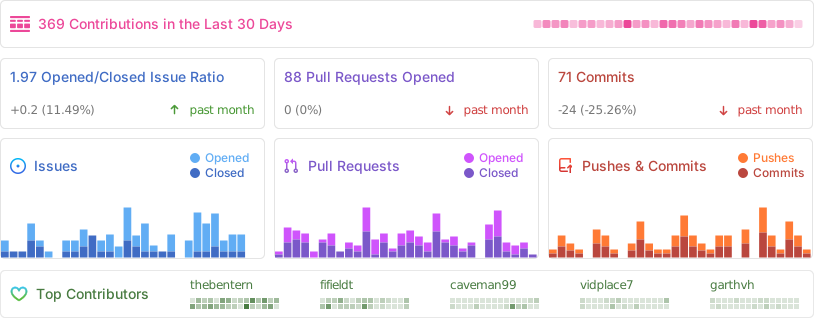
Stats