Deluan Quintão
f853ca604a
Deluan Quintão
f853ca604a
* refactor(model): extract canonical 128-bit base62 id codec

* feat(model): generate random ids as canonical 128-bit base62 values

* feat(scanner): emit legacy PIDs in canonical base62 encoding

* feat(db): add id canonicalization transform for the uniform-ids migration

* feat(db): migrate all ids to canonical 128-bit base62 encoding

* fix(db): canonicalize ids in junction tables and JSON columns

* chore(jellyfin): update id-family notes for uniform canonical ids

* test(ids): harden codec input contract and migration edge coverage

* refactor(model): use log.Fatal for Encode128 contract guard per project convention

* fix(db): force full rescan after id migration for legacy PID configs

* test(db): guard id-column inventory against schema drift

* refactor(ids): compile-time Encode128 contract and unified column rewrite helper

* refactor(db): apply review feedback to id migration

Filter empty strings in collectColumn's SQL, reuse a prepared statement
for rewriteColumn updates, and clarify the legacy ID functions' comment
now that they emit the canonical encoding.

* feat(auth): split session and public-link JWT secrets, rotating sessions on id migration

* test(subsonic): initialize public token secret in helpers suite

The suite sets auth.TokenAuth directly instead of calling auth.Init, so the
new PublicTokenAuth was nil whenever Ginkgo's spec order ran a helpers spec
before any spec that calls auth.Init, panicking in publicurl.ImageURL.

* refactor(db): inline canonicalID into its only consumer, the uniform-ids migration

* refactor(model): rename Encode128/Decode128 to Encode/Decode

With every id now exactly 128 bits, the width suffix is redundant; the
package-qualified id.Encode/id.Decode carries the same information.

* test(db): make the id-columns guard classify JSON columns too

The guard only inspected columns named id/pid/*_id, so it could not see ids
embedded in JSON. Widen it to *_ids and to every JSON column, and drive the
"covered" set from a new embeddedIDColumns list instead of the inline calls
in the migration.

Every JSON column the schema has now carries a verdict. The four denormalized
caches -- media_file/album.participants, media_file/album.tags,
album.folder_ids and artist.similar_artists -- hold only artist, tag and
folder ids. Those all come from id.NewHash, whose 22-char base62 encoding of
a 128-bit MD5 is already in canonical range, so canonicalID is the identity
on them and the migration correctly leaves them alone. A new codec test pins
that invariant, since the exemptions depend on it.

Verified on a copy of a 727MB/96k-track production database: canonicalizing
those four columns changed zero rows, and artist, tag and folder ids were
themselves unchanged by the migration (only media_file ids moved, 95108 of
96666).

Navidrome Music Server 








Navidrome is an open source web-based music collection server and streamer. It gives you freedom to listen to your music collection from any browser or mobile device. It's like your personal Spotify!
Note: The master branch may be in an unstable or even broken state during development.
Please use releases instead of
the master branch in order to get a stable set of binaries.
Check out our Live Demo!
Any feedback is welcome! If you need/want a new feature, find a bug or think of any way to improve Navidrome, please file a GitHub issue or join the discussion in our Subreddit. If you want to contribute to the project in any other way (ui/backend dev, translations, themes), please join the chat in our Discord server.
Installation
See instructions on the project's website
Cloud Hosting
PikaPods has partnered with us to offer you an officially supported, cloud-hosted solution. A share of the revenue helps fund the development of Navidrome at no additional cost for you.

Features
- Handles very large music collections
- Streams virtually any audio format available
- Reads and uses all your beautifully curated metadata
- Great support for compilations (Various Artists albums) and box sets (multi-disc albums)
- Multi-user, each user has their own play counts, playlists, favourites, etc...
- Very low resource usage
- Multi-platform, runs on macOS, Linux and Windows. Docker images are also provided
- Ready to use binaries for all major platforms, including Raspberry Pi
- Automatically monitors your library for changes, importing new files and reloading new metadata
- Supports lyrics from sidecar .ttml, .yaml/.yml Lyricsfile, .elrc, .lrc, .srt, .txt files and embedded TTML, Enhanced LRC, LRC, SRT, and plain-text tags (via
lyricspriority) - Themeable, modern and responsive Web interface based on Material UI
- Compatible with all Subsonic/Madsonic/Airsonic clients
- Transcoding on the fly. Can be set per user/player. Opus encoding is supported
- Translated to various languages
Translations
Navidrome uses POEditor for translations, and we are always looking for more contributors
Documentation
All documentation can be found in the project's website: https://www.navidrome.org/docs. Here are some useful direct links:
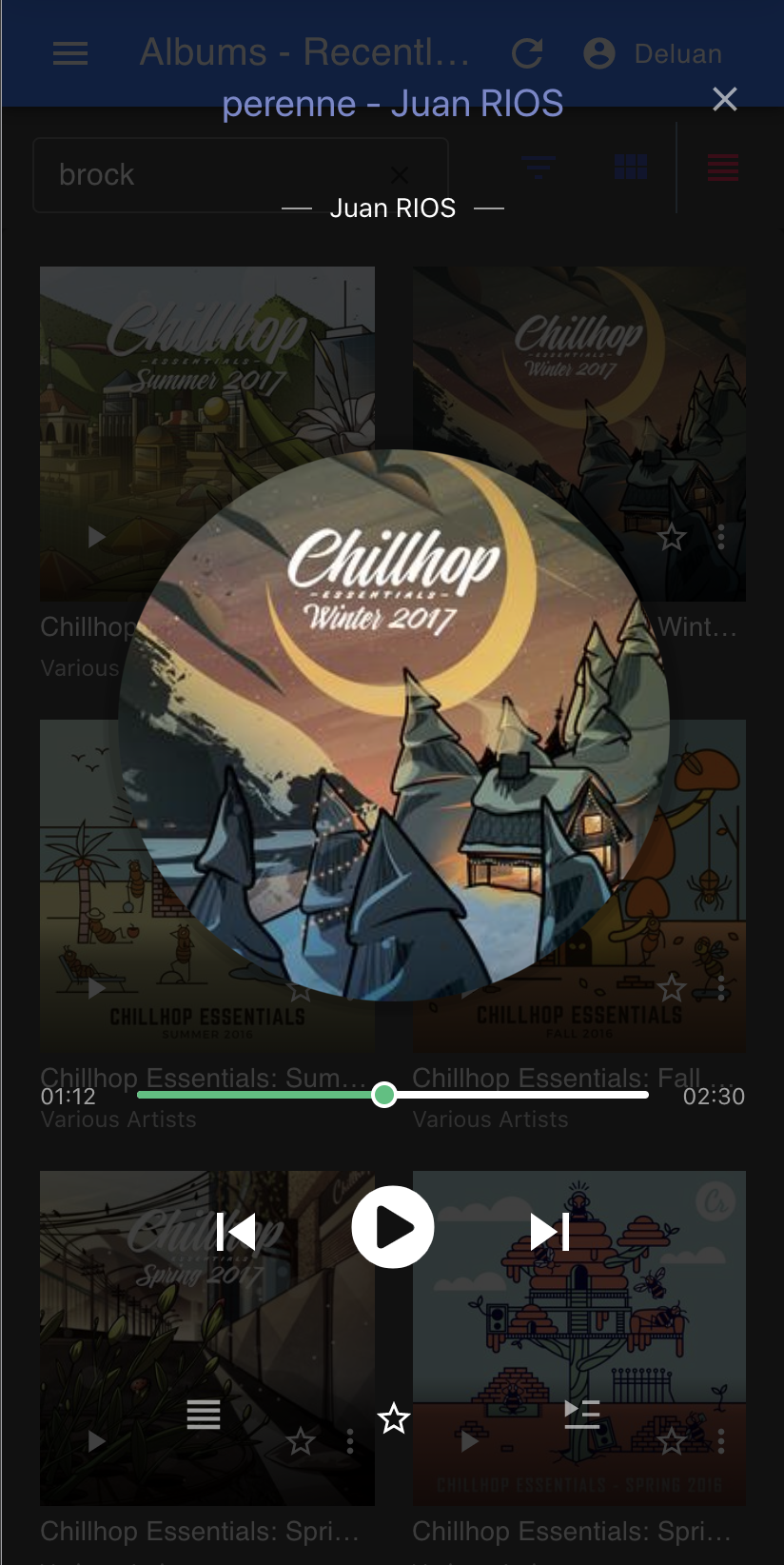
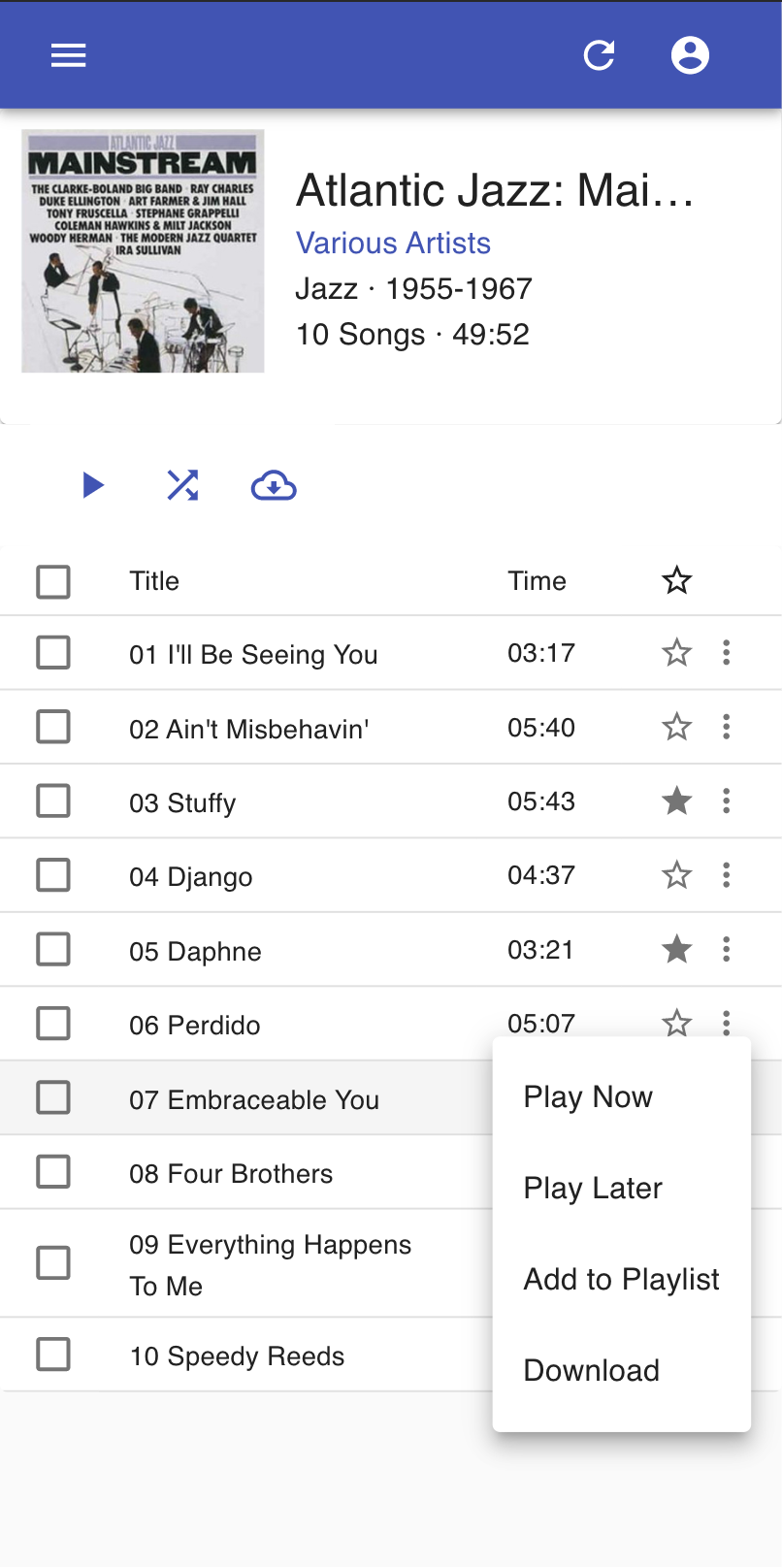
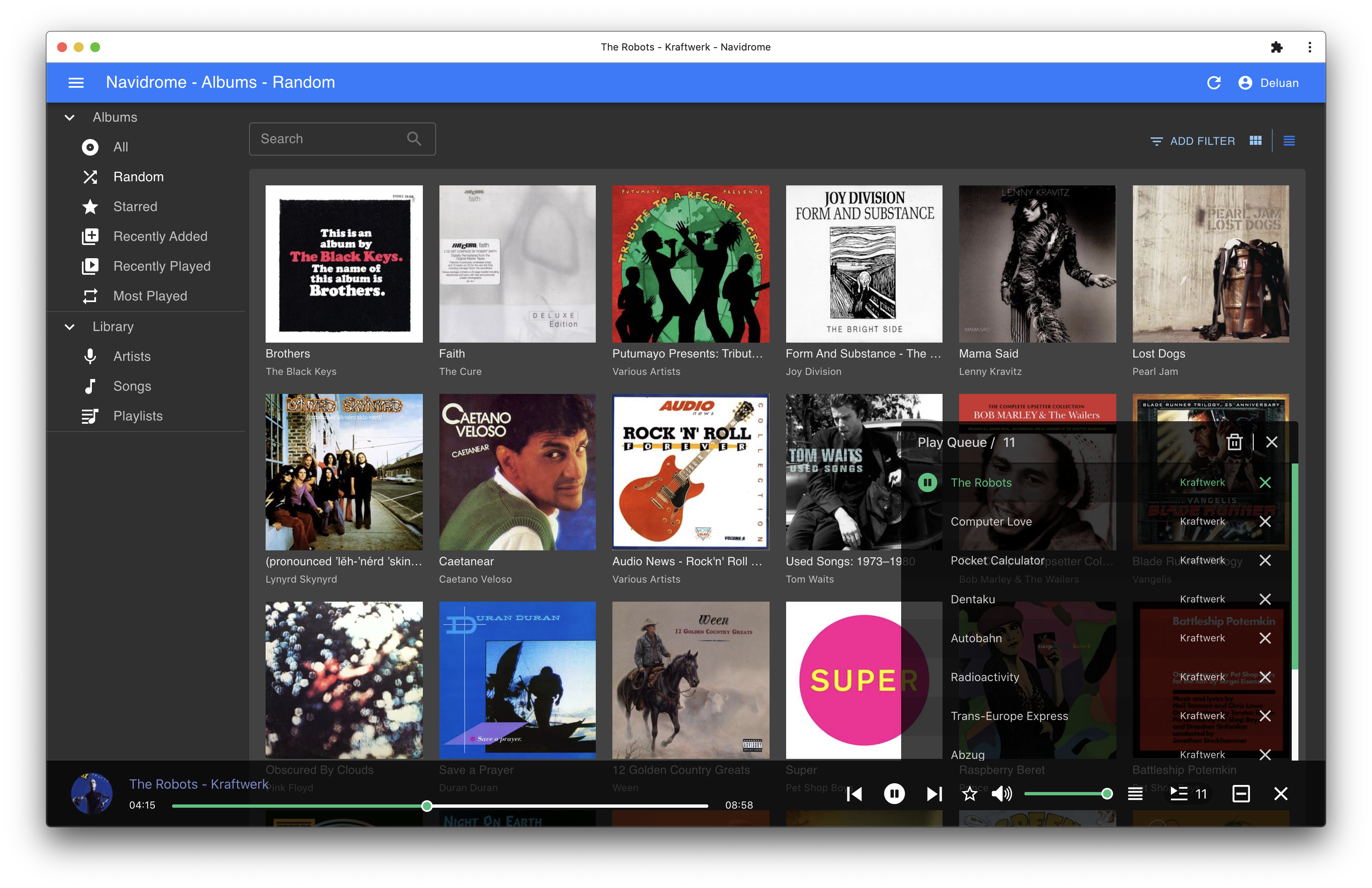
Screenshots