mirror of
https://github.com/fastapi/fastapi.git
synced 2025-12-25 15:18:36 -05:00
Compare commits
66 Commits
| Author | SHA1 | Date | |
|---|---|---|---|

|
a0209a0d2c | ||
|
|
099aab79e6 | ||
|
|
7dc5b94d45 | ||
|
|
684c0077cc | ||
|
|
75d8a6b5c2 | ||
|
|
96fdfc53cc | ||
|
|
49517d3310 | ||
|
|
9355cc4eaa | ||
|
|
1ce59152e7 | ||
|
|
1241f7f0b7 | ||
|
|
fd74c0f6a4 | ||
|
|
e4eac12c34 | ||
|
|
b235653a6c | ||
|
|
4cb4bdb984 | ||
|
|
ba596152d9 | ||
|
|
a1227624c8 | ||
|
|
9ce1ae771c | ||
|
|
b9fed9b485 | ||
|
|
0d97e1f97d | ||
|
|
1ce7258a01 | ||
|
|
bcd06fdfdf | ||
|
|
fc35b7d18d | ||
|
|
8c12ab0d5b | ||
|
|
38194a29bc | ||
|
|
6b65de6033 | ||
|
|
f80230d654 | ||
|
|
f6cc418d79 | ||
|
|
3ce9407093 | ||
|
|
ef1716c39e | ||
|
|
9ab7da6562 | ||
|
|
fcfff5e8e5 | ||
|
|
67ef62a4dd | ||
|
|
7741635b3b | ||
|
|
3d81bc638b | ||
|
|
c1801738b0 | ||
|
|
ba84f167f5 | ||
|
|
0a38c51b9e | ||
|
|
db5b2bdf56 | ||
|
|
5ac84120b3 | ||
|
|
2d296c5d07 | ||
|
|
71c96d9eb9 | ||
|
|
5342a0a00f | ||
|
|
163b086f21 | ||
|
|
0876d3df1d | ||
|
|
50baf5e804 | ||
|
|
3d6da2c32d | ||
|
|
e721d04350 | ||
|
|
8cc6f9baac | ||
|
|
dfd453e001 | ||
|
|
7e9d5aacf8 | ||
|
|
d27a218bc3 | ||
|
|
0c4ded88fe | ||
|
|
0e0931d308 | ||
|
|
dcfa9eb8fe | ||
|
|
6ebf60b175 | ||
|
|
a4d0724a97 | ||
|
|
c235e9b78c | ||
|
|
5fa3e239db | ||
|
|
3d1b107d70 | ||
|
|
18e0828daf | ||
|
|
f16c7729bd | ||
|
|
9f3c8cd139 | ||
|
|
a7a35aee61 | ||
|
|
dc5a966548 | ||
|
|
ea8d7f689e | ||
|
|
0ed6c92341 |
2
.github/workflows/build-docs.yml
vendored
2
.github/workflows/build-docs.yml
vendored
@@ -4,7 +4,7 @@ on:
|
||||
pull_request:
|
||||
types: [opened, synchronize]
|
||||
jobs:
|
||||
build:
|
||||
build-docs:
|
||||
runs-on: ubuntu-18.04
|
||||
steps:
|
||||
- name: Dump GitHub context
|
||||
|
||||
15
.github/workflows/latest-changes.yml
vendored
15
.github/workflows/latest-changes.yml
vendored
@@ -11,12 +11,27 @@ on:
|
||||
number:
|
||||
description: PR number
|
||||
required: true
|
||||
debug_enabled:
|
||||
description: 'Run the build with tmate debugging enabled (https://github.com/marketplace/actions/debugging-with-tmate)'
|
||||
required: false
|
||||
default: false
|
||||
|
||||
jobs:
|
||||
latest-changes:
|
||||
runs-on: ubuntu-latest
|
||||
steps:
|
||||
- uses: actions/checkout@v2
|
||||
with:
|
||||
# To allow latest-changes to commit to master
|
||||
token: ${{ secrets.ACTIONS_TOKEN }}
|
||||
# Allow debugging with tmate
|
||||
- name: Setup tmate session
|
||||
uses: mxschmitt/action-tmate@v3
|
||||
if: ${{ github.event_name == 'workflow_dispatch' && github.event.inputs.debug_enabled }}
|
||||
with:
|
||||
limit-access-to-actor: true
|
||||
token: ${{ secrets.ACTIONS_TOKEN }}
|
||||
standard_token: ${{ secrets.GITHUB_TOKEN }}
|
||||
- uses: docker://tiangolo/latest-changes:0.0.3
|
||||
with:
|
||||
token: ${{ secrets.GITHUB_TOKEN }}
|
||||
|
||||
2
.github/workflows/preview-docs.yml
vendored
2
.github/workflows/preview-docs.yml
vendored
@@ -7,7 +7,7 @@ on:
|
||||
- completed
|
||||
|
||||
jobs:
|
||||
deploy:
|
||||
preview-docs:
|
||||
runs-on: ubuntu-latest
|
||||
steps:
|
||||
- uses: actions/checkout@v2
|
||||
|
||||
467
docs/de/docs/index.md
Normal file
467
docs/de/docs/index.md
Normal file
@@ -0,0 +1,467 @@
|
||||
|
||||
{!../../../docs/missing-translation.md!}
|
||||
|
||||
|
||||
<p align="center">
|
||||
<a href="https://fastapi.tiangolo.com"><img src="https://fastapi.tiangolo.com/img/logo-margin/logo-teal.png" alt="FastAPI"></a>
|
||||
</p>
|
||||
<p align="center">
|
||||
<em>FastAPI framework, high performance, easy to learn, fast to code, ready for production</em>
|
||||
</p>
|
||||
<p align="center">
|
||||
<a href="https://github.com/tiangolo/fastapi/actions?query=workflow%3ATest" target="_blank">
|
||||
<img src="https://github.com/tiangolo/fastapi/workflows/Test/badge.svg" alt="Test">
|
||||
</a>
|
||||
<a href="https://codecov.io/gh/tiangolo/fastapi" target="_blank">
|
||||
<img src="https://img.shields.io/codecov/c/github/tiangolo/fastapi?color=%2334D058" alt="Coverage">
|
||||
</a>
|
||||
<a href="https://pypi.org/project/fastapi" target="_blank">
|
||||
<img src="https://img.shields.io/pypi/v/fastapi?color=%2334D058&label=pypi%20package" alt="Package version">
|
||||
</a>
|
||||
</p>
|
||||
|
||||
---
|
||||
|
||||
**Documentation**: <a href="https://fastapi.tiangolo.com" target="_blank">https://fastapi.tiangolo.com</a>
|
||||
|
||||
**Source Code**: <a href="https://github.com/tiangolo/fastapi" target="_blank">https://github.com/tiangolo/fastapi</a>
|
||||
|
||||
---
|
||||
|
||||
FastAPI is a modern, fast (high-performance), web framework for building APIs with Python 3.6+ based on standard Python type hints.
|
||||
|
||||
The key features are:
|
||||
|
||||
* **Fast**: Very high performance, on par with **NodeJS** and **Go** (thanks to Starlette and Pydantic). [One of the fastest Python frameworks available](#performance).
|
||||
|
||||
* **Fast to code**: Increase the speed to develop features by about 200% to 300%. *
|
||||
* **Fewer bugs**: Reduce about 40% of human (developer) induced errors. *
|
||||
* **Intuitive**: Great editor support. <abbr title="also known as auto-complete, autocompletion, IntelliSense">Completion</abbr> everywhere. Less time debugging.
|
||||
* **Easy**: Designed to be easy to use and learn. Less time reading docs.
|
||||
* **Short**: Minimize code duplication. Multiple features from each parameter declaration. Fewer bugs.
|
||||
* **Robust**: Get production-ready code. With automatic interactive documentation.
|
||||
* **Standards-based**: Based on (and fully compatible with) the open standards for APIs: <a href="https://github.com/OAI/OpenAPI-Specification" class="external-link" target="_blank">OpenAPI</a> (previously known as Swagger) and <a href="https://json-schema.org/" class="external-link" target="_blank">JSON Schema</a>.
|
||||
|
||||
<small>* estimation based on tests on an internal development team, building production applications.</small>
|
||||
|
||||
## Sponsors
|
||||
|
||||
<!-- sponsors -->
|
||||
|
||||
{% if sponsors %}
|
||||
{% for sponsor in sponsors.gold -%}
|
||||
<a href="{{ sponsor.url }}" target="_blank" title="{{ sponsor.title }}"><img src="{{ sponsor.img }}" style="border-radius:15px"></a>
|
||||
{% endfor -%}
|
||||
{%- for sponsor in sponsors.silver -%}
|
||||
<a href="{{ sponsor.url }}" target="_blank" title="{{ sponsor.title }}"><img src="{{ sponsor.img }}" style="border-radius:15px"></a>
|
||||
{% endfor %}
|
||||
{% endif %}
|
||||
|
||||
<!-- /sponsors -->
|
||||
|
||||
<a href="https://fastapi.tiangolo.com/fastapi-people/#sponsors" class="external-link" target="_blank">Other sponsors</a>
|
||||
|
||||
## Opinions
|
||||
|
||||
"_[...] I'm using **FastAPI** a ton these days. [...] I'm actually planning to use it for all of my team's **ML services at Microsoft**. Some of them are getting integrated into the core **Windows** product and some **Office** products._"
|
||||
|
||||
<div style="text-align: right; margin-right: 10%;">Kabir Khan - <strong>Microsoft</strong> <a href="https://github.com/tiangolo/fastapi/pull/26" target="_blank"><small>(ref)</small></a></div>
|
||||
|
||||
---
|
||||
|
||||
"_We adopted the **FastAPI** library to spawn a **REST** server that can be queried to obtain **predictions**. [for Ludwig]_"
|
||||
|
||||
<div style="text-align: right; margin-right: 10%;">Piero Molino, Yaroslav Dudin, and Sai Sumanth Miryala - <strong>Uber</strong> <a href="https://eng.uber.com/ludwig-v0-2/" target="_blank"><small>(ref)</small></a></div>
|
||||
|
||||
---
|
||||
|
||||
"_**Netflix** is pleased to announce the open-source release of our **crisis management** orchestration framework: **Dispatch**! [built with **FastAPI**]_"
|
||||
|
||||
<div style="text-align: right; margin-right: 10%;">Kevin Glisson, Marc Vilanova, Forest Monsen - <strong>Netflix</strong> <a href="https://netflixtechblog.com/introducing-dispatch-da4b8a2a8072" target="_blank"><small>(ref)</small></a></div>
|
||||
|
||||
---
|
||||
|
||||
"_I’m over the moon excited about **FastAPI**. It’s so fun!_"
|
||||
|
||||
<div style="text-align: right; margin-right: 10%;">Brian Okken - <strong><a href="https://pythonbytes.fm/episodes/show/123/time-to-right-the-py-wrongs?time_in_sec=855" target="_blank">Python Bytes</a> podcast host</strong> <a href="https://twitter.com/brianokken/status/1112220079972728832" target="_blank"><small>(ref)</small></a></div>
|
||||
|
||||
---
|
||||
|
||||
"_Honestly, what you've built looks super solid and polished. In many ways, it's what I wanted **Hug** to be - it's really inspiring to see someone build that._"
|
||||
|
||||
<div style="text-align: right; margin-right: 10%;">Timothy Crosley - <strong><a href="https://www.hug.rest/" target="_blank">Hug</a> creator</strong> <a href="https://news.ycombinator.com/item?id=19455465" target="_blank"><small>(ref)</small></a></div>
|
||||
|
||||
---
|
||||
|
||||
"_If you're looking to learn one **modern framework** for building REST APIs, check out **FastAPI** [...] It's fast, easy to use and easy to learn [...]_"
|
||||
|
||||
"_We've switched over to **FastAPI** for our **APIs** [...] I think you'll like it [...]_"
|
||||
|
||||
<div style="text-align: right; margin-right: 10%;">Ines Montani - Matthew Honnibal - <strong><a href="https://explosion.ai" target="_blank">Explosion AI</a> founders - <a href="https://spacy.io" target="_blank">spaCy</a> creators</strong> <a href="https://twitter.com/_inesmontani/status/1144173225322143744" target="_blank"><small>(ref)</small></a> - <a href="https://twitter.com/honnibal/status/1144031421859655680" target="_blank"><small>(ref)</small></a></div>
|
||||
|
||||
---
|
||||
|
||||
## **Typer**, the FastAPI of CLIs
|
||||
|
||||
<a href="https://typer.tiangolo.com" target="_blank"><img src="https://typer.tiangolo.com/img/logo-margin/logo-margin-vector.svg" style="width: 20%;"></a>
|
||||
|
||||
If you are building a <abbr title="Command Line Interface">CLI</abbr> app to be used in the terminal instead of a web API, check out <a href="https://typer.tiangolo.com/" class="external-link" target="_blank">**Typer**</a>.
|
||||
|
||||
**Typer** is FastAPI's little sibling. And it's intended to be the **FastAPI of CLIs**. ⌨️ 🚀
|
||||
|
||||
## Requirements
|
||||
|
||||
Python 3.6+
|
||||
|
||||
FastAPI stands on the shoulders of giants:
|
||||
|
||||
* <a href="https://www.starlette.io/" class="external-link" target="_blank">Starlette</a> for the web parts.
|
||||
* <a href="https://pydantic-docs.helpmanual.io/" class="external-link" target="_blank">Pydantic</a> for the data parts.
|
||||
|
||||
## Installation
|
||||
|
||||
<div class="termy">
|
||||
|
||||
```console
|
||||
$ pip install fastapi
|
||||
|
||||
---> 100%
|
||||
```
|
||||
|
||||
</div>
|
||||
|
||||
You will also need an ASGI server, for production such as <a href="https://www.uvicorn.org" class="external-link" target="_blank">Uvicorn</a> or <a href="https://gitlab.com/pgjones/hypercorn" class="external-link" target="_blank">Hypercorn</a>.
|
||||
|
||||
<div class="termy">
|
||||
|
||||
```console
|
||||
$ pip install uvicorn[standard]
|
||||
|
||||
---> 100%
|
||||
```
|
||||
|
||||
</div>
|
||||
|
||||
## Example
|
||||
|
||||
### Create it
|
||||
|
||||
* Create a file `main.py` with:
|
||||
|
||||
```Python
|
||||
from typing import Optional
|
||||
|
||||
from fastapi import FastAPI
|
||||
|
||||
app = FastAPI()
|
||||
|
||||
|
||||
@app.get("/")
|
||||
def read_root():
|
||||
return {"Hello": "World"}
|
||||
|
||||
|
||||
@app.get("/items/{item_id}")
|
||||
def read_item(item_id: int, q: Optional[str] = None):
|
||||
return {"item_id": item_id, "q": q}
|
||||
```
|
||||
|
||||
<details markdown="1">
|
||||
<summary>Or use <code>async def</code>...</summary>
|
||||
|
||||
If your code uses `async` / `await`, use `async def`:
|
||||
|
||||
```Python hl_lines="9 14"
|
||||
from typing import Optional
|
||||
|
||||
from fastapi import FastAPI
|
||||
|
||||
app = FastAPI()
|
||||
|
||||
|
||||
@app.get("/")
|
||||
async def read_root():
|
||||
return {"Hello": "World"}
|
||||
|
||||
|
||||
@app.get("/items/{item_id}")
|
||||
async def read_item(item_id: int, q: Optional[str] = None):
|
||||
return {"item_id": item_id, "q": q}
|
||||
```
|
||||
|
||||
**Note**:
|
||||
|
||||
If you don't know, check the _"In a hurry?"_ section about <a href="https://fastapi.tiangolo.com/async/#in-a-hurry" target="_blank">`async` and `await` in the docs</a>.
|
||||
|
||||
</details>
|
||||
|
||||
### Run it
|
||||
|
||||
Run the server with:
|
||||
|
||||
<div class="termy">
|
||||
|
||||
```console
|
||||
$ uvicorn main:app --reload
|
||||
|
||||
INFO: Uvicorn running on http://127.0.0.1:8000 (Press CTRL+C to quit)
|
||||
INFO: Started reloader process [28720]
|
||||
INFO: Started server process [28722]
|
||||
INFO: Waiting for application startup.
|
||||
INFO: Application startup complete.
|
||||
```
|
||||
|
||||
</div>
|
||||
|
||||
<details markdown="1">
|
||||
<summary>About the command <code>uvicorn main:app --reload</code>...</summary>
|
||||
|
||||
The command `uvicorn main:app` refers to:
|
||||
|
||||
* `main`: the file `main.py` (the Python "module").
|
||||
* `app`: the object created inside of `main.py` with the line `app = FastAPI()`.
|
||||
* `--reload`: make the server restart after code changes. Only do this for development.
|
||||
|
||||
</details>
|
||||
|
||||
### Check it
|
||||
|
||||
Open your browser at <a href="http://127.0.0.1:8000/items/5?q=somequery" class="external-link" target="_blank">http://127.0.0.1:8000/items/5?q=somequery</a>.
|
||||
|
||||
You will see the JSON response as:
|
||||
|
||||
```JSON
|
||||
{"item_id": 5, "q": "somequery"}
|
||||
```
|
||||
|
||||
You already created an API that:
|
||||
|
||||
* Receives HTTP requests in the _paths_ `/` and `/items/{item_id}`.
|
||||
* Both _paths_ take `GET` <em>operations</em> (also known as HTTP _methods_).
|
||||
* The _path_ `/items/{item_id}` has a _path parameter_ `item_id` that should be an `int`.
|
||||
* The _path_ `/items/{item_id}` has an optional `str` _query parameter_ `q`.
|
||||
|
||||
### Interactive API docs
|
||||
|
||||
Now go to <a href="http://127.0.0.1:8000/docs" class="external-link" target="_blank">http://127.0.0.1:8000/docs</a>.
|
||||
|
||||
You will see the automatic interactive API documentation (provided by <a href="https://github.com/swagger-api/swagger-ui" class="external-link" target="_blank">Swagger UI</a>):
|
||||
|
||||
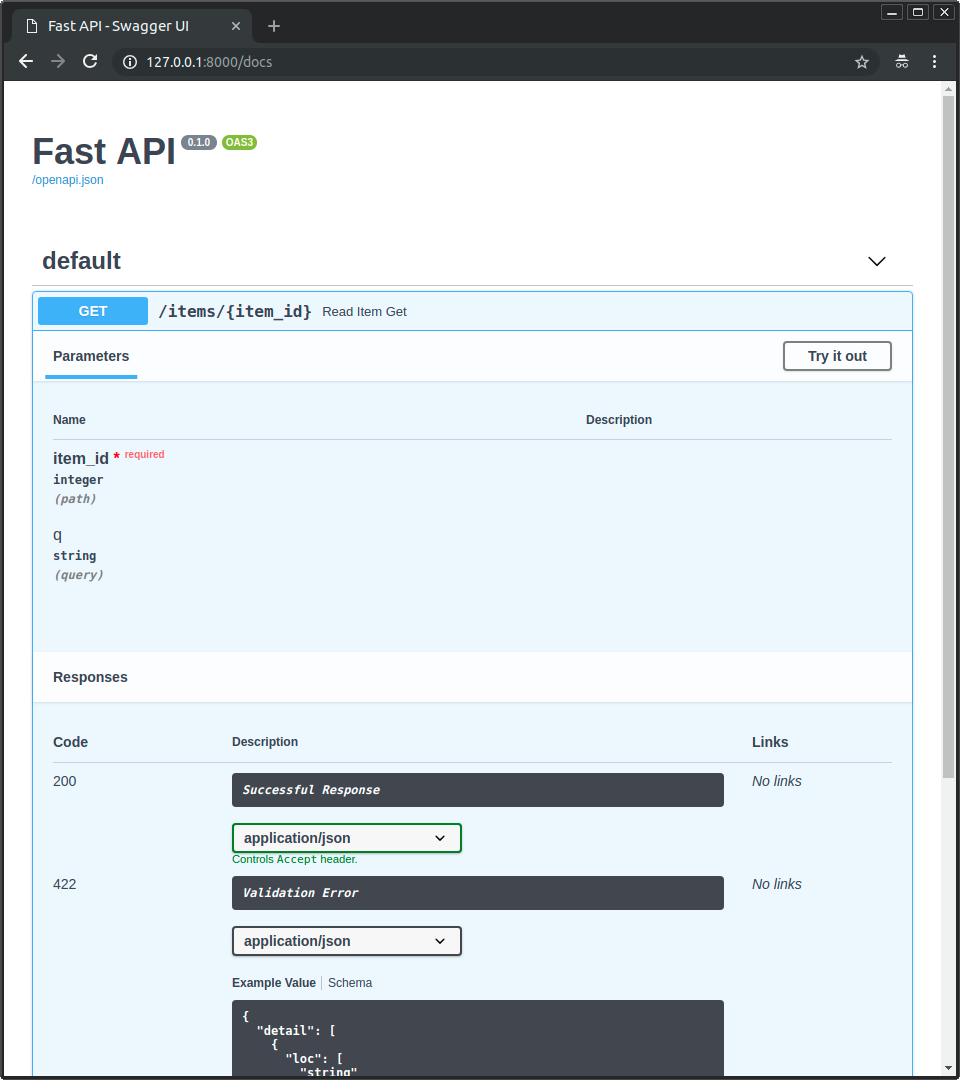
|
||||
|
||||
### Alternative API docs
|
||||
|
||||
And now, go to <a href="http://127.0.0.1:8000/redoc" class="external-link" target="_blank">http://127.0.0.1:8000/redoc</a>.
|
||||
|
||||
You will see the alternative automatic documentation (provided by <a href="https://github.com/Rebilly/ReDoc" class="external-link" target="_blank">ReDoc</a>):
|
||||
|
||||
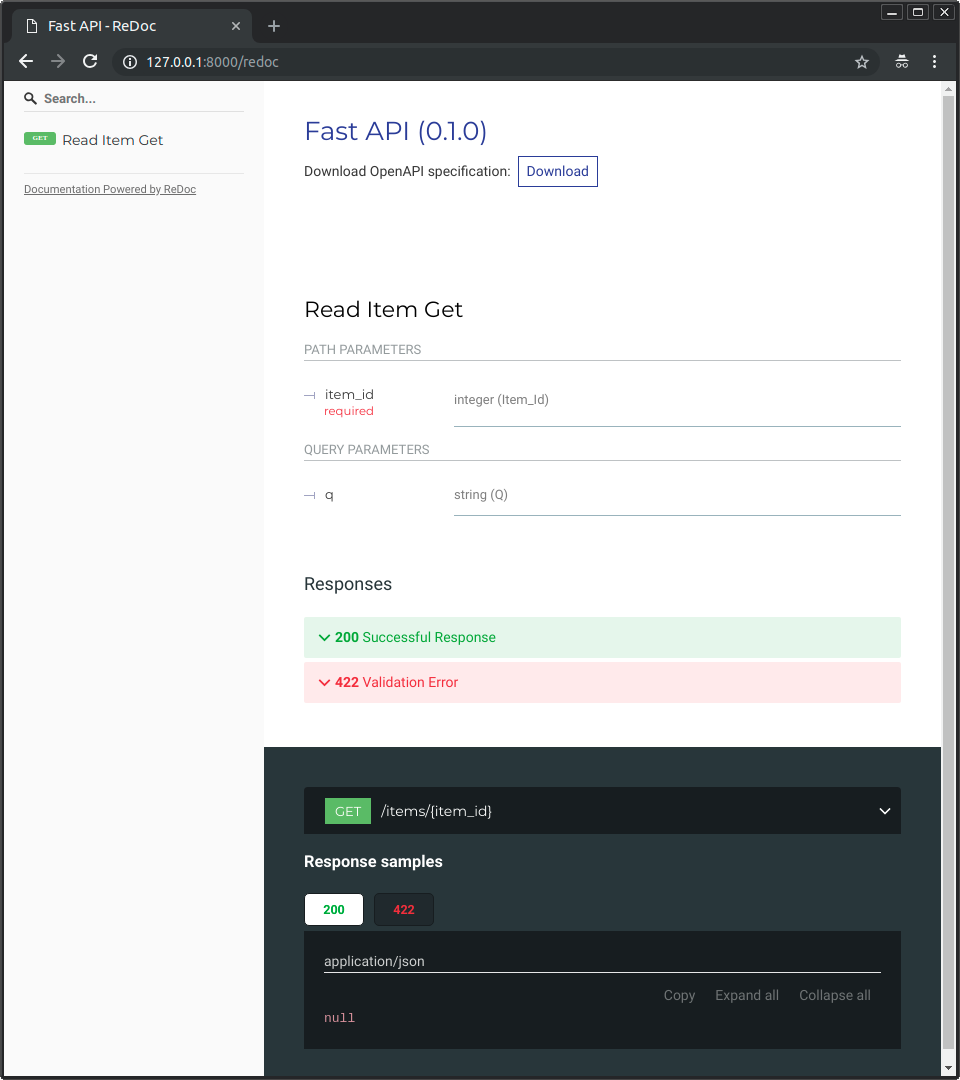
|
||||
|
||||
## Example upgrade
|
||||
|
||||
Now modify the file `main.py` to receive a body from a `PUT` request.
|
||||
|
||||
Declare the body using standard Python types, thanks to Pydantic.
|
||||
|
||||
```Python hl_lines="4 9-12 25-27"
|
||||
from typing import Optional
|
||||
|
||||
from fastapi import FastAPI
|
||||
from pydantic import BaseModel
|
||||
|
||||
app = FastAPI()
|
||||
|
||||
|
||||
class Item(BaseModel):
|
||||
name: str
|
||||
price: float
|
||||
is_offer: Optional[bool] = None
|
||||
|
||||
|
||||
@app.get("/")
|
||||
def read_root():
|
||||
return {"Hello": "World"}
|
||||
|
||||
|
||||
@app.get("/items/{item_id}")
|
||||
def read_item(item_id: int, q: Optional[str] = None):
|
||||
return {"item_id": item_id, "q": q}
|
||||
|
||||
|
||||
@app.put("/items/{item_id}")
|
||||
def update_item(item_id: int, item: Item):
|
||||
return {"item_name": item.name, "item_id": item_id}
|
||||
```
|
||||
|
||||
The server should reload automatically (because you added `--reload` to the `uvicorn` command above).
|
||||
|
||||
### Interactive API docs upgrade
|
||||
|
||||
Now go to <a href="http://127.0.0.1:8000/docs" class="external-link" target="_blank">http://127.0.0.1:8000/docs</a>.
|
||||
|
||||
* The interactive API documentation will be automatically updated, including the new body:
|
||||
|
||||
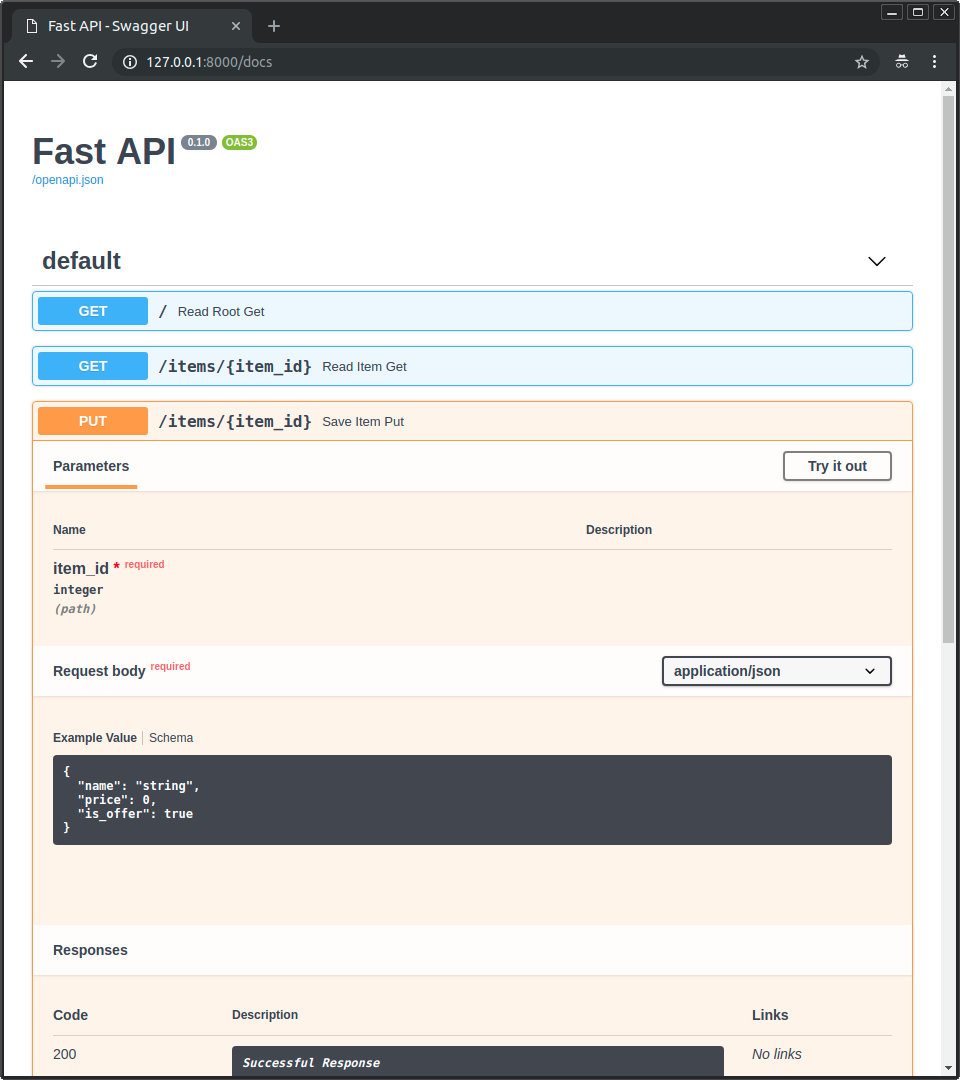
|
||||
|
||||
* Click on the button "Try it out", it allows you to fill the parameters and directly interact with the API:
|
||||
|
||||
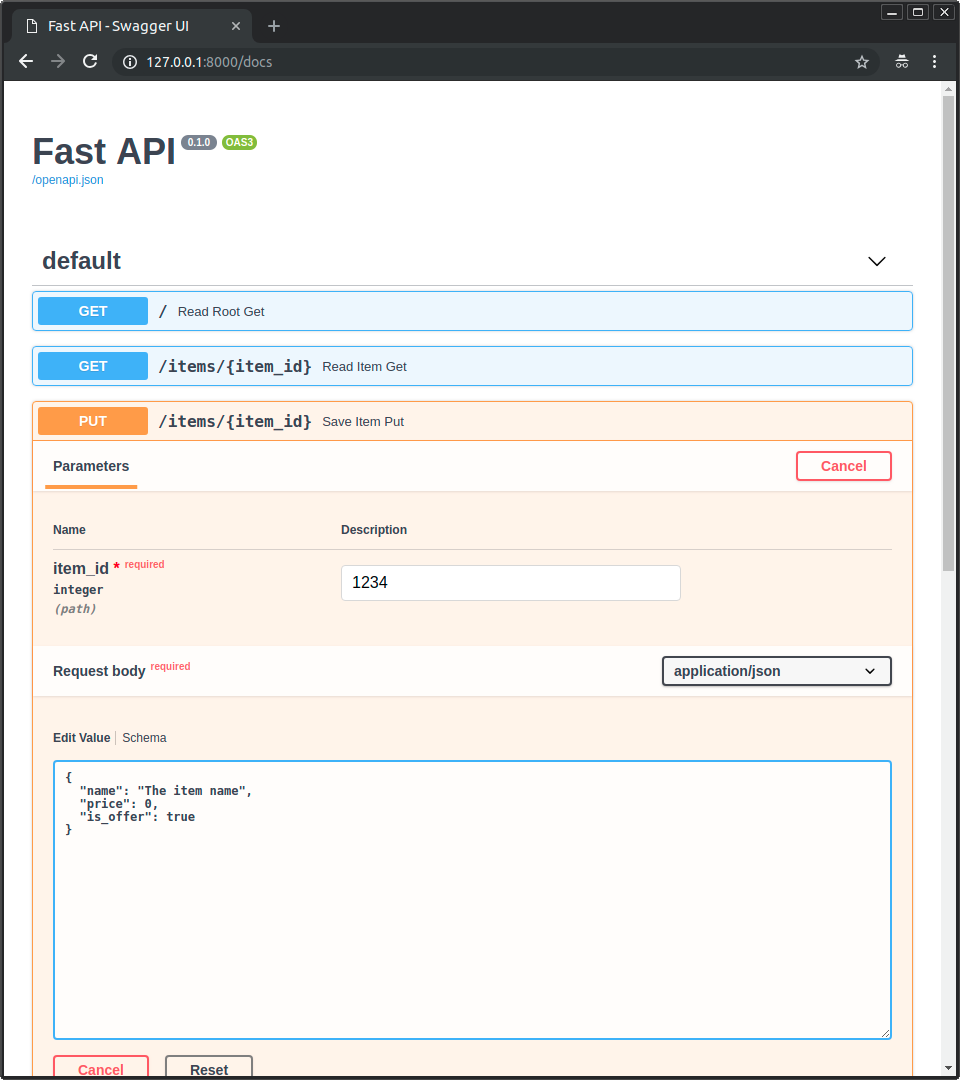
|
||||
|
||||
* Then click on the "Execute" button, the user interface will communicate with your API, send the parameters, get the results and show them on the screen:
|
||||
|
||||
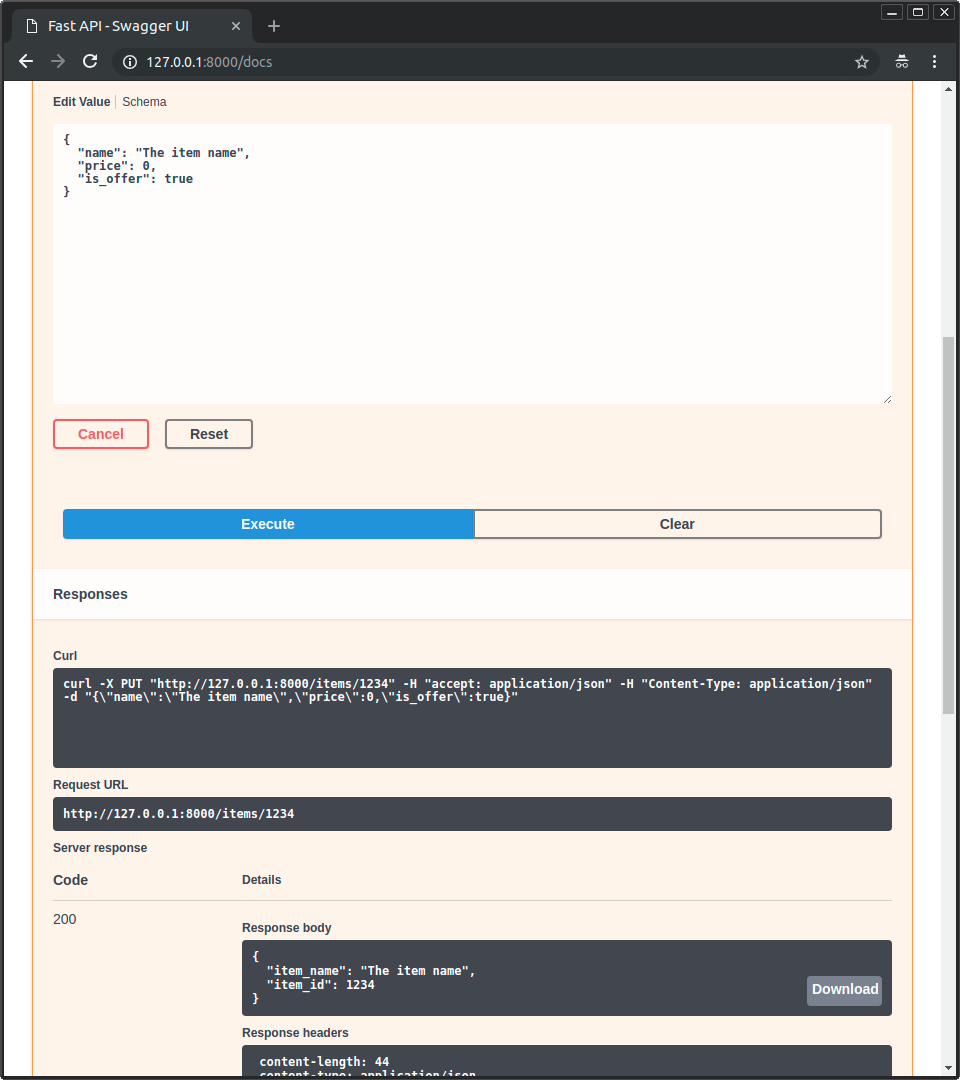
|
||||
|
||||
### Alternative API docs upgrade
|
||||
|
||||
And now, go to <a href="http://127.0.0.1:8000/redoc" class="external-link" target="_blank">http://127.0.0.1:8000/redoc</a>.
|
||||
|
||||
* The alternative documentation will also reflect the new query parameter and body:
|
||||
|
||||
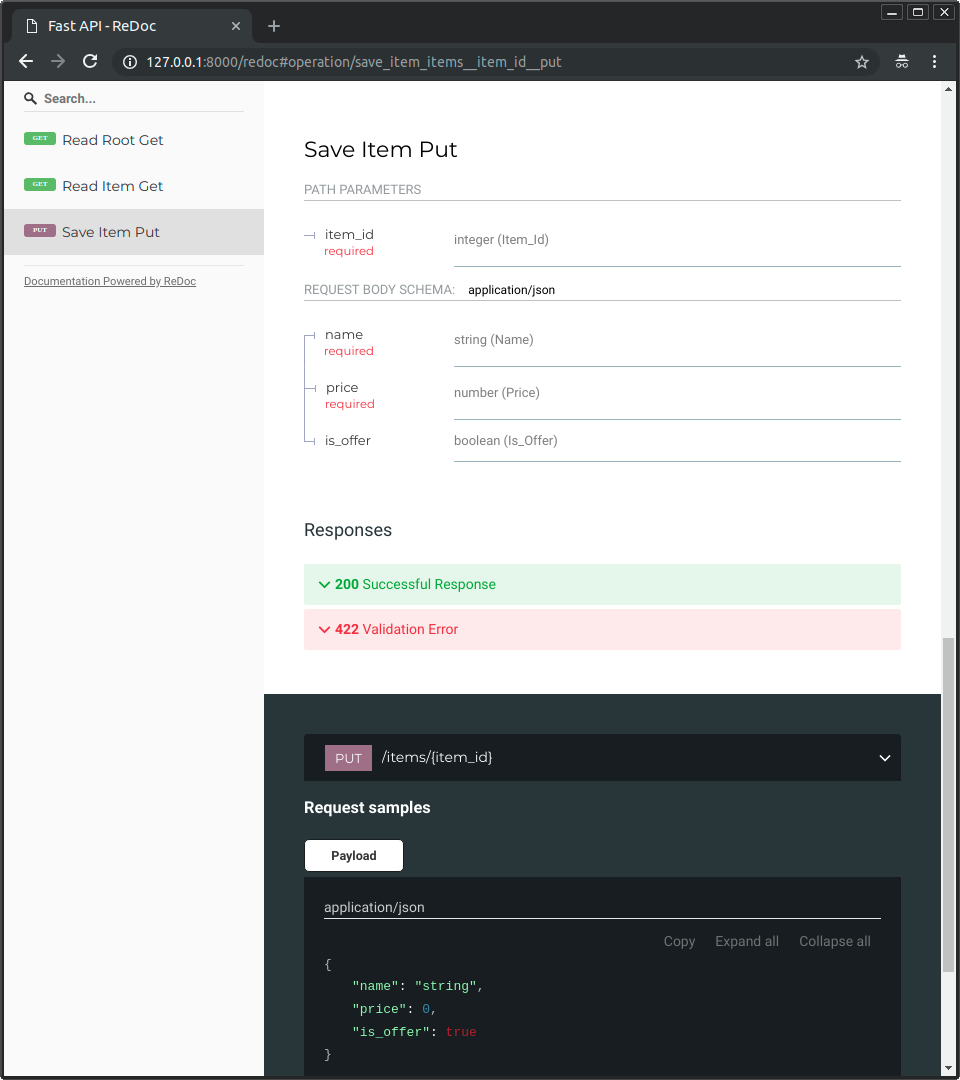
|
||||
|
||||
### Recap
|
||||
|
||||
In summary, you declare **once** the types of parameters, body, etc. as function parameters.
|
||||
|
||||
You do that with standard modern Python types.
|
||||
|
||||
You don't have to learn a new syntax, the methods or classes of a specific library, etc.
|
||||
|
||||
Just standard **Python 3.6+**.
|
||||
|
||||
For example, for an `int`:
|
||||
|
||||
```Python
|
||||
item_id: int
|
||||
```
|
||||
|
||||
or for a more complex `Item` model:
|
||||
|
||||
```Python
|
||||
item: Item
|
||||
```
|
||||
|
||||
...and with that single declaration you get:
|
||||
|
||||
* Editor support, including:
|
||||
* Completion.
|
||||
* Type checks.
|
||||
* Validation of data:
|
||||
* Automatic and clear errors when the data is invalid.
|
||||
* Validation even for deeply nested JSON objects.
|
||||
* <abbr title="also known as: serialization, parsing, marshalling">Conversion</abbr> of input data: coming from the network to Python data and types. Reading from:
|
||||
* JSON.
|
||||
* Path parameters.
|
||||
* Query parameters.
|
||||
* Cookies.
|
||||
* Headers.
|
||||
* Forms.
|
||||
* Files.
|
||||
* <abbr title="also known as: serialization, parsing, marshalling">Conversion</abbr> of output data: converting from Python data and types to network data (as JSON):
|
||||
* Convert Python types (`str`, `int`, `float`, `bool`, `list`, etc).
|
||||
* `datetime` objects.
|
||||
* `UUID` objects.
|
||||
* Database models.
|
||||
* ...and many more.
|
||||
* Automatic interactive API documentation, including 2 alternative user interfaces:
|
||||
* Swagger UI.
|
||||
* ReDoc.
|
||||
|
||||
---
|
||||
|
||||
Coming back to the previous code example, **FastAPI** will:
|
||||
|
||||
* Validate that there is an `item_id` in the path for `GET` and `PUT` requests.
|
||||
* Validate that the `item_id` is of type `int` for `GET` and `PUT` requests.
|
||||
* If it is not, the client will see a useful, clear error.
|
||||
* Check if there is an optional query parameter named `q` (as in `http://127.0.0.1:8000/items/foo?q=somequery`) for `GET` requests.
|
||||
* As the `q` parameter is declared with `= None`, it is optional.
|
||||
* Without the `None` it would be required (as is the body in the case with `PUT`).
|
||||
* For `PUT` requests to `/items/{item_id}`, Read the body as JSON:
|
||||
* Check that it has a required attribute `name` that should be a `str`.
|
||||
* Check that it has a required attribute `price` that has to be a `float`.
|
||||
* Check that it has an optional attribute `is_offer`, that should be a `bool`, if present.
|
||||
* All this would also work for deeply nested JSON objects.
|
||||
* Convert from and to JSON automatically.
|
||||
* Document everything with OpenAPI, that can be used by:
|
||||
* Interactive documentation systems.
|
||||
* Automatic client code generation systems, for many languages.
|
||||
* Provide 2 interactive documentation web interfaces directly.
|
||||
|
||||
---
|
||||
|
||||
We just scratched the surface, but you already get the idea of how it all works.
|
||||
|
||||
Try changing the line with:
|
||||
|
||||
```Python
|
||||
return {"item_name": item.name, "item_id": item_id}
|
||||
```
|
||||
|
||||
...from:
|
||||
|
||||
```Python
|
||||
... "item_name": item.name ...
|
||||
```
|
||||
|
||||
...to:
|
||||
|
||||
```Python
|
||||
... "item_price": item.price ...
|
||||
```
|
||||
|
||||
...and see how your editor will auto-complete the attributes and know their types:
|
||||
|
||||
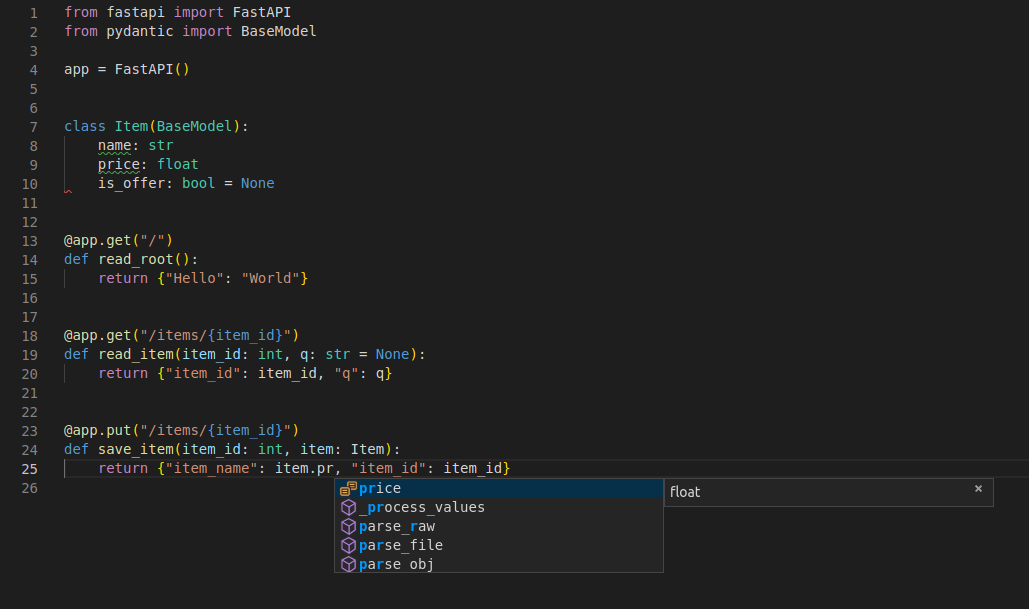
|
||||
|
||||
For a more complete example including more features, see the <a href="https://fastapi.tiangolo.com/tutorial/">Tutorial - User Guide</a>.
|
||||
|
||||
**Spoiler alert**: the tutorial - user guide includes:
|
||||
|
||||
* Declaration of **parameters** from other different places as: **headers**, **cookies**, **form fields** and **files**.
|
||||
* How to set **validation constraints** as `maximum_length` or `regex`.
|
||||
* A very powerful and easy to use **<abbr title="also known as components, resources, providers, services, injectables">Dependency Injection</abbr>** system.
|
||||
* Security and authentication, including support for **OAuth2** with **JWT tokens** and **HTTP Basic** auth.
|
||||
* More advanced (but equally easy) techniques for declaring **deeply nested JSON models** (thanks to Pydantic).
|
||||
* Many extra features (thanks to Starlette) as:
|
||||
* **WebSockets**
|
||||
* **GraphQL**
|
||||
* extremely easy tests based on `requests` and `pytest`
|
||||
* **CORS**
|
||||
* **Cookie Sessions**
|
||||
* ...and more.
|
||||
|
||||
## Performance
|
||||
|
||||
Independent TechEmpower benchmarks show **FastAPI** applications running under Uvicorn as <a href="https://www.techempower.com/benchmarks/#section=test&runid=7464e520-0dc2-473d-bd34-dbdfd7e85911&hw=ph&test=query&l=zijzen-7" class="external-link" target="_blank">one of the fastest Python frameworks available</a>, only below Starlette and Uvicorn themselves (used internally by FastAPI). (*)
|
||||
|
||||
To understand more about it, see the section <a href="https://fastapi.tiangolo.com/benchmarks/" class="internal-link" target="_blank">Benchmarks</a>.
|
||||
|
||||
## Optional Dependencies
|
||||
|
||||
Used by Pydantic:
|
||||
|
||||
* <a href="https://github.com/esnme/ultrajson" target="_blank"><code>ujson</code></a> - for faster JSON <abbr title="converting the string that comes from an HTTP request into Python data">"parsing"</abbr>.
|
||||
* <a href="https://github.com/JoshData/python-email-validator" target="_blank"><code>email_validator</code></a> - for email validation.
|
||||
|
||||
Used by Starlette:
|
||||
|
||||
* <a href="https://requests.readthedocs.io" target="_blank"><code>requests</code></a> - Required if you want to use the `TestClient`.
|
||||
* <a href="https://github.com/Tinche/aiofiles" target="_blank"><code>aiofiles</code></a> - Required if you want to use `FileResponse` or `StaticFiles`.
|
||||
* <a href="https://jinja.palletsprojects.com" target="_blank"><code>jinja2</code></a> - Required if you want to use the default template configuration.
|
||||
* <a href="https://andrew-d.github.io/python-multipart/" target="_blank"><code>python-multipart</code></a> - Required if you want to support form <abbr title="converting the string that comes from an HTTP request into Python data">"parsing"</abbr>, with `request.form()`.
|
||||
* <a href="https://pythonhosted.org/itsdangerous/" target="_blank"><code>itsdangerous</code></a> - Required for `SessionMiddleware` support.
|
||||
* <a href="https://pyyaml.org/wiki/PyYAMLDocumentation" target="_blank"><code>pyyaml</code></a> - Required for Starlette's `SchemaGenerator` support (you probably don't need it with FastAPI).
|
||||
* <a href="https://graphene-python.org/" target="_blank"><code>graphene</code></a> - Required for `GraphQLApp` support.
|
||||
* <a href="https://github.com/esnme/ultrajson" target="_blank"><code>ujson</code></a> - Required if you want to use `UJSONResponse`.
|
||||
|
||||
Used by FastAPI / Starlette:
|
||||
|
||||
* <a href="https://www.uvicorn.org" target="_blank"><code>uvicorn</code></a> - for the server that loads and serves your application.
|
||||
* <a href="https://github.com/ijl/orjson" target="_blank"><code>orjson</code></a> - Required if you want to use `ORJSONResponse`.
|
||||
|
||||
You can install all of these with `pip install fastapi[all]`.
|
||||
|
||||
## License
|
||||
|
||||
This project is licensed under the terms of the MIT license.
|
||||
125
docs/de/mkdocs.yml
Normal file
125
docs/de/mkdocs.yml
Normal file
@@ -0,0 +1,125 @@
|
||||
site_name: FastAPI
|
||||
site_description: FastAPI framework, high performance, easy to learn, fast to code, ready for production
|
||||
site_url: https://fastapi.tiangolo.com/de/
|
||||
theme:
|
||||
name: material
|
||||
custom_dir: overrides
|
||||
palette:
|
||||
- scheme: default
|
||||
primary: teal
|
||||
accent: amber
|
||||
toggle:
|
||||
icon: material/lightbulb-outline
|
||||
name: Switch to light mode
|
||||
- scheme: slate
|
||||
primary: teal
|
||||
accent: amber
|
||||
toggle:
|
||||
icon: material/lightbulb
|
||||
name: Switch to dark mode
|
||||
features:
|
||||
- search.suggest
|
||||
- search.highlight
|
||||
icon:
|
||||
repo: fontawesome/brands/github-alt
|
||||
logo: https://fastapi.tiangolo.com/img/icon-white.svg
|
||||
favicon: https://fastapi.tiangolo.com/img/favicon.png
|
||||
language: de
|
||||
repo_name: tiangolo/fastapi
|
||||
repo_url: https://github.com/tiangolo/fastapi
|
||||
edit_uri: ''
|
||||
google_analytics:
|
||||
- UA-133183413-1
|
||||
- auto
|
||||
plugins:
|
||||
- search
|
||||
- markdownextradata:
|
||||
data: data
|
||||
nav:
|
||||
- FastAPI: index.md
|
||||
- Languages:
|
||||
- en: /
|
||||
- de: /de/
|
||||
- es: /es/
|
||||
- fr: /fr/
|
||||
- id: /id/
|
||||
- it: /it/
|
||||
- ja: /ja/
|
||||
- ko: /ko/
|
||||
- pl: /pl/
|
||||
- pt: /pt/
|
||||
- ru: /ru/
|
||||
- sq: /sq/
|
||||
- tr: /tr/
|
||||
- uk: /uk/
|
||||
- zh: /zh/
|
||||
markdown_extensions:
|
||||
- toc:
|
||||
permalink: true
|
||||
- markdown.extensions.codehilite:
|
||||
guess_lang: false
|
||||
- markdown_include.include:
|
||||
base_path: docs
|
||||
- admonition
|
||||
- codehilite
|
||||
- extra
|
||||
- pymdownx.superfences:
|
||||
custom_fences:
|
||||
- name: mermaid
|
||||
class: mermaid
|
||||
format: !!python/name:pymdownx.superfences.fence_div_format ''
|
||||
- pymdownx.tabbed
|
||||
extra:
|
||||
social:
|
||||
- icon: fontawesome/brands/github-alt
|
||||
link: https://github.com/tiangolo/fastapi
|
||||
- icon: fontawesome/brands/discord
|
||||
link: https://discord.gg/VQjSZaeJmf
|
||||
- icon: fontawesome/brands/twitter
|
||||
link: https://twitter.com/tiangolo
|
||||
- icon: fontawesome/brands/linkedin
|
||||
link: https://www.linkedin.com/in/tiangolo
|
||||
- icon: fontawesome/brands/dev
|
||||
link: https://dev.to/tiangolo
|
||||
- icon: fontawesome/brands/medium
|
||||
link: https://medium.com/@tiangolo
|
||||
- icon: fontawesome/solid/globe
|
||||
link: https://tiangolo.com
|
||||
alternate:
|
||||
- link: /
|
||||
name: en - English
|
||||
- link: /de/
|
||||
name: de
|
||||
- link: /es/
|
||||
name: es - español
|
||||
- link: /fr/
|
||||
name: fr - français
|
||||
- link: /id/
|
||||
name: id
|
||||
- link: /it/
|
||||
name: it - italiano
|
||||
- link: /ja/
|
||||
name: ja - 日本語
|
||||
- link: /ko/
|
||||
name: ko - 한국어
|
||||
- link: /pl/
|
||||
name: pl
|
||||
- link: /pt/
|
||||
name: pt - português
|
||||
- link: /ru/
|
||||
name: ru - русский язык
|
||||
- link: /sq/
|
||||
name: sq - shqip
|
||||
- link: /tr/
|
||||
name: tr - Türkçe
|
||||
- link: /uk/
|
||||
name: uk - українська мова
|
||||
- link: /zh/
|
||||
name: zh - 汉语
|
||||
extra_css:
|
||||
- https://fastapi.tiangolo.com/css/termynal.css
|
||||
- https://fastapi.tiangolo.com/css/custom.css
|
||||
extra_javascript:
|
||||
- https://unpkg.com/mermaid@8.4.6/dist/mermaid.min.js
|
||||
- https://fastapi.tiangolo.com/js/termynal.js
|
||||
- https://fastapi.tiangolo.com/js/custom.js
|
||||
0
docs/de/overrides/.gitignore
vendored
Normal file
0
docs/de/overrides/.gitignore
vendored
Normal file
@@ -1,258 +1,278 @@
|
||||
articles:
|
||||
english:
|
||||
- link: https://medium.com/@williamhayes/fastapi-starlette-debug-vs-prod-5f7561db3a59
|
||||
title: FastAPI/Starlette debug vs prod
|
||||
author_link: https://medium.com/@williamhayes
|
||||
author: William Hayes
|
||||
- link: https://medium.com/data-rebels/fastapi-google-as-an-external-authentication-provider-3a527672cf33
|
||||
title: FastAPI — Google as an external authentication provider
|
||||
author_link: https://medium.com/@nilsdebruin
|
||||
author: Nils de Bruin
|
||||
- link: https://medium.com/data-rebels/fastapi-how-to-add-basic-and-cookie-authentication-a45c85ef47d3
|
||||
title: FastAPI — How to add basic and cookie authentication
|
||||
author_link: https://medium.com/@nilsdebruin
|
||||
author: Nils de Bruin
|
||||
- link: https://dev.to/errietta/introduction-to-the-fastapi-python-framework-2n10
|
||||
title: Introduction to the fastapi python framework
|
||||
author_link: https://dev.to/errietta
|
||||
author: Errieta Kostala
|
||||
- link: https://nickc1.github.io/api,/scikit-learn/2019/01/10/scikit-fastapi.html
|
||||
title: "FastAPI and Scikit-Learn: Easily Deploy Models"
|
||||
author_link: https://nickc1.github.io/
|
||||
author: Nick Cortale
|
||||
- link: https://medium.com/data-rebels/fastapi-authentication-revisited-enabling-api-key-authentication-122dc5975680
|
||||
title: "FastAPI authentication revisited: Enabling API key authentication"
|
||||
author_link: https://medium.com/@nilsdebruin
|
||||
author: Nils de Bruin
|
||||
- link: https://medium.com/@nico.axtmann95/deploying-a-scikit-learn-model-with-onnx-und-fastapi-1af398268915
|
||||
title: Deploying a scikit-learn model with ONNX and FastAPI
|
||||
author_link: https://www.linkedin.com/in/nico-axtmann
|
||||
author: Nico Axtmann
|
||||
- link: https://geekflare.com/python-asynchronous-web-frameworks/
|
||||
title: Top 5 Asynchronous Web Frameworks for Python
|
||||
author_link: https://geekflare.com/author/ankush/
|
||||
author: Ankush Thakur
|
||||
- link: https://medium.com/@gntrm/jwt-authentication-with-fastapi-and-aws-cognito-1333f7f2729e
|
||||
title: JWT Authentication with FastAPI and AWS Cognito
|
||||
author_link: https://twitter.com/gntrm
|
||||
author: Johannes Gontrum
|
||||
- link: https://towardsdatascience.com/how-to-deploy-a-machine-learning-model-dc51200fe8cf
|
||||
title: How to Deploy a Machine Learning Model
|
||||
author_link: https://www.linkedin.com/in/mgrootendorst/
|
||||
author: Maarten Grootendorst
|
||||
- link: https://eng.uber.com/ludwig-v0-2/
|
||||
title: "Uber: Ludwig v0.2 Adds New Features and Other Improvements to its Deep Learning Toolbox [including a FastAPI server]"
|
||||
author_link: https://eng.uber.com
|
||||
author: Uber Engineering
|
||||
- link: https://gitlab.com/euri10/fastapi_cheatsheet
|
||||
title: A FastAPI and Swagger UI visual cheatsheet
|
||||
author_link: https://gitlab.com/euri10
|
||||
author: "@euri10"
|
||||
- link: https://medium.com/@mike.p.moritz/using-docker-compose-to-deploy-a-lightweight-python-rest-api-with-a-job-queue-37e6072a209b
|
||||
title: Using Docker Compose to deploy a lightweight Python REST API with a job queue
|
||||
author_link: https://medium.com/@mike.p.moritz
|
||||
author: Mike Moritz
|
||||
- link: https://robwagner.dev/tortoise-fastapi-setup/
|
||||
title: Setting up Tortoise ORM with FastAPI
|
||||
author_link: https://robwagner.dev/
|
||||
author: Rob Wagner
|
||||
- link: https://dev.to/dbanty/why-i-m-leaving-flask-3ki6
|
||||
title: Why I'm Leaving Flask
|
||||
author_link: https://dev.to/dbanty
|
||||
author: Dylan Anthony
|
||||
- link: https://medium.com/python-data/how-to-deploy-tensorflow-2-0-models-as-an-api-service-with-fastapi-docker-128b177e81f3
|
||||
title: How To Deploy Tensorflow 2.0 Models As An API Service With FastAPI & Docker
|
||||
author_link: https://medium.com/@bbrenyah
|
||||
author: Bernard Brenyah
|
||||
- link: https://testdriven.io/blog/fastapi-crud/
|
||||
title: "TestDriven.io: Developing and Testing an Asynchronous API with FastAPI and Pytest"
|
||||
author_link: https://testdriven.io/authors/herman
|
||||
author: Michael Herman
|
||||
- link: https://towardsdatascience.com/deploying-iris-classifications-with-fastapi-and-docker-7c9b83fdec3a
|
||||
title: "Towards Data Science: Deploying Iris Classifications with FastAPI and Docker"
|
||||
author_link: https://towardsdatascience.com/@mandygu
|
||||
author: Mandy Gu
|
||||
- link: https://medium.com/analytics-vidhya/deploy-machine-learning-models-with-keras-fastapi-redis-and-docker-4940df614ece
|
||||
title: Deploy Machine Learning Models with Keras, FastAPI, Redis and Docker
|
||||
author_link: https://medium.com/@shane.soh
|
||||
author: Shane Soh
|
||||
- link: https://medium.com/@arthur393/another-boilerplate-to-fastapi-azure-pipeline-ci-pytest-3c8d9a4be0bb
|
||||
title: "Another Boilerplate to FastAPI: Azure Pipeline CI + Pytest"
|
||||
author_link: https://twitter.com/arthurheinrique
|
||||
author: Arthur Henrique
|
||||
- link: https://iwpnd.pw/articles/2020-01/deploy-fastapi-to-aws-lambda
|
||||
title: How to continuously deploy a FastAPI to AWS Lambda with AWS SAM
|
||||
author_link: https://iwpnd.pw
|
||||
author: Benjamin Ramser
|
||||
- link: https://www.tutlinks.com/create-and-deploy-fastapi-app-to-heroku/
|
||||
title: Create and Deploy FastAPI app to Heroku without using Docker
|
||||
author_link: https://www.linkedin.com/in/navule/
|
||||
author: Navule Pavan Kumar Rao
|
||||
- link: https://iwpnd.pw/articles/2020-03/apache-kafka-fastapi-geostream
|
||||
title: Apache Kafka producer and consumer with FastAPI and aiokafka
|
||||
author_link: https://iwpnd.pw
|
||||
author: Benjamin Ramser
|
||||
- link: https://wuilly.com/2019/10/real-time-notifications-with-python-and-postgres/
|
||||
title: Real-time Notifications with Python and Postgres
|
||||
author_link: https://wuilly.com/
|
||||
author: Guillermo Cruz
|
||||
- link: https://dev.to/paurakhsharma/microservice-in-python-using-fastapi-24cc
|
||||
title: Microservice in Python using FastAPI
|
||||
author_link: https://twitter.com/PaurakhSharma
|
||||
author: Paurakh Sharma Humagain
|
||||
- link: https://dev.to/cuongld2/build-simple-api-service-with-python-fastapi-part-1-581o
|
||||
title: Build simple API service with Python FastAPI — Part 1
|
||||
author_link: https://dev.to/cuongld2
|
||||
author: cuongld2
|
||||
- link: https://paulsec.github.io/posts/fastapi_plus_zeit_serverless_fu/
|
||||
title: FastAPI + Zeit.co = 🚀
|
||||
author_link: https://twitter.com/PaulWebSec
|
||||
author: Paul Sec
|
||||
- link: https://dev.to/tiangolo/build-a-web-api-from-scratch-with-fastapi-the-workshop-2ehe
|
||||
title: Build a web API from scratch with FastAPI - the workshop
|
||||
author_link: https://twitter.com/tiangolo
|
||||
author: Sebastián Ramírez (tiangolo)
|
||||
- link: https://www.twilio.com/blog/build-secure-twilio-webhook-python-fastapi
|
||||
title: Build a Secure Twilio Webhook with Python and FastAPI
|
||||
author_link: https://www.twilio.com
|
||||
author: Twilio
|
||||
- link: https://www.stavros.io/posts/fastapi-with-django/
|
||||
title: Using FastAPI with Django
|
||||
author_link: https://twitter.com/Stavros
|
||||
author: Stavros Korokithakis
|
||||
- link: https://netflixtechblog.com/introducing-dispatch-da4b8a2a8072
|
||||
title: Introducing Dispatch
|
||||
author_link: https://netflixtechblog.com/
|
||||
author: Netflix
|
||||
- link: https://davidefiocco.github.io/streamlit-fastapi-ml-serving/
|
||||
title: Machine learning model serving in Python using FastAPI and streamlit
|
||||
author_link: https://github.com/davidefiocco
|
||||
author: Davide Fiocco
|
||||
- link: https://www.tutlinks.com/deploy-fastapi-on-azure/
|
||||
title: Deploy FastAPI on Azure App Service
|
||||
author_link: https://www.linkedin.com/in/navule/
|
||||
author: Navule Pavan Kumar Rao
|
||||
- link: https://towardsdatascience.com/build-and-host-fast-data-science-applications-using-fastapi-823be8a1d6a0
|
||||
title: Build And Host Fast Data Science Applications Using FastAPI
|
||||
author_link: https://medium.com/@farhadmalik
|
||||
author: Farhad Malik
|
||||
- link: https://medium.com/@gabbyprecious2000/creating-a-crud-app-with-fastapi-part-one-7c049292ad37
|
||||
title: Creating a CRUD App with FastAPI (Part one)
|
||||
author_link: https://medium.com/@gabbyprecious2000
|
||||
author: Precious Ndubueze
|
||||
- link: https://julienharbulot.com/notification-server.html
|
||||
title: HTTP server to display desktop notifications
|
||||
author_link: https://julienharbulot.com/
|
||||
author: Julien Harbulot
|
||||
- link: https://guitton.co/posts/fastapi-monitoring/
|
||||
title: How to monitor your FastAPI service
|
||||
author_link: https://twitter.com/louis_guitton
|
||||
author: Louis Guitton
|
||||
- link: https://amitness.com/2020/06/fastapi-vs-flask/
|
||||
title: FastAPI for Flask Users
|
||||
author_link: https://twitter.com/amitness
|
||||
author: Amit Chaudhary
|
||||
- link: https://valonjanuzaj.medium.com/deploy-a-dockerized-fastapi-application-to-aws-cc757830ba1b
|
||||
title: Deploy a dockerized FastAPI application to AWS
|
||||
author_link: https://www.linkedin.com/in/valon-januzaj-b02692187/
|
||||
author: Valon Januzaj
|
||||
- link: https://dompatmore.com/blog/authenticate-your-fastapi-app-with-auth0
|
||||
title: Authenticate Your FastAPI App with auth0
|
||||
author_link: https://twitter.com/dompatmore
|
||||
author: Dom Patmore
|
||||
japanese:
|
||||
- link: https://qiita.com/mtitg/items/47770e9a562dd150631d
|
||||
title: FastAPI|DB接続してCRUDするPython製APIサーバーを構築
|
||||
author_link: https://qiita.com/mtitg
|
||||
author: "@mtitg"
|
||||
- link: https://qiita.com/ryoryomaru/items/59958ed385b3571d50de
|
||||
title: python製の最新APIフレームワーク FastAPI を触ってみた
|
||||
author_link: https://qiita.com/ryoryomaru
|
||||
author: "@ryoryomaru"
|
||||
- link: https://qiita.com/angel_katayoku/items/0e1f5dbbe62efc612a78
|
||||
title: FastAPIでCORSを回避
|
||||
author_link: https://qiita.com/angel_katayoku
|
||||
author: "@angel_katayoku"
|
||||
- link: https://qiita.com/angel_katayoku/items/4fbc1a4e2b33fa2237d2
|
||||
title: FastAPIをMySQLと接続してDockerで管理してみる
|
||||
author_link: https://qiita.com/angel_katayoku
|
||||
author: "@angel_katayoku"
|
||||
- link: https://qiita.com/angel_katayoku/items/8a458a8952f50b73f420
|
||||
title: FastAPIでPOSTされたJSONのレスポンスbodyを受け取る
|
||||
author_link: https://qiita.com/angel_katayoku
|
||||
author: "@angel_katayoku"
|
||||
- link: https://qiita.com/hikarut/items/b178af2e2440c67c6ac4
|
||||
title: フロントエンド開発者向けのDockerによるPython開発環境構築
|
||||
author_link: https://qiita.com/hikarut
|
||||
author: Hikaru Takahashi
|
||||
- link: https://rightcode.co.jp/blog/information-technology/fastapi-tutorial-todo-apps-environment
|
||||
title: "【第1回】FastAPIチュートリアル: ToDoアプリを作ってみよう【環境構築編】"
|
||||
author_link: https://rightcode.co.jp/author/jun
|
||||
author: ライトコードメディア編集部
|
||||
- link: https://rightcode.co.jp/blog/information-technology/fastapi-tutorial-todo-apps-model-building
|
||||
title: "【第2回】FastAPIチュートリアル: ToDoアプリを作ってみよう【モデル構築編】"
|
||||
author_link: https://rightcode.co.jp/author/jun
|
||||
author: ライトコードメディア編集部
|
||||
- link: https://rightcode.co.jp/blog/information-technology/fastapi-tutorial-todo-apps-authentication-user-registration
|
||||
title: "【第3回】FastAPIチュートリアル: toDoアプリを作ってみよう【認証・ユーザ登録編】"
|
||||
author_link: https://rightcode.co.jp/author/jun
|
||||
author: ライトコードメディア編集部
|
||||
- link: https://rightcode.co.jp/blog/information-technology/fastapi-tutorial-todo-apps-admin-page-improvement
|
||||
title: "【第4回】FastAPIチュートリアル: toDoアプリを作ってみよう【管理者ページ改良編】"
|
||||
author_link: https://rightcode.co.jp/author/jun
|
||||
author: ライトコードメディア編集部
|
||||
- link: https://qiita.com/bee2/items/0ad260ab9835a2087dae
|
||||
title: PythonのWeb frameworkのパフォーマンス比較 (Django, Flask, responder, FastAPI, japronto)
|
||||
author_link: https://qiita.com/bee2
|
||||
author: "@bee2"
|
||||
- link: https://qiita.com/bee2/items/75d9c0d7ba20e7a4a0e9
|
||||
title: "[FastAPI] Python製のASGI Web フレームワーク FastAPIに入門する"
|
||||
author_link: https://qiita.com/bee2
|
||||
author: "@bee2"
|
||||
vietnamese:
|
||||
- link: https://fullstackstation.com/fastapi-trien-khai-bang-docker/
|
||||
title: "FASTAPI: TRIỂN KHAI BẰNG DOCKER"
|
||||
author_link: https://fullstackstation.com/author/figonking/
|
||||
author: Nguyễn Nhân
|
||||
russian:
|
||||
- link: https://habr.com/ru/post/454440/
|
||||
title: "Мелкая питонячая радость #2: Starlette - Солидная примочка – FastAPI"
|
||||
author_link: https://habr.com/ru/users/57uff3r/
|
||||
author: Andrey Korchak
|
||||
- link: https://habr.com/ru/post/478620/
|
||||
title: Почему Вы должны попробовать FastAPI?
|
||||
author_link: https://github.com/prostomarkeloff
|
||||
author: prostomarkeloff
|
||||
- link: https://trkohler.com/fast-api-introduction-to-framework
|
||||
title: "FastAPI: знакомимся с фреймворком"
|
||||
author_link: https://www.linkedin.com/in/trkohler/
|
||||
author: Troy Köhler
|
||||
- author: "@pystar"
|
||||
author_link: https://pystar.substack.com/
|
||||
link: https://pystar.substack.com/p/how-to-create-a-fake-certificate
|
||||
title: How to Create A Fake Certificate Authority And Generate TLS Certs for FastAPI
|
||||
- author: Shahriyar(Shako) Rzayev
|
||||
author_link: https://www.linkedin.com/in/shahriyar-rzayev/
|
||||
link: https://www.azepug.az/posts/fastapi/#building-simple-e-commerce-with-nuxtjs-and-fastapi-series
|
||||
title: Building simple E-Commerce with NuxtJS and FastAPI
|
||||
- author: Rodrigo Arenas
|
||||
author_link: https://rodrigo-arenas.medium.com/
|
||||
link: https://medium.com/analytics-vidhya/serve-a-machine-learning-model-using-sklearn-fastapi-and-docker-85aabf96729b
|
||||
title: "Serve a machine learning model using Sklearn, FastAPI and Docker"
|
||||
- author: Navule Pavan Kumar Rao
|
||||
author_link: https://www.linkedin.com/in/navule/
|
||||
link: https://www.tutlinks.com/deploy-fastapi-on-ubuntu-gunicorn-caddy-2/
|
||||
title: Deploy FastAPI on Ubuntu and Serve using Caddy 2 Web Server
|
||||
- author: Patrick Ladon
|
||||
author_link: https://dev.to/factorlive
|
||||
link: https://dev.to/factorlive/python-facebook-messenger-webhook-with-fastapi-on-glitch-4n90
|
||||
title: Python Facebook messenger webhook with FastAPI on Glitch
|
||||
- author: Dom Patmore
|
||||
author_link: https://twitter.com/dompatmore
|
||||
link: https://dompatmore.com/blog/authenticate-your-fastapi-app-with-auth0
|
||||
title: Authenticate Your FastAPI App with auth0
|
||||
- author: Valon Januzaj
|
||||
author_link: https://www.linkedin.com/in/valon-januzaj-b02692187/
|
||||
link: https://valonjanuzaj.medium.com/deploy-a-dockerized-fastapi-application-to-aws-cc757830ba1b
|
||||
title: Deploy a dockerized FastAPI application to AWS
|
||||
- author: Amit Chaudhary
|
||||
author_link: https://twitter.com/amitness
|
||||
link: https://amitness.com/2020/06/fastapi-vs-flask/
|
||||
title: FastAPI for Flask Users
|
||||
- author: Louis Guitton
|
||||
author_link: https://twitter.com/louis_guitton
|
||||
link: https://guitton.co/posts/fastapi-monitoring/
|
||||
title: How to monitor your FastAPI service
|
||||
- author: Julien Harbulot
|
||||
author_link: https://julienharbulot.com/
|
||||
link: https://julienharbulot.com/notification-server.html
|
||||
title: HTTP server to display desktop notifications
|
||||
- author: Precious Ndubueze
|
||||
author_link: https://medium.com/@gabbyprecious2000
|
||||
link: https://medium.com/@gabbyprecious2000/creating-a-crud-app-with-fastapi-part-one-7c049292ad37
|
||||
title: Creating a CRUD App with FastAPI (Part one)
|
||||
- author: Farhad Malik
|
||||
author_link: https://medium.com/@farhadmalik
|
||||
link: https://towardsdatascience.com/build-and-host-fast-data-science-applications-using-fastapi-823be8a1d6a0
|
||||
title: Build And Host Fast Data Science Applications Using FastAPI
|
||||
- author: Navule Pavan Kumar Rao
|
||||
author_link: https://www.linkedin.com/in/navule/
|
||||
link: https://www.tutlinks.com/deploy-fastapi-on-azure/
|
||||
title: Deploy FastAPI on Azure App Service
|
||||
- author: Davide Fiocco
|
||||
author_link: https://github.com/davidefiocco
|
||||
link: https://davidefiocco.github.io/streamlit-fastapi-ml-serving/
|
||||
title: Machine learning model serving in Python using FastAPI and streamlit
|
||||
- author: Netflix
|
||||
author_link: https://netflixtechblog.com/
|
||||
link: https://netflixtechblog.com/introducing-dispatch-da4b8a2a8072
|
||||
title: Introducing Dispatch
|
||||
- author: Stavros Korokithakis
|
||||
author_link: https://twitter.com/Stavros
|
||||
link: https://www.stavros.io/posts/fastapi-with-django/
|
||||
title: Using FastAPI with Django
|
||||
- author: Twilio
|
||||
author_link: https://www.twilio.com
|
||||
link: https://www.twilio.com/blog/build-secure-twilio-webhook-python-fastapi
|
||||
title: Build a Secure Twilio Webhook with Python and FastAPI
|
||||
- author: Sebastián Ramírez (tiangolo)
|
||||
author_link: https://twitter.com/tiangolo
|
||||
link: https://dev.to/tiangolo/build-a-web-api-from-scratch-with-fastapi-the-workshop-2ehe
|
||||
title: Build a web API from scratch with FastAPI - the workshop
|
||||
- author: Paul Sec
|
||||
author_link: https://twitter.com/PaulWebSec
|
||||
link: https://paulsec.github.io/posts/fastapi_plus_zeit_serverless_fu/
|
||||
title: FastAPI + Zeit.co = 🚀
|
||||
- author: cuongld2
|
||||
author_link: https://dev.to/cuongld2
|
||||
link: https://dev.to/cuongld2/build-simple-api-service-with-python-fastapi-part-1-581o
|
||||
title: Build simple API service with Python FastAPI — Part 1
|
||||
- author: Paurakh Sharma Humagain
|
||||
author_link: https://twitter.com/PaurakhSharma
|
||||
link: https://dev.to/paurakhsharma/microservice-in-python-using-fastapi-24cc
|
||||
title: Microservice in Python using FastAPI
|
||||
- author: Guillermo Cruz
|
||||
author_link: https://wuilly.com/
|
||||
link: https://wuilly.com/2019/10/real-time-notifications-with-python-and-postgres/
|
||||
title: Real-time Notifications with Python and Postgres
|
||||
- author: Benjamin Ramser
|
||||
author_link: https://iwpnd.pw
|
||||
link: https://iwpnd.pw/articles/2020-03/apache-kafka-fastapi-geostream
|
||||
title: Apache Kafka producer and consumer with FastAPI and aiokafka
|
||||
- author: Navule Pavan Kumar Rao
|
||||
author_link: https://www.linkedin.com/in/navule/
|
||||
link: https://www.tutlinks.com/create-and-deploy-fastapi-app-to-heroku/
|
||||
title: Create and Deploy FastAPI app to Heroku without using Docker
|
||||
- author: Benjamin Ramser
|
||||
author_link: https://iwpnd.pw
|
||||
link: https://iwpnd.pw/articles/2020-01/deploy-fastapi-to-aws-lambda
|
||||
title: How to continuously deploy a FastAPI to AWS Lambda with AWS SAM
|
||||
- author: Arthur Henrique
|
||||
author_link: https://twitter.com/arthurheinrique
|
||||
link: https://medium.com/@arthur393/another-boilerplate-to-fastapi-azure-pipeline-ci-pytest-3c8d9a4be0bb
|
||||
title: 'Another Boilerplate to FastAPI: Azure Pipeline CI + Pytest'
|
||||
- author: Shane Soh
|
||||
author_link: https://medium.com/@shane.soh
|
||||
link: https://medium.com/analytics-vidhya/deploy-machine-learning-models-with-keras-fastapi-redis-and-docker-4940df614ece
|
||||
title: Deploy Machine Learning Models with Keras, FastAPI, Redis and Docker
|
||||
- author: Mandy Gu
|
||||
author_link: https://towardsdatascience.com/@mandygu
|
||||
link: https://towardsdatascience.com/deploying-iris-classifications-with-fastapi-and-docker-7c9b83fdec3a
|
||||
title: 'Towards Data Science: Deploying Iris Classifications with FastAPI and Docker'
|
||||
- author: Michael Herman
|
||||
author_link: https://testdriven.io/authors/herman
|
||||
link: https://testdriven.io/blog/fastapi-crud/
|
||||
title: 'TestDriven.io: Developing and Testing an Asynchronous API with FastAPI and Pytest'
|
||||
- author: Bernard Brenyah
|
||||
author_link: https://medium.com/@bbrenyah
|
||||
link: https://medium.com/python-data/how-to-deploy-tensorflow-2-0-models-as-an-api-service-with-fastapi-docker-128b177e81f3
|
||||
title: How To Deploy Tensorflow 2.0 Models As An API Service With FastAPI & Docker
|
||||
- author: Dylan Anthony
|
||||
author_link: https://dev.to/dbanty
|
||||
link: https://dev.to/dbanty/why-i-m-leaving-flask-3ki6
|
||||
title: Why I'm Leaving Flask
|
||||
- author: Rob Wagner
|
||||
author_link: https://robwagner.dev/
|
||||
link: https://robwagner.dev/tortoise-fastapi-setup/
|
||||
title: Setting up Tortoise ORM with FastAPI
|
||||
- author: Mike Moritz
|
||||
author_link: https://medium.com/@mike.p.moritz
|
||||
link: https://medium.com/@mike.p.moritz/using-docker-compose-to-deploy-a-lightweight-python-rest-api-with-a-job-queue-37e6072a209b
|
||||
title: Using Docker Compose to deploy a lightweight Python REST API with a job queue
|
||||
- author: '@euri10'
|
||||
author_link: https://gitlab.com/euri10
|
||||
link: https://gitlab.com/euri10/fastapi_cheatsheet
|
||||
title: A FastAPI and Swagger UI visual cheatsheet
|
||||
- author: Uber Engineering
|
||||
author_link: https://eng.uber.com
|
||||
link: https://eng.uber.com/ludwig-v0-2/
|
||||
title: 'Uber: Ludwig v0.2 Adds New Features and Other Improvements to its Deep Learning Toolbox [including a FastAPI server]'
|
||||
- author: Maarten Grootendorst
|
||||
author_link: https://www.linkedin.com/in/mgrootendorst/
|
||||
link: https://towardsdatascience.com/how-to-deploy-a-machine-learning-model-dc51200fe8cf
|
||||
title: How to Deploy a Machine Learning Model
|
||||
- author: Johannes Gontrum
|
||||
author_link: https://twitter.com/gntrm
|
||||
link: https://medium.com/@gntrm/jwt-authentication-with-fastapi-and-aws-cognito-1333f7f2729e
|
||||
title: JWT Authentication with FastAPI and AWS Cognito
|
||||
- author: Ankush Thakur
|
||||
author_link: https://geekflare.com/author/ankush/
|
||||
link: https://geekflare.com/python-asynchronous-web-frameworks/
|
||||
title: Top 5 Asynchronous Web Frameworks for Python
|
||||
- author: Nico Axtmann
|
||||
author_link: https://www.linkedin.com/in/nico-axtmann
|
||||
link: https://medium.com/@nico.axtmann95/deploying-a-scikit-learn-model-with-onnx-und-fastapi-1af398268915
|
||||
title: Deploying a scikit-learn model with ONNX and FastAPI
|
||||
- author: Nils de Bruin
|
||||
author_link: https://medium.com/@nilsdebruin
|
||||
link: https://medium.com/data-rebels/fastapi-authentication-revisited-enabling-api-key-authentication-122dc5975680
|
||||
title: 'FastAPI authentication revisited: Enabling API key authentication'
|
||||
- author: Nick Cortale
|
||||
author_link: https://nickc1.github.io/
|
||||
link: https://nickc1.github.io/api,/scikit-learn/2019/01/10/scikit-fastapi.html
|
||||
title: 'FastAPI and Scikit-Learn: Easily Deploy Models'
|
||||
- author: Errieta Kostala
|
||||
author_link: https://dev.to/errietta
|
||||
link: https://dev.to/errietta/introduction-to-the-fastapi-python-framework-2n10
|
||||
title: Introduction to the fastapi python framework
|
||||
- author: Nils de Bruin
|
||||
author_link: https://medium.com/@nilsdebruin
|
||||
link: https://medium.com/data-rebels/fastapi-how-to-add-basic-and-cookie-authentication-a45c85ef47d3
|
||||
title: FastAPI — How to add basic and cookie authentication
|
||||
- author: Nils de Bruin
|
||||
author_link: https://medium.com/@nilsdebruin
|
||||
link: https://medium.com/data-rebels/fastapi-google-as-an-external-authentication-provider-3a527672cf33
|
||||
title: FastAPI — Google as an external authentication provider
|
||||
- author: William Hayes
|
||||
author_link: https://medium.com/@williamhayes
|
||||
link: https://medium.com/@williamhayes/fastapi-starlette-debug-vs-prod-5f7561db3a59
|
||||
title: FastAPI/Starlette debug vs prod
|
||||
german:
|
||||
- link: https://blog.codecentric.de/2019/08/inbetriebnahme-eines-scikit-learn-modells-mit-onnx-und-fastapi/
|
||||
title: Inbetriebnahme eines scikit-learn-Modells mit ONNX und FastAPI
|
||||
author_link: https://twitter.com/_nicoax
|
||||
author: Nico Axtmann
|
||||
- author: Nico Axtmann
|
||||
author_link: https://twitter.com/_nicoax
|
||||
link: https://blog.codecentric.de/2019/08/inbetriebnahme-eines-scikit-learn-modells-mit-onnx-und-fastapi/
|
||||
title: Inbetriebnahme eines scikit-learn-Modells mit ONNX und FastAPI
|
||||
japanese:
|
||||
- author: '@bee2'
|
||||
author_link: https://qiita.com/bee2
|
||||
link: https://qiita.com/bee2/items/75d9c0d7ba20e7a4a0e9
|
||||
title: '[FastAPI] Python製のASGI Web フレームワーク FastAPIに入門する'
|
||||
- author: '@bee2'
|
||||
author_link: https://qiita.com/bee2
|
||||
link: https://qiita.com/bee2/items/0ad260ab9835a2087dae
|
||||
title: PythonのWeb frameworkのパフォーマンス比較 (Django, Flask, responder, FastAPI, japronto)
|
||||
- author: ライトコードメディア編集部
|
||||
author_link: https://rightcode.co.jp/author/jun
|
||||
link: https://rightcode.co.jp/blog/information-technology/fastapi-tutorial-todo-apps-admin-page-improvement
|
||||
title: '【第4回】FastAPIチュートリアル: toDoアプリを作ってみよう【管理者ページ改良編】'
|
||||
- author: ライトコードメディア編集部
|
||||
author_link: https://rightcode.co.jp/author/jun
|
||||
link: https://rightcode.co.jp/blog/information-technology/fastapi-tutorial-todo-apps-authentication-user-registration
|
||||
title: '【第3回】FastAPIチュートリアル: toDoアプリを作ってみよう【認証・ユーザ登録編】'
|
||||
- author: ライトコードメディア編集部
|
||||
author_link: https://rightcode.co.jp/author/jun
|
||||
link: https://rightcode.co.jp/blog/information-technology/fastapi-tutorial-todo-apps-model-building
|
||||
title: '【第2回】FastAPIチュートリアル: ToDoアプリを作ってみよう【モデル構築編】'
|
||||
- author: ライトコードメディア編集部
|
||||
author_link: https://rightcode.co.jp/author/jun
|
||||
link: https://rightcode.co.jp/blog/information-technology/fastapi-tutorial-todo-apps-environment
|
||||
title: '【第1回】FastAPIチュートリアル: ToDoアプリを作ってみよう【環境構築編】'
|
||||
- author: Hikaru Takahashi
|
||||
author_link: https://qiita.com/hikarut
|
||||
link: https://qiita.com/hikarut/items/b178af2e2440c67c6ac4
|
||||
title: フロントエンド開発者向けのDockerによるPython開発環境構築
|
||||
- author: '@angel_katayoku'
|
||||
author_link: https://qiita.com/angel_katayoku
|
||||
link: https://qiita.com/angel_katayoku/items/8a458a8952f50b73f420
|
||||
title: FastAPIでPOSTされたJSONのレスポンスbodyを受け取る
|
||||
- author: '@angel_katayoku'
|
||||
author_link: https://qiita.com/angel_katayoku
|
||||
link: https://qiita.com/angel_katayoku/items/4fbc1a4e2b33fa2237d2
|
||||
title: FastAPIをMySQLと接続してDockerで管理してみる
|
||||
- author: '@angel_katayoku'
|
||||
author_link: https://qiita.com/angel_katayoku
|
||||
link: https://qiita.com/angel_katayoku/items/0e1f5dbbe62efc612a78
|
||||
title: FastAPIでCORSを回避
|
||||
- author: '@ryoryomaru'
|
||||
author_link: https://qiita.com/ryoryomaru
|
||||
link: https://qiita.com/ryoryomaru/items/59958ed385b3571d50de
|
||||
title: python製の最新APIフレームワーク FastAPI を触ってみた
|
||||
- author: '@mtitg'
|
||||
author_link: https://qiita.com/mtitg
|
||||
link: https://qiita.com/mtitg/items/47770e9a562dd150631d
|
||||
title: FastAPI|DB接続してCRUDするPython製APIサーバーを構築
|
||||
russian:
|
||||
- author: Troy Köhler
|
||||
author_link: https://www.linkedin.com/in/trkohler/
|
||||
link: https://trkohler.com/fast-api-introduction-to-framework
|
||||
title: 'FastAPI: знакомимся с фреймворком'
|
||||
- author: prostomarkeloff
|
||||
author_link: https://github.com/prostomarkeloff
|
||||
link: https://habr.com/ru/post/478620/
|
||||
title: Почему Вы должны попробовать FastAPI?
|
||||
- author: Andrey Korchak
|
||||
author_link: https://habr.com/ru/users/57uff3r/
|
||||
link: https://habr.com/ru/post/454440/
|
||||
title: 'Мелкая питонячая радость #2: Starlette - Солидная примочка – FastAPI'
|
||||
vietnamese:
|
||||
- author: Nguyễn Nhân
|
||||
author_link: https://fullstackstation.com/author/figonking/
|
||||
link: https://fullstackstation.com/fastapi-trien-khai-bang-docker/
|
||||
title: 'FASTAPI: TRIỂN KHAI BẰNG DOCKER'
|
||||
podcasts:
|
||||
english:
|
||||
- link: https://pythonbytes.fm/episodes/show/123/time-to-right-the-py-wrongs?time_in_sec=855
|
||||
title: FastAPI on PythonBytes
|
||||
author_link: https://pythonbytes.fm/
|
||||
author: Python Bytes FM
|
||||
- link: https://www.pythonpodcast.com/fastapi-web-application-framework-episode-259/
|
||||
title: "Build The Next Generation Of Python Web Applications With FastAPI - Episode 259 - interview to Sebastían Ramírez (tiangolo)"
|
||||
author_link: https://www.pythonpodcast.com/
|
||||
author: Podcast.`__init__`
|
||||
- author: Podcast.`__init__`
|
||||
author_link: https://www.pythonpodcast.com/
|
||||
link: https://www.pythonpodcast.com/fastapi-web-application-framework-episode-259/
|
||||
title: Build The Next Generation Of Python Web Applications With FastAPI - Episode 259 - interview to Sebastían Ramírez (tiangolo)
|
||||
- author: Python Bytes FM
|
||||
author_link: https://pythonbytes.fm/
|
||||
link: https://pythonbytes.fm/episodes/show/123/time-to-right-the-py-wrongs?time_in_sec=855
|
||||
title: FastAPI on PythonBytes
|
||||
talks:
|
||||
english:
|
||||
- link: https://www.youtube.com/watch?v=3DLwPcrE5mA
|
||||
title: "PyCon UK 2019: FastAPI from the ground up"
|
||||
author_link: https://twitter.com/chriswithers13
|
||||
author: Chris Withers
|
||||
- link: https://www.youtube.com/watch?v=z9K5pwb0rt8
|
||||
title: "PyConBY 2020: Serve ML models easily with FastAPI"
|
||||
author_link: https://twitter.com/tiangolo
|
||||
author: "Sebastián Ramírez (tiangolo)"
|
||||
- link: https://www.youtube.com/watch?v=PnpTY1f4k2U
|
||||
title: "[VIRTUAL] Py.Amsterdam's flying Software Circus: Intro to FastAPI"
|
||||
author_link: https://twitter.com/tiangolo
|
||||
author: "Sebastián Ramírez (tiangolo)"
|
||||
- author: Sebastián Ramírez (tiangolo)
|
||||
author_link: https://twitter.com/tiangolo
|
||||
link: https://www.youtube.com/watch?v=PnpTY1f4k2U
|
||||
title: '[VIRTUAL] Py.Amsterdam''s flying Software Circus: Intro to FastAPI'
|
||||
- author: Sebastián Ramírez (tiangolo)
|
||||
author_link: https://twitter.com/tiangolo
|
||||
link: https://www.youtube.com/watch?v=z9K5pwb0rt8
|
||||
title: 'PyConBY 2020: Serve ML models easily with FastAPI'
|
||||
- author: Chris Withers
|
||||
author_link: https://twitter.com/chriswithers13
|
||||
link: https://www.youtube.com/watch?v=3DLwPcrE5mA
|
||||
title: 'PyCon UK 2019: FastAPI from the ground up'
|
||||
|
||||
@@ -161,10 +161,33 @@ An alternative JSON response using <a href="https://github.com/ultrajson/ultrajs
|
||||
|
||||
Returns an HTTP redirect. Uses a 307 status code (Temporary Redirect) by default.
|
||||
|
||||
You can return a `RedirectResponse` directly:
|
||||
|
||||
```Python hl_lines="2 9"
|
||||
{!../../../docs_src/custom_response/tutorial006.py!}
|
||||
```
|
||||
|
||||
---
|
||||
|
||||
Or you can use it in the `response_class` parameter:
|
||||
|
||||
|
||||
```Python hl_lines="2 7 9"
|
||||
{!../../../docs_src/custom_response/tutorial006b.py!}
|
||||
```
|
||||
|
||||
If you do that, then you can return the URL directly from your *path operation* function.
|
||||
|
||||
In this case, the `status_code` used will be the default one for the `RedirectResponse`, which is `307`.
|
||||
|
||||
---
|
||||
|
||||
You can also use the `status_code` parameter combined with the `response_class` parameter:
|
||||
|
||||
```Python hl_lines="2 7 9"
|
||||
{!../../../docs_src/custom_response/tutorial006c.py!}
|
||||
```
|
||||
|
||||
### `StreamingResponse`
|
||||
|
||||
Takes an async generator or a normal generator/iterator and streams the response body.
|
||||
@@ -175,14 +198,24 @@ Takes an async generator or a normal generator/iterator and streams the response
|
||||
|
||||
#### Using `StreamingResponse` with file-like objects
|
||||
|
||||
If you have a file-like object (e.g. the object returned by `open()`), you can return it in a `StreamingResponse`.
|
||||
If you have a file-like object (e.g. the object returned by `open()`), you can create a generator function to iterate over that file-like object.
|
||||
|
||||
That way, you don't have to read it all first in memory, and you can pass that generator function to the `StreamingResponse`, and return it.
|
||||
|
||||
This includes many libraries to interact with cloud storage, video processing, and others.
|
||||
|
||||
```Python hl_lines="2 10-11"
|
||||
```{ .python .annotate hl_lines="2 10-12 14" }
|
||||
{!../../../docs_src/custom_response/tutorial008.py!}
|
||||
```
|
||||
|
||||
1. This is the generator function. It's a "generator function" because it contains `yield` statements inside.
|
||||
2. By using a `with` block, we make sure that the file-like object is closed after the generator function is done. So, after it finishes sending the response.
|
||||
3. This `yield from` tells the function to iterate over that thing named `file_like`. And then, for each part iterated, yield that part as coming from this generator function.
|
||||
|
||||
So, it is a generator function that transfers the "generating" work to something else internally.
|
||||
|
||||
By doing it this way, we can put it in a `with` block, and that way, ensure that it is closed after finishing.
|
||||
|
||||
!!! tip
|
||||
Notice that here as we are using standard `open()` that doesn't support `async` and `await`, we declare the path operation with normal `def`.
|
||||
|
||||
@@ -203,6 +236,14 @@ File responses will include appropriate `Content-Length`, `Last-Modified` and `E
|
||||
{!../../../docs_src/custom_response/tutorial009.py!}
|
||||
```
|
||||
|
||||
You can also use the `response_class` parameter:
|
||||
|
||||
```Python hl_lines="2 8 10"
|
||||
{!../../../docs_src/custom_response/tutorial009b.py!}
|
||||
```
|
||||
|
||||
In this case, you can return the file path directly from your *path operation* function.
|
||||
|
||||
## Default response class
|
||||
|
||||
When creating a **FastAPI** class instance or an `APIRouter` you can specify which response class to use by default.
|
||||
|
||||
98
docs/en/docs/advanced/dataclasses.md
Normal file
98
docs/en/docs/advanced/dataclasses.md
Normal file
@@ -0,0 +1,98 @@
|
||||
# Using Dataclasses
|
||||
|
||||
FastAPI is built on top of **Pydantic**, and I have been showing you how to use Pydantic models to declare requests and responses.
|
||||
|
||||
But FastAPI also supports using <a href="https://docs.python.org/3/library/dataclasses.html" class="external-link" target="_blank">`dataclasses`</a> the same way:
|
||||
|
||||
```Python hl_lines="1 7-12 19-20"
|
||||
{!../../../docs_src/dataclasses/tutorial001.py!}
|
||||
```
|
||||
|
||||
This is still thanks to **Pydantic**, as it has <a href="https://pydantic-docs.helpmanual.io/usage/dataclasses/#use-of-stdlib-dataclasses-with-basemodel" class="external-link" target="_blank">internal support for `dataclasses`</a>.
|
||||
|
||||
So, even with the code above that doesn't use Pydantic explicitly, FastAPI is using Pydantic to convert those standard dataclasses to Pydantic's own flavor of dataclasses.
|
||||
|
||||
And of course, it supports the same:
|
||||
|
||||
* data validation
|
||||
* data serialization
|
||||
* data documentation, etc.
|
||||
|
||||
This works the same way as with Pydantic models. And it is actually achieved in the same way underneath, using Pydantic.
|
||||
|
||||
!!! info
|
||||
Have in mind that dataclasses can't do everything Pydantic models can do.
|
||||
|
||||
So, you might still need to use Pydantic models.
|
||||
|
||||
But if you have a bunch of dataclasses laying around, this is a nice trick to use them to power a web API using FastAPI. 🤓
|
||||
|
||||
## Dataclasses in `response_model`
|
||||
|
||||
You can also use `dataclasses` in the `response_model` parameter:
|
||||
|
||||
```Python hl_lines="1 7-13 19"
|
||||
{!../../../docs_src/dataclasses/tutorial002.py!}
|
||||
```
|
||||
|
||||
The dataclass will be automatically converted to a Pydantic dataclass.
|
||||
|
||||
This way, its schema will show up in the API docs user interface:
|
||||
|
||||
<img src="/img/tutorial/dataclasses/image01.png">
|
||||
|
||||
## Dataclasses in Nested Data Structures
|
||||
|
||||
You can also combine `dataclasses` with other type annotations to make nested data structures.
|
||||
|
||||
In some cases, you might still have to use Pydantic's version of `dataclasses`. For example, if you have errors with the automatically generated API documentation.
|
||||
|
||||
In that case, you can simply swap the standard `dataclasses` with `pydantic.dataclasses`, which is a drop-in replacement:
|
||||
|
||||
```{ .python .annotate hl_lines="1 5 8-11 14-17 23-25 28" }
|
||||
{!../../../docs_src/dataclasses/tutorial003.py!}
|
||||
```
|
||||
|
||||
1. We still import `field` from standard `dataclasses`.
|
||||
|
||||
2. `pydantic.dataclasses` is a drop-in replacement for `dataclasses`.
|
||||
|
||||
3. The `Author` dataclass includes a list of `Item` dataclasses.
|
||||
|
||||
4. The `Author` dataclass is used as the `response_model` parameter.
|
||||
|
||||
5. You can use other standard type annotations with dataclasses as the request body.
|
||||
|
||||
In this case, it's a list of `Item` dataclasses.
|
||||
|
||||
6. Here we are returning a dictionary that contains `items` which is a list of dataclasses.
|
||||
|
||||
FastAPI is still capable of <abbr title="converting the data to a format that can be transmitted">serializing</abbr> the data to JSON.
|
||||
|
||||
7. Here the `response_model` is using a type annotation of a list of `Author` dataclasses.
|
||||
|
||||
Again, you can combine `dataclasses` with standard type annotations.
|
||||
|
||||
8. Notice that this *path operation function* uses regular `def` instead of `async def`.
|
||||
|
||||
As always, in FastAPI you can combine `def` and `async def` as needed.
|
||||
|
||||
If you need a refresher about when to use which, check out the section _"In a hurry?"_ in the docs about <a href="https://fastapi.tiangolo.com/async/#in-a-hurry" target="_blank" class="internal-link">`async` and `await`</a>.
|
||||
|
||||
9. This *path operation function* is not returning dataclasses (although it could), but a list of dictionaries with internal data.
|
||||
|
||||
FastAPI will use the `response_model` parameter (that includes dataclasses) to convert the response.
|
||||
|
||||
You can combine `dataclasses` with other type annotations in many different combinations to form complex data structures.
|
||||
|
||||
Check the in-code annotation tips above to see more specific details.
|
||||
|
||||
## Learn More
|
||||
|
||||
You can also combine `dataclasses` with other Pydantic models, inherit from them, include them in your own models, etc.
|
||||
|
||||
To learn more, check the <a href="https://pydantic-docs.helpmanual.io/usage/dataclasses/" class="external-link" target="_blank">Pydantic docs about dataclasses</a>.
|
||||
|
||||
## Version
|
||||
|
||||
This is available since FastAPI version `0.67.0`. 🔖
|
||||
@@ -118,7 +118,7 @@ They are supporting my work with **FastAPI** (and others), mainly through <a hre
|
||||
|
||||
{% if sponsors %}
|
||||
{% for sponsor in sponsors.gold -%}
|
||||
<a href="{{ sponsor.url }}" target="_blank" title="{{ sponsor.title }}"><img src="{{ sponsor.img }}"></a>
|
||||
<a href="{{ sponsor.url }}" target="_blank" title="{{ sponsor.title }}"><img src="{{ sponsor.img }}" style="border-radius:15px"></a>
|
||||
{% endfor %}
|
||||
{% endif %}
|
||||
|
||||
@@ -126,7 +126,7 @@ They are supporting my work with **FastAPI** (and others), mainly through <a hre
|
||||
|
||||
{% if sponsors %}
|
||||
{% for sponsor in sponsors.silver -%}
|
||||
<a href="{{ sponsor.url }}" target="_blank" title="{{ sponsor.title }}"><img src="{{ sponsor.img }}"></a>
|
||||
<a href="{{ sponsor.url }}" target="_blank" title="{{ sponsor.title }}"><img src="{{ sponsor.img }}" style="border-radius:15px"></a>
|
||||
{% endfor %}
|
||||
{% endif %}
|
||||
|
||||
@@ -134,7 +134,7 @@ They are supporting my work with **FastAPI** (and others), mainly through <a hre
|
||||
|
||||
{% if sponsors %}
|
||||
{% for sponsor in sponsors.bronze -%}
|
||||
<a href="{{ sponsor.url }}" target="_blank" title="{{ sponsor.title }}"><img src="{{ sponsor.img }}"></a>
|
||||
<a href="{{ sponsor.url }}" target="_blank" title="{{ sponsor.title }}"><img src="{{ sponsor.img }}" style="border-radius:15px"></a>
|
||||
{% endfor %}
|
||||
{% endif %}
|
||||
|
||||
|
||||
@@ -92,7 +92,7 @@ You can [contribute](contributing.md){.internal-link target=_blank} to the sourc
|
||||
|
||||
* To fix a typo you found on the documentation.
|
||||
* To share an article, video, or podcast you created or found about FastAPI by <a href="https://github.com/tiangolo/fastapi/edit/master/docs/en/data/external_links.yml" class="external-link" target="_blank">editing this file</a>.
|
||||
* Make sure you add your link to the end of the corresponding section.
|
||||
* Make sure you add your link to the start of the corresponding section.
|
||||
* To help [translate the documentation](contributing.md#translations){.internal-link target=_blank} to your language.
|
||||
* You can also help reviewing the translations created by others.
|
||||
* To propose new documentation sections.
|
||||
|
||||
BIN
docs/en/docs/img/tutorial/dataclasses/image01.png
Normal file
BIN
docs/en/docs/img/tutorial/dataclasses/image01.png
Normal file

Binary file not shown.
|
After Width: | Height: | Size: 71 KiB |
@@ -46,10 +46,10 @@ The key features are:
|
||||
|
||||
{% if sponsors %}
|
||||
{% for sponsor in sponsors.gold -%}
|
||||
<a href="{{ sponsor.url }}" target="_blank" title="{{ sponsor.title }}"><img src="{{ sponsor.img }}"></a>
|
||||
<a href="{{ sponsor.url }}" target="_blank" title="{{ sponsor.title }}"><img src="{{ sponsor.img }}" style="border-radius:15px"></a>
|
||||
{% endfor -%}
|
||||
{%- for sponsor in sponsors.silver -%}
|
||||
<a href="{{ sponsor.url }}" target="_blank" title="{{ sponsor.title }}"><img src="{{ sponsor.img }}"></a>
|
||||
<a href="{{ sponsor.url }}" target="_blank" title="{{ sponsor.title }}"><img src="{{ sponsor.img }}" style="border-radius:15px"></a>
|
||||
{% endfor %}
|
||||
{% endif %}
|
||||
|
||||
|
||||
@@ -3,6 +3,65 @@
|
||||
## Latest Changes
|
||||
|
||||
|
||||
## 0.67.0
|
||||
|
||||
### Features
|
||||
|
||||
* ✨ Add support for `dataclasses` in request bodies and `response_model`. New documentation: [Advanced User Guide - Using Dataclasses](https://fastapi.tiangolo.com/advanced/dataclasses/). PR [#3577](https://github.com/tiangolo/fastapi/pull/3577) by [@tiangolo](https://github.com/tiangolo).
|
||||
* ✨ Support `dataclasses` in responses. PR [#3576](https://github.com/tiangolo/fastapi/pull/3576) by [@tiangolo](https://github.com/tiangolo), continuation from initial PR [#2722](https://github.com/tiangolo/fastapi/pull/2722) by [@amitlissack](https://github.com/amitlissack).
|
||||
|
||||
### Docs
|
||||
|
||||
* 📝 Add external link: How to Create A Fake Certificate Authority And Generate TLS Certs for FastAPI. PR [#2839](https://github.com/tiangolo/fastapi/pull/2839) by [@aitoehigie](https://github.com/aitoehigie).
|
||||
* ✏ Fix code highlighted line in: `body-nested-models.md`. PR [#3463](https://github.com/tiangolo/fastapi/pull/3463) by [@jaystone776](https://github.com/jaystone776).
|
||||
* ✏ Fix typo in `body-nested-models.md`. PR [#3462](https://github.com/tiangolo/fastapi/pull/3462) by [@jaystone776](https://github.com/jaystone776).
|
||||
* ✏ Fix typo "might me" -> "might be" in `docs/en/docs/tutorial/schema-extra-example.md`. PR [#3362](https://github.com/tiangolo/fastapi/pull/3362) by [@dbrakman](https://github.com/dbrakman).
|
||||
* 📝 Add external link: Building simple E-Commerce with NuxtJS and FastAPI. PR [#3271](https://github.com/tiangolo/fastapi/pull/3271) by [@ShahriyarR](https://github.com/ShahriyarR).
|
||||
* 📝 Add external link: Serve a machine learning model using Sklearn, FastAPI and Docker. PR [#2974](https://github.com/tiangolo/fastapi/pull/2974) by [@rodrigo-arenas](https://github.com/rodrigo-arenas).
|
||||
* ✏️ Fix typo on docstring in datastructures file. PR [#2887](https://github.com/tiangolo/fastapi/pull/2887) by [@Kludex](https://github.com/Kludex).
|
||||
* 📝 Add External Link: Deploy FastAPI on Ubuntu and Serve using Caddy 2 Web Server. PR [#3572](https://github.com/tiangolo/fastapi/pull/3572) by [@tiangolo](https://github.com/tiangolo).
|
||||
* 📝 Add External Link, replaces #1898. PR [#3571](https://github.com/tiangolo/fastapi/pull/3571) by [@tiangolo](https://github.com/tiangolo).
|
||||
|
||||
### Internal
|
||||
|
||||
* 🎨 Improve style for sponsors, add radius border. PR [#2388](https://github.com/tiangolo/fastapi/pull/2388) by [@Kludex](https://github.com/Kludex).
|
||||
* 👷 Update GitHub Action latest-changes. PR [#3574](https://github.com/tiangolo/fastapi/pull/3574) by [@tiangolo](https://github.com/tiangolo).
|
||||
* 👷 Update GitHub Action latest-changes. PR [#3573](https://github.com/tiangolo/fastapi/pull/3573) by [@tiangolo](https://github.com/tiangolo).
|
||||
* 👷 Rename and clarify CI workflow job names. PR [#3570](https://github.com/tiangolo/fastapi/pull/3570) by [@tiangolo](https://github.com/tiangolo).
|
||||
* 👷 Update GitHub Action latest-changes, strike 2 ⚾. PR [#3575](https://github.com/tiangolo/fastapi/pull/3575) by [@tiangolo](https://github.com/tiangolo).
|
||||
* 🔧 Sort external links in docs to have the most recent at the top. PR [#3568](https://github.com/tiangolo/fastapi/pull/3568) by [@tiangolo](https://github.com/tiangolo).
|
||||
|
||||
## 0.66.1
|
||||
|
||||
### Translations
|
||||
|
||||
* 🌐 Add basic setup for German translations. PR [#3522](https://github.com/tiangolo/fastapi/pull/3522) by [@0x4Dark](https://github.com/0x4Dark).
|
||||
* 🌐 Add Portuguese translation for `docs/tutorial/security/index.md`. PR [#3507](https://github.com/tiangolo/fastapi/pull/3507) by [@oandersonmagalhaes](https://github.com/oandersonmagalhaes).
|
||||
* 🌐 Add Portuguese translation for `docs/deployment/index.md`. PR [#3337](https://github.com/tiangolo/fastapi/pull/3337) by [@lsglucas](https://github.com/lsglucas).
|
||||
|
||||
### Internal
|
||||
|
||||
* 🔧 Configure strict pytest options and update/refactor tests. Upgrade pytest to `>=6.2.4,<7.0.0` and pytest-cov to `>=2.12.0,<3.0.0`. Initial PR [#2790](https://github.com/tiangolo/fastapi/pull/2790) by [@graingert](https://github.com/graingert).
|
||||
* ⬆️ Upgrade python-jose dependency to `>=3.3.0,<4.0.0` for tests. PR [#3468](https://github.com/tiangolo/fastapi/pull/3468) by [@tiangolo](https://github.com/tiangolo).
|
||||
|
||||
## 0.66.0
|
||||
|
||||
### Features
|
||||
|
||||
* ✨ Allow setting the `response_class` to `RedirectResponse` or `FileResponse` and returning the URL from the function. New and updated docs are in the tutorial section **Custom Response - HTML, Stream, File, others**, in [RedirectResponse](https://fastapi.tiangolo.com/advanced/custom-response/#redirectresponse) and in [FileResponse](https://fastapi.tiangolo.com/advanced/custom-response/#fileresponse). PR [#3457](https://github.com/tiangolo/fastapi/pull/3457) by [@tiangolo](https://github.com/tiangolo).
|
||||
|
||||
### Fixes
|
||||
|
||||
* 🐛 Fix include/exclude for dicts in `jsonable_encoder`. PR [#2016](https://github.com/tiangolo/fastapi/pull/2016) by [@Rubikoid](https://github.com/Rubikoid).
|
||||
* 🐛 Support custom OpenAPI / JSON Schema fields in the generated output OpenAPI. PR [#1429](https://github.com/tiangolo/fastapi/pull/1429) by [@jmagnusson](https://github.com/jmagnusson).
|
||||
|
||||
### Translations
|
||||
|
||||
* 🌐 Add Spanish translation for `tutorial/query-params.md`. PR [#2243](https://github.com/tiangolo/fastapi/pull/2243) by [@mariacamilagl](https://github.com/mariacamilagl).
|
||||
* 🌐 Add Spanish translation for `advanced/response-directly.md`. PR [#1253](https://github.com/tiangolo/fastapi/pull/1253) by [@jfunez](https://github.com/jfunez).
|
||||
* 🌐 Add Spanish translation for `advanced/additional-status-codes.md`. PR [#1252](https://github.com/tiangolo/fastapi/pull/1252) by [@jfunez](https://github.com/jfunez).
|
||||
* 🌐 Add Spanish translation for `advanced/path-operation-advanced-configuration.md`. PR [#1251](https://github.com/tiangolo/fastapi/pull/1251) by [@jfunez](https://github.com/jfunez).
|
||||
|
||||
## 0.65.3
|
||||
|
||||
### Fixes
|
||||
|
||||
@@ -198,7 +198,7 @@ Even for items inside of lists:
|
||||
|
||||
<img src="/img/tutorial/body-nested-models/image01.png">
|
||||
|
||||
You couldn't get this kind of editor support if you where working directly with `dict` instead of Pydantic models.
|
||||
You couldn't get this kind of editor support if you were working directly with `dict` instead of Pydantic models.
|
||||
|
||||
But you don't have to worry about them either, incoming dicts are converted automatically and your output is converted automatically to JSON too.
|
||||
|
||||
@@ -218,7 +218,7 @@ That's what we are going to see here.
|
||||
|
||||
In this case, you would accept any `dict` as long as it has `int` keys with `float` values:
|
||||
|
||||
```Python hl_lines="15"
|
||||
```Python hl_lines="9"
|
||||
{!../../../docs_src/body_nested_models/tutorial009.py!}
|
||||
```
|
||||
|
||||
|
||||
@@ -88,7 +88,7 @@ With `examples` added to `Body()` the `/docs` would look like:
|
||||
!!! warning
|
||||
These are very technical details about the standards **JSON Schema** and **OpenAPI**.
|
||||
|
||||
If the ideas above already work for you, that might me enough, and you probably don't need these details, feel free to skip them.
|
||||
If the ideas above already work for you, that might be enough, and you probably don't need these details, feel free to skip them.
|
||||
|
||||
When you add an example inside of a Pydantic model, using `schema_extra` or `Field(example="something")` that example is added to the **JSON Schema** for that Pydantic model.
|
||||
|
||||
|
||||
@@ -39,6 +39,7 @@ nav:
|
||||
- FastAPI: index.md
|
||||
- Languages:
|
||||
- en: /
|
||||
- de: /de/
|
||||
- es: /es/
|
||||
- fr: /fr/
|
||||
- id: /id/
|
||||
@@ -118,6 +119,7 @@ nav:
|
||||
- advanced/security/oauth2-scopes.md
|
||||
- advanced/security/http-basic-auth.md
|
||||
- advanced/using-request-directly.md
|
||||
- advanced/dataclasses.md
|
||||
- advanced/middleware.md
|
||||
- advanced/sql-databases-peewee.md
|
||||
- advanced/async-sql-databases.md
|
||||
@@ -190,6 +192,8 @@ extra:
|
||||
alternate:
|
||||
- link: /
|
||||
name: en - English
|
||||
- link: /de/
|
||||
name: de
|
||||
- link: /es/
|
||||
name: es - español
|
||||
- link: /fr/
|
||||
|
||||
37
docs/es/docs/advanced/additional-status-codes.md
Normal file
37
docs/es/docs/advanced/additional-status-codes.md
Normal file
@@ -0,0 +1,37 @@
|
||||
# Códigos de estado adicionales
|
||||
|
||||
Por defecto, **FastAPI** devolverá las respuestas utilizando una `JSONResponse`, poniendo el contenido que devuelves en tu *operación de path* dentro de esa `JSONResponse`.
|
||||
|
||||
Utilizará el código de estado por defecto, o el que hayas asignado en tu *operación de path*.
|
||||
|
||||
## Códigos de estado adicionales
|
||||
|
||||
Si quieres devolver códigos de estado adicionales además del principal, puedes hacerlo devolviendo directamente una `Response`, como una `JSONResponse`, y asignar directamente el código de estado adicional.
|
||||
|
||||
Por ejemplo, digamos que quieres tener una *operación de path* que permita actualizar ítems y devolver códigos de estado HTTP 200 "OK" cuando sea exitosa.
|
||||
|
||||
Pero también quieres que acepte nuevos ítems. Cuando los ítems no existan anteriormente, serán creados y devolverá un código de estado HTTP 201 "Created".
|
||||
|
||||
Para conseguir esto importa `JSONResponse` y devuelve ahí directamente tu contenido, asignando el `status_code` que quieras:
|
||||
|
||||
```Python hl_lines="2 19"
|
||||
{!../../../docs_src/additional_status_codes/tutorial001.py!}
|
||||
```
|
||||
|
||||
!!! warning "Advertencia"
|
||||
Cuando devuelves directamente una `Response`, como en los ejemplos anteriores, será devuelta directamente.
|
||||
|
||||
No será serializado con el modelo, etc.
|
||||
|
||||
Asegurate de que la respuesta tenga los datos que quieras, y que los valores sean JSON válidos (si estás usando `JSONResponse`).
|
||||
|
||||
!!! note "Detalles Técnicos"
|
||||
También podrías utilizar `from starlette.responses import JSONResponse`.
|
||||
|
||||
**FastAPI** provee las mismas `starlette.responses` que `fastapi.responses` simplemente como una convención para ti, el desarrollador. Pero la mayoría de las respuestas disponibles vienen directamente de Starlette. Lo mismo con `status`.
|
||||
|
||||
## OpenAPI y documentación de API
|
||||
|
||||
Si quieres devolver códigos de estado y respuestas adicionales directamente, estas no estarán incluidas en el schema de OpenAPI (documentación de API), porque FastAPI no tiene una manera de conocer de antemano lo que vas a devolver.
|
||||
|
||||
Pero puedes documentar eso en tu código usando [Respuestas Adicionales](additional-responses.md){.internal-link target=_blank}.
|
||||
@@ -0,0 +1,52 @@
|
||||
# Configuración avanzada de las operaciones de path
|
||||
|
||||
## OpenAPI operationId
|
||||
|
||||
!!! warning "Advertencia"
|
||||
Si no eres una persona "experta" en OpenAPI, probablemente no necesitas leer esto.
|
||||
|
||||
Puedes asignar el `operationId` de OpenAPI para ser usado en tu *operación de path* con el parámetro `operation_id`.
|
||||
|
||||
En este caso tendrías que asegurarte de que sea único para cada operación.
|
||||
|
||||
```Python hl_lines="6"
|
||||
{!../../../docs_src/path_operation_advanced_configuration/tutorial001.py!}
|
||||
```
|
||||
|
||||
### Usando el nombre de la *función de la operación de path* en el operationId
|
||||
|
||||
Si quieres usar tus nombres de funciones de API como `operationId`s, puedes iterar sobre todos ellos y sobrescribir `operation_id` de cada *operación de path* usando su `APIRoute.name`.
|
||||
|
||||
Deberías hacerlo después de adicionar todas tus *operaciones de path*.
|
||||
|
||||
```Python hl_lines="2 12 13 14 15 16 17 18 19 20 21 24"
|
||||
{!../../../docs_src/path_operation_advanced_configuration/tutorial002.py!}
|
||||
```
|
||||
|
||||
!!! tip "Consejo"
|
||||
Si llamas manualmente a `app.openapi()`, debes actualizar el `operationId`s antes de hacerlo.
|
||||
|
||||
!!! warning "Advertencia"
|
||||
Si haces esto, debes asegurarte de que cada una de tus *funciones de las operaciones de path* tenga un nombre único.
|
||||
|
||||
Incluso si están en diferentes módulos (archivos Python).
|
||||
|
||||
## Excluir de OpenAPI
|
||||
|
||||
Para excluir una *operación de path* del esquema OpenAPI generado (y por tanto del la documentación generada automáticamente), usa el parámetro `include_in_schema` y asigna el valor como `False`;
|
||||
|
||||
```Python hl_lines="6"
|
||||
{!../../../docs_src/path_operation_advanced_configuration/tutorial003.py!}
|
||||
```
|
||||
|
||||
## Descripción avanzada desde el docstring
|
||||
|
||||
Puedes limitar las líneas usadas desde el docstring de una *operación de path* para OpenAPI.
|
||||
|
||||
Agregar un `\f` (un carácter de "form feed" escapado) hace que **FastAPI** trunque el output utilizada para OpenAPI en ese punto.
|
||||
|
||||
No será mostrado en la documentación, pero otras herramientas (como Sphinx) serán capaces de usar el resto.
|
||||
|
||||
```Python hl_lines="19 20 21 22 23 24 25 26 27 28 29"
|
||||
{!../../../docs_src/path_operation_advanced_configuration/tutorial004.py!}
|
||||
```
|
||||
63
docs/es/docs/advanced/response-directly.md
Normal file
63
docs/es/docs/advanced/response-directly.md
Normal file
@@ -0,0 +1,63 @@
|
||||
# Devolver una respuesta directamente
|
||||
|
||||
Cuando creas una *operación de path* normalmente puedes devolver cualquier dato: un `dict`, una `list`, un modelo Pydantic, un modelo de base de datos, etc.
|
||||
|
||||
Por defecto, **FastAPI** convertiría automáticamente ese valor devuelto a JSON usando el `jsonable_encoder` explicado en [Codificador Compatible JSON](../tutorial/encoder.md){.internal-link target=_blank}.
|
||||
|
||||
Luego, tras bastidores, pondría esos datos compatibles con JSON (por ejemplo, un `dict`) dentro de una `JSONResponse` que se usaría para enviar la respuesta al cliente.
|
||||
|
||||
Pero puedes devolver una `JSONResponse` directamente de tu *operación de path*.
|
||||
|
||||
Esto puede ser útil, por ejemplo, para devolver cookies o headers personalizados.
|
||||
|
||||
## Devolver una `Response`
|
||||
|
||||
De hecho, puedes devolver cualquier `Response` o cualquier subclase de la misma.
|
||||
|
||||
!!! tip "Consejo"
|
||||
`JSONResponse` en sí misma es una subclase de `Response`.
|
||||
|
||||
Y cuando devuelves una `Response`, **FastAPI** la pasará directamente.
|
||||
|
||||
No hará ninguna conversión de datos con modelos Pydantic, no convertirá el contenido a ningún tipo, etc.
|
||||
|
||||
Esto te da mucha flexibilidad. Puedes devolver cualquier tipo de dato, sobrescribir cualquer declaración de datos o validación, etc.
|
||||
|
||||
## Usando el `jsonable_encoder` en una `Response`
|
||||
|
||||
Como **FastAPI** no realiza ningún cambio en la `Response` que devuelves, debes asegurarte de que el contenido está listo.
|
||||
|
||||
Por ejemplo, no puedes poner un modelo Pydantic en una `JSONResponse` sin primero convertirlo a un `dict` con todos los tipos de datos (como `datetime`, `UUID`, etc) convertidos a tipos compatibles con JSON.
|
||||
|
||||
Para esos casos, puedes usar el `jsonable_encoder` para convertir tus datos antes de pasarlos a la respuesta:
|
||||
|
||||
```Python hl_lines="4 6 20 21"
|
||||
{!../../../docs_src/response_directly/tutorial001.py!}
|
||||
```
|
||||
|
||||
!!! note "Detalles Técnicos"
|
||||
También puedes usar `from starlette.responses import JSONResponse`.
|
||||
|
||||
**FastAPI** provee `starlette.responses` como `fastapi.responses`, simplemente como una conveniencia para ti, el desarrollador. Pero la mayoría de las respuestas disponibles vienen directamente de Starlette.
|
||||
|
||||
## Devolviendo una `Response` personalizada
|
||||
|
||||
El ejemplo anterior muestra las partes que necesitas, pero no es muy útil todavía, dado que podrías simplemente devolver el `item` directamente, y **FastAPI** lo pondría en una `JSONResponse` por ti, convirtiéndolo en un `dict`, etc. Todo esto por defecto.
|
||||
|
||||
Ahora, veamos cómo puedes usarlo para devolver una respuesta personalizada.
|
||||
|
||||
Digamos que quieres devolver una respuesta <a href="https://en.wikipedia.org/wiki/XML" class="external-link" target="_blank">XML</a>.
|
||||
|
||||
Podrías poner tu contenido XML en un string, ponerlo en una `Response` y devolverlo:
|
||||
|
||||
```Python hl_lines="1 18"
|
||||
{!../../../docs_src/response_directly/tutorial002.py!}
|
||||
```
|
||||
|
||||
## Notas
|
||||
|
||||
Cuando devuelves una `Response` directamente, los datos no son validados, convertidos (serializados), ni documentados automáticamente.
|
||||
|
||||
Pero todavía es posible documentarlo como es descrito en [Respuestas adicionales en OpenAPI](additional-responses.md){.internal-link target=_blank}.
|
||||
|
||||
Puedes ver en secciones posteriores como usar/declarar esas `Response`s personalizadas aún teniendo conversión automática de datos, documentación, etc.
|
||||
@@ -39,13 +39,16 @@ Sus características principales son:
|
||||
|
||||
<small>* Esta estimación está basada en pruebas con un equipo de desarrollo interno contruyendo aplicaciones listas para producción.</small>
|
||||
|
||||
## Gold Sponsors
|
||||
## Sponsors
|
||||
|
||||
<!-- sponsors -->
|
||||
|
||||
{% if sponsors %}
|
||||
{% for sponsor in sponsors.gold -%}
|
||||
<a href="{{ sponsor.url }}" target="_blank" title="{{ sponsor.title }}"><img src="{{ sponsor.img }}"></a>
|
||||
<a href="{{ sponsor.url }}" target="_blank" title="{{ sponsor.title }}"><img src="{{ sponsor.img }}" style="border-radius:15px"></a>
|
||||
{% endfor -%}
|
||||
{%- for sponsor in sponsors.silver -%}
|
||||
<a href="{{ sponsor.url }}" target="_blank" title="{{ sponsor.title }}"><img src="{{ sponsor.img }}" style="border-radius:15px"></a>
|
||||
{% endfor %}
|
||||
{% endif %}
|
||||
|
||||
|
||||
197
docs/es/docs/tutorial/query-params.md
Normal file
197
docs/es/docs/tutorial/query-params.md
Normal file
@@ -0,0 +1,197 @@
|
||||
# Parámetros de query
|
||||
|
||||
Cuando declaras otros parámetros de la función que no hacen parte de los parámetros de path estos se interpretan automáticamente como parámetros de "query".
|
||||
|
||||
```Python hl_lines="9"
|
||||
{!../../../docs_src/query_params/tutorial001.py!}
|
||||
```
|
||||
|
||||
El query es el conjunto de pares de key-value que van después del `?` en la URL, separados por caracteres `&`.
|
||||
|
||||
Por ejemplo, en la URL:
|
||||
|
||||
```
|
||||
http://127.0.0.1:8000/items/?skip=0&limit=10
|
||||
```
|
||||
|
||||
...los parámetros de query son:
|
||||
|
||||
* `skip`: con un valor de `0`
|
||||
* `limit`: con un valor de `10`
|
||||
|
||||
Dado que son parte de la URL son strings "naturalmente".
|
||||
|
||||
Pero cuando los declaras con tipos de Python (en el ejemplo arriba, como `int`) son convertidos a ese tipo y son validados con él.
|
||||
|
||||
Todo el proceso que aplicaba a los parámetros de path también aplica a los parámetros de query:
|
||||
|
||||
* Soporte del editor (obviamente)
|
||||
* <abbr title="convertir el string que viene de un HTTP request a datos de Python">"Parsing"</abbr> de datos
|
||||
* Validación de datos
|
||||
* Documentación automática
|
||||
|
||||
## Configuraciones por defecto
|
||||
|
||||
Como los parámetros de query no están fijos en una parte del path pueden ser opcionales y pueden tener valores por defecto.
|
||||
|
||||
El ejemplo arriba tiene `skip=0` y `limit=10` como los valores por defecto.
|
||||
|
||||
Entonces, si vas a la URL:
|
||||
|
||||
```
|
||||
http://127.0.0.1:8000/items/
|
||||
```
|
||||
|
||||
Sería lo mismo que ir a:
|
||||
|
||||
```
|
||||
http://127.0.0.1:8000/items/?skip=0&limit=10
|
||||
```
|
||||
|
||||
Pero, si por ejemplo vas a:
|
||||
|
||||
```
|
||||
http://127.0.0.1:8000/items/?skip=20
|
||||
```
|
||||
|
||||
Los valores de los parámetros en tu función serán:
|
||||
|
||||
* `skip=20`: porque lo definiste en la URL
|
||||
* `limit=10`: porque era el valor por defecto
|
||||
|
||||
## Parámetros opcionales
|
||||
|
||||
Del mismo modo puedes declarar parámetros de query opcionales definiendo el valor por defecto como `None`:
|
||||
|
||||
```Python hl_lines="9"
|
||||
{!../../../docs_src/query_params/tutorial002.py!}
|
||||
```
|
||||
|
||||
En este caso el parámetro de la función `q` será opcional y será `None` por defecto.
|
||||
|
||||
!!! check "Revisa"
|
||||
También puedes notar que **FastAPI** es lo suficientemente inteligente para darse cuenta de que el parámetro de path `item_id` es un parámetro de path y que `q` no lo es, y por lo tanto es un parámetro de query.
|
||||
|
||||
!!! note "Nota"
|
||||
FastAPI sabrá que `q` es opcional por el `= None`.
|
||||
|
||||
El `Optional` en `Optional[str]` no es usado por FastAPI (FastAPI solo usará la parte `str`), pero el `Optional[str]` le permitirá a tu editor ayudarte a encontrar errores en tu código.
|
||||
|
||||
## Conversión de tipos de parámetros de query
|
||||
|
||||
También puedes declarar tipos `bool` y serán convertidos:
|
||||
|
||||
```Python hl_lines="9"
|
||||
{!../../../docs_src/query_params/tutorial003.py!}
|
||||
```
|
||||
|
||||
En este caso, si vas a:
|
||||
|
||||
```
|
||||
http://127.0.0.1:8000/items/foo?short=1
|
||||
```
|
||||
|
||||
o
|
||||
|
||||
```
|
||||
http://127.0.0.1:8000/items/foo?short=True
|
||||
```
|
||||
|
||||
o
|
||||
|
||||
```
|
||||
http://127.0.0.1:8000/items/foo?short=true
|
||||
```
|
||||
|
||||
o
|
||||
|
||||
```
|
||||
http://127.0.0.1:8000/items/foo?short=on
|
||||
```
|
||||
|
||||
o
|
||||
|
||||
```
|
||||
http://127.0.0.1:8000/items/foo?short=yes
|
||||
```
|
||||
|
||||
o cualquier otra variación (mayúsculas, primera letra en mayúscula, etc.) tu función verá el parámetro `short` con un valor `bool` de `True`. Si no, lo verá como `False`.
|
||||
|
||||
## Múltiples parámetros de path y query
|
||||
|
||||
Puedes declarar múltiples parámetros de path y parámetros de query al mismo tiempo. **FastAPI** sabe cuál es cuál.
|
||||
|
||||
No los tienes que declarar en un orden específico.
|
||||
|
||||
Serán detectados por nombre:
|
||||
|
||||
```Python hl_lines="8 10"
|
||||
{!../../../docs_src/query_params/tutorial004.py!}
|
||||
```
|
||||
|
||||
## Parámetros de query requeridos
|
||||
|
||||
Cuando declaras un valor por defecto para los parámetros que no son de path (por ahora solo hemos visto parámetros de query), entonces no es requerido.
|
||||
|
||||
Si no quieres añadir un valor específico sino solo hacerlo opcional, pon el valor por defecto como `None`.
|
||||
|
||||
Pero cuando quieres hacer que un parámetro de query sea requerido, puedes simplemente no declararle un valor por defecto:
|
||||
|
||||
```Python hl_lines="6-7"
|
||||
{!../../../docs_src/query_params/tutorial005.py!}
|
||||
```
|
||||
|
||||
Aquí el parámetro de query `needy` es un parámetro de query requerido, del tipo `str`.
|
||||
|
||||
Si abres tu navegador en una URL como:
|
||||
|
||||
```
|
||||
http://127.0.0.1:8000/items/foo-item
|
||||
```
|
||||
|
||||
...sin añadir el parámetro `needy` requerido, verás un error como:
|
||||
|
||||
```JSON
|
||||
{
|
||||
"detail": [
|
||||
{
|
||||
"loc": [
|
||||
"query",
|
||||
"needy"
|
||||
],
|
||||
"msg": "field required",
|
||||
"type": "value_error.missing"
|
||||
}
|
||||
]
|
||||
}
|
||||
```
|
||||
|
||||
Dado que `needy` es un parámetro requerido necesitarías declararlo en la URL:
|
||||
|
||||
```
|
||||
http://127.0.0.1:8000/items/foo-item?needy=sooooneedy
|
||||
```
|
||||
|
||||
...esto funcionaría:
|
||||
|
||||
```JSON
|
||||
{
|
||||
"item_id": "foo-item",
|
||||
"needy": "sooooneedy"
|
||||
}
|
||||
```
|
||||
|
||||
Por supuesto que también puedes definir algunos parámetros como requeridos, con un valor por defecto y otros completamente opcionales:
|
||||
|
||||
```Python hl_lines="10"
|
||||
{!../../../docs_src/query_params/tutorial006.py!}
|
||||
```
|
||||
|
||||
En este caso hay 3 parámetros de query:
|
||||
|
||||
* `needy`, un `str` requerido.
|
||||
* `skip`, un `int` con un valor por defecto de `0`.
|
||||
* `limit`, un `int` opcional.
|
||||
|
||||
!!! tip "Consejo"
|
||||
También podrías usar los `Enum`s de la misma manera que con los [Parámetros de path](path-params.md#predefined-values){.internal-link target=_blank}.
|
||||
@@ -39,6 +39,7 @@ nav:
|
||||
- FastAPI: index.md
|
||||
- Languages:
|
||||
- en: /
|
||||
- de: /de/
|
||||
- es: /es/
|
||||
- fr: /fr/
|
||||
- id: /id/
|
||||
@@ -58,6 +59,7 @@ nav:
|
||||
- tutorial/index.md
|
||||
- tutorial/first-steps.md
|
||||
- tutorial/path-params.md
|
||||
- tutorial/query-params.md
|
||||
- Guía de Usuario Avanzada:
|
||||
- advanced/index.md
|
||||
- async.md
|
||||
@@ -96,6 +98,8 @@ extra:
|
||||
alternate:
|
||||
- link: /
|
||||
name: en - English
|
||||
- link: /de/
|
||||
name: de
|
||||
- link: /es/
|
||||
name: es - español
|
||||
- link: /fr/
|
||||
|
||||
@@ -114,6 +114,46 @@ Ce sont les **Sponsors**. 😎
|
||||
|
||||
Ils soutiennent mon travail avec **FastAPI** (et d'autres) avec <a href="https://github.com/sponsors/tiangolo" class="external-link" target="_blank">GitHub Sponsors</a>.
|
||||
|
||||
### Gold Sponsors
|
||||
|
||||
{% if sponsors %}
|
||||
{% for sponsor in sponsors.gold -%}
|
||||
<a href="{{ sponsor.url }}" target="_blank" title="{{ sponsor.title }}"><img src="{{ sponsor.img }}" style="border-radius:15px"></a>
|
||||
{% endfor %}
|
||||
{% endif %}
|
||||
|
||||
### Silver Sponsors
|
||||
|
||||
{% if sponsors %}
|
||||
{% for sponsor in sponsors.silver -%}
|
||||
<a href="{{ sponsor.url }}" target="_blank" title="{{ sponsor.title }}"><img src="{{ sponsor.img }}" style="border-radius:15px"></a>
|
||||
{% endfor %}
|
||||
{% endif %}
|
||||
|
||||
### Bronze Sponsors
|
||||
|
||||
{% if sponsors %}
|
||||
{% for sponsor in sponsors.bronze -%}
|
||||
<a href="{{ sponsor.url }}" target="_blank" title="{{ sponsor.title }}"><img src="{{ sponsor.img }}" style="border-radius:15px"></a>
|
||||
{% endfor %}
|
||||
{% endif %}
|
||||
|
||||
### Individual Sponsors
|
||||
|
||||
{% if people %}
|
||||
{% if people.sponsors_50 %}
|
||||
|
||||
<div class="user-list user-list-center">
|
||||
{% for user in people.sponsors_50 %}
|
||||
|
||||
<div class="user"><a href="{{ user.url }}" target="_blank"><div class="avatar-wrapper"><img src="{{ user.avatarUrl }}"/></div><div class="title">@{{ user.login }}</div></a></div>
|
||||
{% endfor %}
|
||||
|
||||
</div>
|
||||
|
||||
{% endif %}
|
||||
{% endif %}
|
||||
|
||||
{% if people %}
|
||||
<div class="user-list user-list-center">
|
||||
{% for user in people.sponsors %}
|
||||
|
||||
@@ -44,13 +44,16 @@ The key features are:
|
||||
|
||||
<small>* estimation based on tests on an internal development team, building production applications.</small>
|
||||
|
||||
## Gold Sponsors
|
||||
## Sponsors
|
||||
|
||||
<!-- sponsors -->
|
||||
|
||||
{% if sponsors %}
|
||||
{% for sponsor in sponsors.gold -%}
|
||||
<a href="{{ sponsor.url }}" target="_blank" title="{{ sponsor.title }}"><img src="{{ sponsor.img }}"></a>
|
||||
<a href="{{ sponsor.url }}" target="_blank" title="{{ sponsor.title }}"><img src="{{ sponsor.img }}" style="border-radius:15px"></a>
|
||||
{% endfor -%}
|
||||
{%- for sponsor in sponsors.silver -%}
|
||||
<a href="{{ sponsor.url }}" target="_blank" title="{{ sponsor.title }}"><img src="{{ sponsor.img }}" style="border-radius:15px"></a>
|
||||
{% endfor %}
|
||||
{% endif %}
|
||||
|
||||
|
||||
@@ -39,6 +39,7 @@ nav:
|
||||
- FastAPI: index.md
|
||||
- Languages:
|
||||
- en: /
|
||||
- de: /de/
|
||||
- es: /es/
|
||||
- fr: /fr/
|
||||
- id: /id/
|
||||
@@ -95,6 +96,8 @@ extra:
|
||||
alternate:
|
||||
- link: /
|
||||
name: en - English
|
||||
- link: /de/
|
||||
name: de
|
||||
- link: /es/
|
||||
name: es - español
|
||||
- link: /fr/
|
||||
|
||||
@@ -44,13 +44,16 @@ The key features are:
|
||||
|
||||
<small>* estimation based on tests on an internal development team, building production applications.</small>
|
||||
|
||||
## Gold Sponsors
|
||||
## Sponsors
|
||||
|
||||
<!-- sponsors -->
|
||||
|
||||
{% if sponsors %}
|
||||
{% for sponsor in sponsors.gold -%}
|
||||
<a href="{{ sponsor.url }}" target="_blank" title="{{ sponsor.title }}"><img src="{{ sponsor.img }}"></a>
|
||||
<a href="{{ sponsor.url }}" target="_blank" title="{{ sponsor.title }}"><img src="{{ sponsor.img }}" style="border-radius:15px"></a>
|
||||
{% endfor -%}
|
||||
{%- for sponsor in sponsors.silver -%}
|
||||
<a href="{{ sponsor.url }}" target="_blank" title="{{ sponsor.title }}"><img src="{{ sponsor.img }}" style="border-radius:15px"></a>
|
||||
{% endfor %}
|
||||
{% endif %}
|
||||
|
||||
|
||||
@@ -39,12 +39,14 @@ nav:
|
||||
- FastAPI: index.md
|
||||
- Languages:
|
||||
- en: /
|
||||
- de: /de/
|
||||
- es: /es/
|
||||
- fr: /fr/
|
||||
- id: /id/
|
||||
- it: /it/
|
||||
- ja: /ja/
|
||||
- ko: /ko/
|
||||
- pl: /pl/
|
||||
- pt: /pt/
|
||||
- ru: /ru/
|
||||
- sq: /sq/
|
||||
@@ -86,6 +88,8 @@ extra:
|
||||
alternate:
|
||||
- link: /
|
||||
name: en - English
|
||||
- link: /de/
|
||||
name: de
|
||||
- link: /es/
|
||||
name: es - español
|
||||
- link: /fr/
|
||||
@@ -98,6 +102,8 @@ extra:
|
||||
name: ja - 日本語
|
||||
- link: /ko/
|
||||
name: ko - 한국어
|
||||
- link: /pl/
|
||||
name: pl
|
||||
- link: /pt/
|
||||
name: pt - português
|
||||
- link: /ru/
|
||||
|
||||
@@ -44,13 +44,16 @@ The key features are:
|
||||
|
||||
<small>* estimation based on tests on an internal development team, building production applications.</small>
|
||||
|
||||
## Gold Sponsors
|
||||
## Sponsors
|
||||
|
||||
<!-- sponsors -->
|
||||
|
||||
{% if sponsors %}
|
||||
{% for sponsor in sponsors.gold -%}
|
||||
<a href="{{ sponsor.url }}" target="_blank" title="{{ sponsor.title }}"><img src="{{ sponsor.img }}"></a>
|
||||
<a href="{{ sponsor.url }}" target="_blank" title="{{ sponsor.title }}"><img src="{{ sponsor.img }}" style="border-radius:15px"></a>
|
||||
{% endfor -%}
|
||||
{%- for sponsor in sponsors.silver -%}
|
||||
<a href="{{ sponsor.url }}" target="_blank" title="{{ sponsor.title }}"><img src="{{ sponsor.img }}" style="border-radius:15px"></a>
|
||||
{% endfor %}
|
||||
{% endif %}
|
||||
|
||||
|
||||
@@ -39,6 +39,7 @@ nav:
|
||||
- FastAPI: index.md
|
||||
- Languages:
|
||||
- en: /
|
||||
- de: /de/
|
||||
- es: /es/
|
||||
- fr: /fr/
|
||||
- id: /id/
|
||||
@@ -87,6 +88,8 @@ extra:
|
||||
alternate:
|
||||
- link: /
|
||||
name: en - English
|
||||
- link: /de/
|
||||
name: de
|
||||
- link: /es/
|
||||
name: es - español
|
||||
- link: /fr/
|
||||
|
||||
@@ -179,7 +179,7 @@ HTTPリダイレクトを返します。デフォルトでは307ステータス
|
||||
|
||||
これにはクラウドストレージとの連携や映像処理など、多くのライブラリが含まれています。
|
||||
|
||||
```Python hl_lines="2 10-11"
|
||||
```Python hl_lines="2 10-12 14"
|
||||
{!../../../docs_src/custom_response/tutorial008.py!}
|
||||
```
|
||||
|
||||
|
||||
@@ -119,7 +119,7 @@ FastAPIには、様々なバックグラウンドの人々を歓迎する素晴
|
||||
|
||||
{% if sponsors %}
|
||||
{% for sponsor in sponsors.gold -%}
|
||||
<a href="{{ sponsor.url }}" target="_blank" title="{{ sponsor.title }}"><img src="{{ sponsor.img }}"></a>
|
||||
<a href="{{ sponsor.url }}" target="_blank" title="{{ sponsor.title }}"><img src="{{ sponsor.img }}" style="border-radius:15px"></a>
|
||||
{% endfor %}
|
||||
{% endif %}
|
||||
|
||||
@@ -127,15 +127,23 @@ FastAPIには、様々なバックグラウンドの人々を歓迎する素晴
|
||||
|
||||
{% if sponsors %}
|
||||
{% for sponsor in sponsors.silver -%}
|
||||
<a href="{{ sponsor.url }}" target="_blank" title="{{ sponsor.title }}"><img src="{{ sponsor.img }}"></a>
|
||||
<a href="{{ sponsor.url }}" target="_blank" title="{{ sponsor.title }}"><img src="{{ sponsor.img }}" style="border-radius:15px"></a>
|
||||
{% endfor %}
|
||||
{% endif %}
|
||||
|
||||
### Bronze Sponsors
|
||||
|
||||
{% if sponsors %}
|
||||
{% for sponsor in sponsors.bronze -%}
|
||||
<a href="{{ sponsor.url }}" target="_blank" title="{{ sponsor.title }}"><img src="{{ sponsor.img }}" style="border-radius:15px"></a>
|
||||
{% endfor %}
|
||||
{% endif %}
|
||||
|
||||
### Individual Sponsors
|
||||
|
||||
{% if people %}
|
||||
{% if people.sponsors_50 %}
|
||||
|
||||
### Bronze Sponsors
|
||||
|
||||
<div class="user-list user-list-center">
|
||||
{% for user in people.sponsors_50 %}
|
||||
|
||||
@@ -147,8 +155,6 @@ FastAPIには、様々なバックグラウンドの人々を歓迎する素晴
|
||||
{% endif %}
|
||||
{% endif %}
|
||||
|
||||
### Individual Sponsors
|
||||
|
||||
{% if people %}
|
||||
<div class="user-list user-list-center">
|
||||
{% for user in people.sponsors %}
|
||||
|
||||
@@ -40,13 +40,16 @@ FastAPI は、Pythonの標準である型ヒントに基づいてPython 3.6 以
|
||||
|
||||
<small>\* 本番アプリケーションを構築している開発チームのテストによる見積もり。</small>
|
||||
|
||||
## Gold Sponsors
|
||||
## Sponsors
|
||||
|
||||
<!-- sponsors -->
|
||||
|
||||
{% if sponsors %}
|
||||
{% for sponsor in sponsors.gold -%}
|
||||
<a href="{{ sponsor.url }}" target="_blank" title="{{ sponsor.title }}"><img src="{{ sponsor.img }}"></a>
|
||||
<a href="{{ sponsor.url }}" target="_blank" title="{{ sponsor.title }}"><img src="{{ sponsor.img }}" style="border-radius:15px"></a>
|
||||
{% endfor -%}
|
||||
{%- for sponsor in sponsors.silver -%}
|
||||
<a href="{{ sponsor.url }}" target="_blank" title="{{ sponsor.title }}"><img src="{{ sponsor.img }}" style="border-radius:15px"></a>
|
||||
{% endfor %}
|
||||
{% endif %}
|
||||
|
||||
|
||||
@@ -39,6 +39,7 @@ nav:
|
||||
- FastAPI: index.md
|
||||
- Languages:
|
||||
- en: /
|
||||
- de: /de/
|
||||
- es: /es/
|
||||
- fr: /fr/
|
||||
- id: /id/
|
||||
@@ -126,6 +127,8 @@ extra:
|
||||
alternate:
|
||||
- link: /
|
||||
name: en - English
|
||||
- link: /de/
|
||||
name: de
|
||||
- link: /es/
|
||||
name: es - español
|
||||
- link: /fr/
|
||||
|
||||
@@ -46,7 +46,10 @@ FastAPI는 현대적이고, 빠르며(고성능), 파이썬 표준 타입 힌트
|
||||
|
||||
{% if sponsors %}
|
||||
{% for sponsor in sponsors.gold -%}
|
||||
<a href="{{ sponsor.url }}" target="_blank" title="{{ sponsor.title }}"><img src="{{ sponsor.img }}"></a>
|
||||
<a href="{{ sponsor.url }}" target="_blank" title="{{ sponsor.title }}"><img src="{{ sponsor.img }}" style="border-radius:15px"></a>
|
||||
{% endfor -%}
|
||||
{%- for sponsor in sponsors.silver -%}
|
||||
<a href="{{ sponsor.url }}" target="_blank" title="{{ sponsor.title }}"><img src="{{ sponsor.img }}" style="border-radius:15px"></a>
|
||||
{% endfor %}
|
||||
{% endif %}
|
||||
|
||||
|
||||
@@ -39,6 +39,7 @@ nav:
|
||||
- FastAPI: index.md
|
||||
- Languages:
|
||||
- en: /
|
||||
- de: /de/
|
||||
- es: /es/
|
||||
- fr: /fr/
|
||||
- id: /id/
|
||||
@@ -93,6 +94,8 @@ extra:
|
||||
alternate:
|
||||
- link: /
|
||||
name: en - English
|
||||
- link: /de/
|
||||
name: de
|
||||
- link: /es/
|
||||
name: es - español
|
||||
- link: /fr/
|
||||
|
||||
@@ -44,13 +44,16 @@ The key features are:
|
||||
|
||||
<small>* estimation based on tests on an internal development team, building production applications.</small>
|
||||
|
||||
## Gold Sponsors
|
||||
## Sponsors
|
||||
|
||||
<!-- sponsors -->
|
||||
|
||||
{% if sponsors %}
|
||||
{% for sponsor in sponsors.gold -%}
|
||||
<a href="{{ sponsor.url }}" target="_blank" title="{{ sponsor.title }}"><img src="{{ sponsor.img }}"></a>
|
||||
<a href="{{ sponsor.url }}" target="_blank" title="{{ sponsor.title }}"><img src="{{ sponsor.img }}" style="border-radius:15px"></a>
|
||||
{% endfor -%}
|
||||
{%- for sponsor in sponsors.silver -%}
|
||||
<a href="{{ sponsor.url }}" target="_blank" title="{{ sponsor.title }}"><img src="{{ sponsor.img }}" style="border-radius:15px"></a>
|
||||
{% endfor %}
|
||||
{% endif %}
|
||||
|
||||
|
||||
@@ -39,8 +39,10 @@ nav:
|
||||
- FastAPI: index.md
|
||||
- Languages:
|
||||
- en: /
|
||||
- de: /de/
|
||||
- es: /es/
|
||||
- fr: /fr/
|
||||
- id: /id/
|
||||
- it: /it/
|
||||
- ja: /ja/
|
||||
- ko: /ko/
|
||||
@@ -86,10 +88,14 @@ extra:
|
||||
alternate:
|
||||
- link: /
|
||||
name: en - English
|
||||
- link: /de/
|
||||
name: de
|
||||
- link: /es/
|
||||
name: es - español
|
||||
- link: /fr/
|
||||
name: fr - français
|
||||
- link: /id/
|
||||
name: id
|
||||
- link: /it/
|
||||
name: it - italiano
|
||||
- link: /ja/
|
||||
|
||||
7
docs/pt/docs/deployment/index.md
Normal file
7
docs/pt/docs/deployment/index.md
Normal file
@@ -0,0 +1,7 @@
|
||||
# Implantação - Introdução
|
||||
|
||||
A implantação de uma aplicação **FastAPI** é relativamente simples.
|
||||
|
||||
Existem várias maneiras para fazer isso, dependendo do seu caso específico e das ferramentas que você utiliza.
|
||||
|
||||
Você verá mais detalhes para se ter em mente e algumas das técnicas para a implantação nas próximas seções.
|
||||
@@ -39,13 +39,16 @@ Os recursos chave são:
|
||||
|
||||
<small>* estimativas baseadas em testes realizados com equipe interna de desenvolvimento, construindo aplicações em produção.</small>
|
||||
|
||||
## Gold Sponsors
|
||||
## Sponsors
|
||||
|
||||
<!-- sponsors -->
|
||||
|
||||
{% if sponsors %}
|
||||
{% for sponsor in sponsors.gold -%}
|
||||
<a href="{{ sponsor.url }}" target="_blank" title="{{ sponsor.title }}"><img src="{{ sponsor.img }}"></a>
|
||||
<a href="{{ sponsor.url }}" target="_blank" title="{{ sponsor.title }}"><img src="{{ sponsor.img }}" style="border-radius:15px"></a>
|
||||
{% endfor -%}
|
||||
{%- for sponsor in sponsors.silver -%}
|
||||
<a href="{{ sponsor.url }}" target="_blank" title="{{ sponsor.title }}"><img src="{{ sponsor.img }}" style="border-radius:15px"></a>
|
||||
{% endfor %}
|
||||
{% endif %}
|
||||
|
||||
|
||||
101
docs/pt/docs/tutorial/security/index.md
Normal file
101
docs/pt/docs/tutorial/security/index.md
Normal file
@@ -0,0 +1,101 @@
|
||||
# Introdução à segurança
|
||||
|
||||
Há várias formas de lidar segurança, autenticação e autorização.
|
||||
|
||||
E isso normalmente é um tópico “difícil” e complexo.
|
||||
|
||||
Em muitos frameworks e sistemas, apenas lidar com segurança e autenticação exige muito esforço e código (em muitos casos isso pode ser 50% ou mais de todo o código escrito).
|
||||
|
||||
**FastAPI** tem muitas ferramentas para ajudar você com a parte de **Segurança** facilmente, rapidamente, de uma forma padrão, sem ter que estudar e aprender tudo sobre especificações de segurança.
|
||||
|
||||
Mas primeiro, vamos verificar alguns pequenos conceitos.
|
||||
|
||||
## Está com pressa?
|
||||
|
||||
Se você não se importa com qualquer um desses termos e só precisa adicionar segurança com autenticação baseada em usuário e senha _agora_, pule para os próximos capítulos.
|
||||
|
||||
## OAuth2
|
||||
|
||||
OAuth2 é uma especificação que define várias formas para lidar com autenticação e autorização.
|
||||
|
||||
Ela é bastante extensiva na especificação e cobre casos de uso muito complexos.
|
||||
|
||||
Ela inclui uma forma para autenticação usando “third party”/aplicações de terceiros.
|
||||
|
||||
Isso é o que todos os sistemas com “Login with Facebook, Google, Twitter, GitHub” usam por baixo.
|
||||
|
||||
### OAuth 1
|
||||
|
||||
Havia um OAuth 1, que é bem diferente do OAuth2, e mais complexo, isso incluía diretamente as especificações de como criptografar a comunicação.
|
||||
|
||||
Não é muito popular ou usado nos dias atuais.
|
||||
|
||||
OAuth2 não especifica como criptografar a comunicação, ele espera que você tenha sua aplicação em um servidor HTTPS.
|
||||
|
||||
!!! tip "Dica"
|
||||
Na seção sobre **deployment** você irá ver como configurar HTTPS de modo gratuito, usando Traefik e Let’s Encrypt.
|
||||
|
||||
|
||||
## OpenID Connect
|
||||
|
||||
OpenID Connect é outra especificação, baseada em **OAuth2**.
|
||||
|
||||
Ela é apenas uma extensão do OAuth2 especificando algumas coisas que são relativamente ambíguas no OAuth2, para tentar torná-lo mais interoperável.
|
||||
|
||||
Por exemplo, o login do Google usa OpenID Connect (que por baixo dos panos usa OAuth2).
|
||||
|
||||
Mas o login do Facebook não tem suporte para OpenID Connect. Ele tem a própria implementação do OAuth2.
|
||||
|
||||
### OpenID (não "OpenID Connect")
|
||||
|
||||
Houve também uma especificação “OpenID”. Ela tentou resolver a mesma coisa que a **OpenID Connect**, mas não baseada em OAuth2.
|
||||
|
||||
Então, ela foi um sistema adicional completo.
|
||||
|
||||
Ela não é muito popular ou usada nos dias de hoje.
|
||||
|
||||
## OpenAPI
|
||||
|
||||
OpenAPI (anteriormente conhecido como Swagger) é a especificação aberta para a criação de APIs (agora parte da Linux Foundation).
|
||||
|
||||
**FastAPI** é baseado no **OpenAPI**.
|
||||
|
||||
Isso é o que torna possível ter múltiplas automações interativas de interfaces de documentação, geração de código, etc.
|
||||
|
||||
OpenAPI tem uma forma para definir múltiplos “esquemas” de segurança.
|
||||
|
||||
Por usá-los, você pode ter vantagens de todas essas ferramentas baseadas nos padrões, incluindo os sistemas de documentação interativa.
|
||||
|
||||
OpenAPI define os seguintes esquemas de segurança:
|
||||
|
||||
* `apiKey`: uma chave específica de aplicação que pode vir de:
|
||||
* Um parâmetro query.
|
||||
* Um header.
|
||||
* Um cookie.
|
||||
* `http`: padrão HTTP de sistemas autenticação, incluindo:
|
||||
* `bearer`: um header de `Authorization` com valor de `Bearer` adicionado de um token. Isso é herança do OAuth2.
|
||||
* HTTP Basic authentication.
|
||||
* HTTP Digest, etc.
|
||||
* `oauth2`: todas as formas do OAuth2 para lidar com segurança (chamados "fluxos").
|
||||
* Vários desses fluxos são apropriados para construir um provedor de autenticação OAuth2 (como Google, Facebook, Twitter, GitHub, etc):
|
||||
* `implicit`
|
||||
* `clientCredentials`
|
||||
* `authorizationCode`
|
||||
* Mas existe um “fluxo” específico que pode ser perfeitamente usado para resolver autenticação diretamente na mesma aplicação:
|
||||
* `password`: alguns dos próximos capítulos tratarão disso.
|
||||
* `openIdConnect`: tem uma forma para definir como descobrir automaticamente o dado da autenticação OAuth2.
|
||||
* Essa descoberta automática é o que é definido na especificação OpenID Connect.
|
||||
|
||||
|
||||
!!! tip "Dica"
|
||||
Integração com outros provedores de autenticação/autorização como Google, Facebook, Twitter, GitHub, etc. é bem possível e relativamente fácil.
|
||||
|
||||
O problema mais complexo é criar um provedor de autenticação/autorização como eles, mas o FastAPI dá a você ferramentas para fazer isso facilmente, enquanto faz o trabalho pesado para você.
|
||||
|
||||
## **FastAPI** utilitários
|
||||
|
||||
**FastAPI** fornece várias ferramentas para cada um desses esquemas de segurança no módulo `fastapi.security` que simplesmente usa esses mecanismos de segurança.
|
||||
|
||||
Nos próximos capítulos você irá ver como adicionar segurança à sua API usando essas ferramentas disponibilizadas pelo **FastAPI**.
|
||||
|
||||
E você irá ver também como isso é automaticamente integrado dentro do sistema de documentação interativo.
|
||||
@@ -39,6 +39,7 @@ nav:
|
||||
- FastAPI: index.md
|
||||
- Languages:
|
||||
- en: /
|
||||
- de: /de/
|
||||
- es: /es/
|
||||
- fr: /fr/
|
||||
- id: /id/
|
||||
@@ -57,6 +58,10 @@ nav:
|
||||
- tutorial/index.md
|
||||
- tutorial/first-steps.md
|
||||
- tutorial/body-fields.md
|
||||
- Segurança:
|
||||
- tutorial/security/index.md
|
||||
- Implantação:
|
||||
- deployment/index.md
|
||||
- alternatives.md
|
||||
- history-design-future.md
|
||||
- external-links.md
|
||||
@@ -96,6 +101,8 @@ extra:
|
||||
alternate:
|
||||
- link: /
|
||||
name: en - English
|
||||
- link: /de/
|
||||
name: de
|
||||
- link: /es/
|
||||
name: es - español
|
||||
- link: /fr/
|
||||
|
||||
@@ -44,13 +44,16 @@ The key features are:
|
||||
|
||||
<small>* estimation based on tests on an internal development team, building production applications.</small>
|
||||
|
||||
## Gold Sponsors
|
||||
## Sponsors
|
||||
|
||||
<!-- sponsors -->
|
||||
|
||||
{% if sponsors %}
|
||||
{% for sponsor in sponsors.gold -%}
|
||||
<a href="{{ sponsor.url }}" target="_blank" title="{{ sponsor.title }}"><img src="{{ sponsor.img }}"></a>
|
||||
<a href="{{ sponsor.url }}" target="_blank" title="{{ sponsor.title }}"><img src="{{ sponsor.img }}" style="border-radius:15px"></a>
|
||||
{% endfor -%}
|
||||
{%- for sponsor in sponsors.silver -%}
|
||||
<a href="{{ sponsor.url }}" target="_blank" title="{{ sponsor.title }}"><img src="{{ sponsor.img }}" style="border-radius:15px"></a>
|
||||
{% endfor %}
|
||||
{% endif %}
|
||||
|
||||
|
||||
@@ -39,6 +39,7 @@ nav:
|
||||
- FastAPI: index.md
|
||||
- Languages:
|
||||
- en: /
|
||||
- de: /de/
|
||||
- es: /es/
|
||||
- fr: /fr/
|
||||
- id: /id/
|
||||
@@ -87,6 +88,8 @@ extra:
|
||||
alternate:
|
||||
- link: /
|
||||
name: en - English
|
||||
- link: /de/
|
||||
name: de
|
||||
- link: /es/
|
||||
name: es - español
|
||||
- link: /fr/
|
||||
|
||||
@@ -44,13 +44,16 @@ The key features are:
|
||||
|
||||
<small>* estimation based on tests on an internal development team, building production applications.</small>
|
||||
|
||||
## Gold Sponsors
|
||||
## Sponsors
|
||||
|
||||
<!-- sponsors -->
|
||||
|
||||
{% if sponsors %}
|
||||
{% for sponsor in sponsors.gold -%}
|
||||
<a href="{{ sponsor.url }}" target="_blank" title="{{ sponsor.title }}"><img src="{{ sponsor.img }}"></a>
|
||||
<a href="{{ sponsor.url }}" target="_blank" title="{{ sponsor.title }}"><img src="{{ sponsor.img }}" style="border-radius:15px"></a>
|
||||
{% endfor -%}
|
||||
{%- for sponsor in sponsors.silver -%}
|
||||
<a href="{{ sponsor.url }}" target="_blank" title="{{ sponsor.title }}"><img src="{{ sponsor.img }}" style="border-radius:15px"></a>
|
||||
{% endfor %}
|
||||
{% endif %}
|
||||
|
||||
|
||||
@@ -39,6 +39,7 @@ nav:
|
||||
- FastAPI: index.md
|
||||
- Languages:
|
||||
- en: /
|
||||
- de: /de/
|
||||
- es: /es/
|
||||
- fr: /fr/
|
||||
- id: /id/
|
||||
@@ -87,6 +88,8 @@ extra:
|
||||
alternate:
|
||||
- link: /
|
||||
name: en - English
|
||||
- link: /de/
|
||||
name: de
|
||||
- link: /es/
|
||||
name: es - español
|
||||
- link: /fr/
|
||||
|
||||
@@ -44,13 +44,16 @@ The key features are:
|
||||
|
||||
<small>* estimation based on tests on an internal development team, building production applications.</small>
|
||||
|
||||
## Gold Sponsors
|
||||
## Sponsors
|
||||
|
||||
<!-- sponsors -->
|
||||
|
||||
{% if sponsors %}
|
||||
{% for sponsor in sponsors.gold -%}
|
||||
<a href="{{ sponsor.url }}" target="_blank" title="{{ sponsor.title }}"><img src="{{ sponsor.img }}"></a>
|
||||
<a href="{{ sponsor.url }}" target="_blank" title="{{ sponsor.title }}"><img src="{{ sponsor.img }}" style="border-radius:15px"></a>
|
||||
{% endfor -%}
|
||||
{%- for sponsor in sponsors.silver -%}
|
||||
<a href="{{ sponsor.url }}" target="_blank" title="{{ sponsor.title }}"><img src="{{ sponsor.img }}" style="border-radius:15px"></a>
|
||||
{% endfor %}
|
||||
{% endif %}
|
||||
|
||||
|
||||
@@ -39,6 +39,7 @@ nav:
|
||||
- FastAPI: index.md
|
||||
- Languages:
|
||||
- en: /
|
||||
- de: /de/
|
||||
- es: /es/
|
||||
- fr: /fr/
|
||||
- id: /id/
|
||||
@@ -87,6 +88,8 @@ extra:
|
||||
alternate:
|
||||
- link: /
|
||||
name: en - English
|
||||
- link: /de/
|
||||
name: de
|
||||
- link: /es/
|
||||
name: es - español
|
||||
- link: /fr/
|
||||
|
||||
@@ -44,13 +44,16 @@ The key features are:
|
||||
|
||||
<small>* estimation based on tests on an internal development team, building production applications.</small>
|
||||
|
||||
## Gold Sponsors
|
||||
## Sponsors
|
||||
|
||||
<!-- sponsors -->
|
||||
|
||||
{% if sponsors %}
|
||||
{% for sponsor in sponsors.gold -%}
|
||||
<a href="{{ sponsor.url }}" target="_blank" title="{{ sponsor.title }}"><img src="{{ sponsor.img }}"></a>
|
||||
<a href="{{ sponsor.url }}" target="_blank" title="{{ sponsor.title }}"><img src="{{ sponsor.img }}" style="border-radius:15px"></a>
|
||||
{% endfor -%}
|
||||
{%- for sponsor in sponsors.silver -%}
|
||||
<a href="{{ sponsor.url }}" target="_blank" title="{{ sponsor.title }}"><img src="{{ sponsor.img }}" style="border-radius:15px"></a>
|
||||
{% endfor %}
|
||||
{% endif %}
|
||||
|
||||
|
||||
@@ -39,6 +39,7 @@ nav:
|
||||
- FastAPI: index.md
|
||||
- Languages:
|
||||
- en: /
|
||||
- de: /de/
|
||||
- es: /es/
|
||||
- fr: /fr/
|
||||
- id: /id/
|
||||
@@ -87,6 +88,8 @@ extra:
|
||||
alternate:
|
||||
- link: /
|
||||
name: en - English
|
||||
- link: /de/
|
||||
name: de
|
||||
- link: /es/
|
||||
name: es - español
|
||||
- link: /fr/
|
||||
|
||||
@@ -183,7 +183,7 @@ FastAPI(实际上是 Starlette)将自动包含 Content-Length 的头。它
|
||||
|
||||
包括许多与云存储,视频处理等交互的库。
|
||||
|
||||
```Python hl_lines="2 10 11"
|
||||
```Python hl_lines="2 10-12 14"
|
||||
{!../../../docs_src/custom_response/tutorial008.py!}
|
||||
```
|
||||
|
||||
|
||||
@@ -116,20 +116,33 @@ FastAPI 有一个非常棒的社区,它欢迎来自各个领域和背景的朋
|
||||
|
||||
### 金牌赞助商
|
||||
|
||||
{% if sponsors %} {% for sponsor in sponsors.gold -%}
|
||||
<a href="{{ sponsor.url }}" target="_blank" title="{{ sponsor.title }}"><img src="{{ sponsor.img }}"></a>
|
||||
{% endfor %} {% endif %}
|
||||
{% if sponsors %}
|
||||
{% for sponsor in sponsors.gold -%}
|
||||
<a href="{{ sponsor.url }}" target="_blank" title="{{ sponsor.title }}"><img src="{{ sponsor.img }}" style="border-radius:15px"></a>
|
||||
{% endfor %}
|
||||
{% endif %}
|
||||
|
||||
### 银牌赞助商
|
||||
|
||||
{% if sponsors %} {% for sponsor in sponsors.silver -%}
|
||||
<a href="{{ sponsor.url }}" target="_blank" title="{{ sponsor.title }}"><img src="{{ sponsor.img }}"></a>
|
||||
{% endfor %} {% endif %}
|
||||
|
||||
{% if people %} {% if people.sponsors_50 %}
|
||||
{% if sponsors %}
|
||||
{% for sponsor in sponsors.silver -%}
|
||||
<a href="{{ sponsor.url }}" target="_blank" title="{{ sponsor.title }}"><img src="{{ sponsor.img }}" style="border-radius:15px"></a>
|
||||
{% endfor %}
|
||||
{% endif %}
|
||||
|
||||
### 铜牌赞助商
|
||||
|
||||
{% if sponsors %}
|
||||
{% for sponsor in sponsors.bronze -%}
|
||||
<a href="{{ sponsor.url }}" target="_blank" title="{{ sponsor.title }}"><img src="{{ sponsor.img }}" style="border-radius:15px"></a>
|
||||
{% endfor %}
|
||||
{% endif %}
|
||||
|
||||
### 个人赞助
|
||||
|
||||
{% if people %}
|
||||
{% if people.sponsors_50 %}
|
||||
|
||||
<div class="user-list user-list-center">
|
||||
{% for user in people.sponsors_50 %}
|
||||
|
||||
@@ -138,9 +151,8 @@ FastAPI 有一个非常棒的社区,它欢迎来自各个领域和背景的朋
|
||||
|
||||
</div>
|
||||
|
||||
{% endif %} {% endif %}
|
||||
|
||||
### 个人赞助
|
||||
{% endif %}
|
||||
{% endif %}
|
||||
|
||||
{% if people %}
|
||||
<div class="user-list user-list-center">
|
||||
|
||||
@@ -40,13 +40,16 @@ FastAPI 是一个用于构建 API 的现代、快速(高性能)的 web 框
|
||||
|
||||
<small>* 根据对某个构建线上应用的内部开发团队所进行的测试估算得出。</small>
|
||||
|
||||
## Gold Sponsors
|
||||
## Sponsors
|
||||
|
||||
<!-- sponsors -->
|
||||
|
||||
{% if sponsors %}
|
||||
{% for sponsor in sponsors.gold -%}
|
||||
<a href="{{ sponsor.url }}" target="_blank" title="{{ sponsor.title }}"><img src="{{ sponsor.img }}"></a>
|
||||
<a href="{{ sponsor.url }}" target="_blank" title="{{ sponsor.title }}"><img src="{{ sponsor.img }}" style="border-radius:15px"></a>
|
||||
{% endfor -%}
|
||||
{%- for sponsor in sponsors.silver -%}
|
||||
<a href="{{ sponsor.url }}" target="_blank" title="{{ sponsor.title }}"><img src="{{ sponsor.img }}" style="border-radius:15px"></a>
|
||||
{% endfor %}
|
||||
{% endif %}
|
||||
|
||||
|
||||
@@ -39,6 +39,7 @@ nav:
|
||||
- FastAPI: index.md
|
||||
- Languages:
|
||||
- en: /
|
||||
- de: /de/
|
||||
- es: /es/
|
||||
- fr: /fr/
|
||||
- id: /id/
|
||||
@@ -133,6 +134,8 @@ extra:
|
||||
alternate:
|
||||
- link: /
|
||||
name: en - English
|
||||
- link: /de/
|
||||
name: de
|
||||
- link: /es/
|
||||
name: es - español
|
||||
- link: /fr/
|
||||
|
||||
@@ -5,5 +5,5 @@ app = FastAPI()
|
||||
|
||||
|
||||
@app.get("/typer")
|
||||
async def read_typer():
|
||||
async def redirect_typer():
|
||||
return RedirectResponse("https://typer.tiangolo.com")
|
||||
|
||||
9
docs_src/custom_response/tutorial006b.py
Normal file
9
docs_src/custom_response/tutorial006b.py
Normal file
@@ -0,0 +1,9 @@
|
||||
from fastapi import FastAPI
|
||||
from fastapi.responses import RedirectResponse
|
||||
|
||||
app = FastAPI()
|
||||
|
||||
|
||||
@app.get("/fastapi", response_class=RedirectResponse)
|
||||
async def redirect_fastapi():
|
||||
return "https://fastapi.tiangolo.com"
|
||||
9
docs_src/custom_response/tutorial006c.py
Normal file
9
docs_src/custom_response/tutorial006c.py
Normal file
@@ -0,0 +1,9 @@
|
||||
from fastapi import FastAPI
|
||||
from fastapi.responses import RedirectResponse
|
||||
|
||||
app = FastAPI()
|
||||
|
||||
|
||||
@app.get("/pydantic", response_class=RedirectResponse, status_code=302)
|
||||
async def redirect_pydantic():
|
||||
return "https://pydantic-docs.helpmanual.io/"
|
||||
@@ -7,5 +7,8 @@ app = FastAPI()
|
||||
|
||||
@app.get("/")
|
||||
def main():
|
||||
file_like = open(some_file_path, mode="rb")
|
||||
return StreamingResponse(file_like, media_type="video/mp4")
|
||||
def iterfile(): # (1)
|
||||
with open(some_file_path, mode="rb") as file_like: # (2)
|
||||
yield from file_like # (3)
|
||||
|
||||
return StreamingResponse(iterfile(), media_type="video/mp4")
|
||||
|
||||
10
docs_src/custom_response/tutorial009b.py
Normal file
10
docs_src/custom_response/tutorial009b.py
Normal file
@@ -0,0 +1,10 @@
|
||||
from fastapi import FastAPI
|
||||
from fastapi.responses import FileResponse
|
||||
|
||||
some_file_path = "large-video-file.mp4"
|
||||
app = FastAPI()
|
||||
|
||||
|
||||
@app.get("/", response_class=FileResponse)
|
||||
async def main():
|
||||
return some_file_path
|
||||
20
docs_src/dataclasses/tutorial001.py
Normal file
20
docs_src/dataclasses/tutorial001.py
Normal file
@@ -0,0 +1,20 @@
|
||||
from dataclasses import dataclass
|
||||
from typing import Optional
|
||||
|
||||
from fastapi import FastAPI
|
||||
|
||||
|
||||
@dataclass
|
||||
class Item:
|
||||
name: str
|
||||
price: float
|
||||
description: Optional[str] = None
|
||||
tax: Optional[float] = None
|
||||
|
||||
|
||||
app = FastAPI()
|
||||
|
||||
|
||||
@app.post("/items/")
|
||||
async def create_item(item: Item):
|
||||
return item
|
||||
26
docs_src/dataclasses/tutorial002.py
Normal file
26
docs_src/dataclasses/tutorial002.py
Normal file
@@ -0,0 +1,26 @@
|
||||
from dataclasses import dataclass, field
|
||||
from typing import List, Optional
|
||||
|
||||
from fastapi import FastAPI
|
||||
|
||||
|
||||
@dataclass
|
||||
class Item:
|
||||
name: str
|
||||
price: float
|
||||
tags: List[str] = field(default_factory=list)
|
||||
description: Optional[str] = None
|
||||
tax: Optional[float] = None
|
||||
|
||||
|
||||
app = FastAPI()
|
||||
|
||||
|
||||
@app.get("/items/next", response_model=Item)
|
||||
async def read_next_item():
|
||||
return {
|
||||
"name": "Island In The Moon",
|
||||
"price": 12.99,
|
||||
"description": "A place to be be playin' and havin' fun",
|
||||
"tags": ["breater"],
|
||||
}
|
||||
55
docs_src/dataclasses/tutorial003.py
Normal file
55
docs_src/dataclasses/tutorial003.py
Normal file
@@ -0,0 +1,55 @@
|
||||
from dataclasses import field # (1)
|
||||
from typing import List, Optional
|
||||
|
||||
from fastapi import FastAPI
|
||||
from pydantic.dataclasses import dataclass # (2)
|
||||
|
||||
|
||||
@dataclass
|
||||
class Item:
|
||||
name: str
|
||||
description: Optional[str] = None
|
||||
|
||||
|
||||
@dataclass
|
||||
class Author:
|
||||
name: str
|
||||
items: List[Item] = field(default_factory=list) # (3)
|
||||
|
||||
|
||||
app = FastAPI()
|
||||
|
||||
|
||||
@app.post("/authors/{author_id}/items/", response_model=Author) # (4)
|
||||
async def create_author_items(author_id: str, items: List[Item]): # (5)
|
||||
return {"name": author_id, "items": items} # (6)
|
||||
|
||||
|
||||
@app.get("/authors/", response_model=List[Author]) # (7)
|
||||
def get_authors(): # (8)
|
||||
return [ # (9)
|
||||
{
|
||||
"name": "Breaters",
|
||||
"items": [
|
||||
{
|
||||
"name": "Island In The Moon",
|
||||
"description": "A place to be be playin' and havin' fun",
|
||||
},
|
||||
{"name": "Holy Buddies"},
|
||||
],
|
||||
},
|
||||
{
|
||||
"name": "System of an Up",
|
||||
"items": [
|
||||
{
|
||||
"name": "Salt",
|
||||
"description": "The kombucha mushroom people's favorite",
|
||||
},
|
||||
{"name": "Pad Thai"},
|
||||
{
|
||||
"name": "Lonely Night",
|
||||
"description": "The mostests lonliest nightiest of allest",
|
||||
},
|
||||
],
|
||||
},
|
||||
]
|
||||
@@ -1,6 +1,6 @@
|
||||
"""FastAPI framework, high performance, easy to learn, fast to code, ready for production"""
|
||||
|
||||
__version__ = "0.65.3"
|
||||
__version__ = "0.67.0"
|
||||
|
||||
from starlette import status as status
|
||||
|
||||
|
||||
@@ -206,7 +206,7 @@ class FastAPI(Starlette):
|
||||
endpoint: Callable[..., Coroutine[Any, Any, Response]],
|
||||
*,
|
||||
response_model: Optional[Type[Any]] = None,
|
||||
status_code: int = 200,
|
||||
status_code: Optional[int] = None,
|
||||
tags: Optional[List[str]] = None,
|
||||
dependencies: Optional[Sequence[Depends]] = None,
|
||||
summary: Optional[str] = None,
|
||||
@@ -258,7 +258,7 @@ class FastAPI(Starlette):
|
||||
path: str,
|
||||
*,
|
||||
response_model: Optional[Type[Any]] = None,
|
||||
status_code: int = 200,
|
||||
status_code: Optional[int] = None,
|
||||
tags: Optional[List[str]] = None,
|
||||
dependencies: Optional[Sequence[Depends]] = None,
|
||||
summary: Optional[str] = None,
|
||||
@@ -351,7 +351,7 @@ class FastAPI(Starlette):
|
||||
path: str,
|
||||
*,
|
||||
response_model: Optional[Type[Any]] = None,
|
||||
status_code: int = 200,
|
||||
status_code: Optional[int] = None,
|
||||
tags: Optional[List[str]] = None,
|
||||
dependencies: Optional[Sequence[Depends]] = None,
|
||||
summary: Optional[str] = None,
|
||||
@@ -400,7 +400,7 @@ class FastAPI(Starlette):
|
||||
path: str,
|
||||
*,
|
||||
response_model: Optional[Type[Any]] = None,
|
||||
status_code: int = 200,
|
||||
status_code: Optional[int] = None,
|
||||
tags: Optional[List[str]] = None,
|
||||
dependencies: Optional[Sequence[Depends]] = None,
|
||||
summary: Optional[str] = None,
|
||||
@@ -449,7 +449,7 @@ class FastAPI(Starlette):
|
||||
path: str,
|
||||
*,
|
||||
response_model: Optional[Type[Any]] = None,
|
||||
status_code: int = 200,
|
||||
status_code: Optional[int] = None,
|
||||
tags: Optional[List[str]] = None,
|
||||
dependencies: Optional[Sequence[Depends]] = None,
|
||||
summary: Optional[str] = None,
|
||||
@@ -498,7 +498,7 @@ class FastAPI(Starlette):
|
||||
path: str,
|
||||
*,
|
||||
response_model: Optional[Type[Any]] = None,
|
||||
status_code: int = 200,
|
||||
status_code: Optional[int] = None,
|
||||
tags: Optional[List[str]] = None,
|
||||
dependencies: Optional[Sequence[Depends]] = None,
|
||||
summary: Optional[str] = None,
|
||||
@@ -547,7 +547,7 @@ class FastAPI(Starlette):
|
||||
path: str,
|
||||
*,
|
||||
response_model: Optional[Type[Any]] = None,
|
||||
status_code: int = 200,
|
||||
status_code: Optional[int] = None,
|
||||
tags: Optional[List[str]] = None,
|
||||
dependencies: Optional[Sequence[Depends]] = None,
|
||||
summary: Optional[str] = None,
|
||||
@@ -596,7 +596,7 @@ class FastAPI(Starlette):
|
||||
path: str,
|
||||
*,
|
||||
response_model: Optional[Type[Any]] = None,
|
||||
status_code: int = 200,
|
||||
status_code: Optional[int] = None,
|
||||
tags: Optional[List[str]] = None,
|
||||
dependencies: Optional[Sequence[Depends]] = None,
|
||||
summary: Optional[str] = None,
|
||||
@@ -645,7 +645,7 @@ class FastAPI(Starlette):
|
||||
path: str,
|
||||
*,
|
||||
response_model: Optional[Type[Any]] = None,
|
||||
status_code: int = 200,
|
||||
status_code: Optional[int] = None,
|
||||
tags: Optional[List[str]] = None,
|
||||
dependencies: Optional[Sequence[Depends]] = None,
|
||||
summary: Optional[str] = None,
|
||||
@@ -694,7 +694,7 @@ class FastAPI(Starlette):
|
||||
path: str,
|
||||
*,
|
||||
response_model: Optional[Type[Any]] = None,
|
||||
status_code: int = 200,
|
||||
status_code: Optional[int] = None,
|
||||
tags: Optional[List[str]] = None,
|
||||
dependencies: Optional[Sequence[Depends]] = None,
|
||||
summary: Optional[str] = None,
|
||||
|
||||
@@ -21,7 +21,7 @@ class DefaultPlaceholder:
|
||||
You shouldn't use this class directly.
|
||||
|
||||
It's used internally to recognize when a default value has been overwritten, even
|
||||
if the overriden default value was truthy.
|
||||
if the overridden default value was truthy.
|
||||
"""
|
||||
|
||||
def __init__(self, value: Any):
|
||||
@@ -42,6 +42,6 @@ def Default(value: DefaultType) -> DefaultType:
|
||||
You shouldn't use this function directly.
|
||||
|
||||
It's used internally to recognize when a default value has been overwritten, even
|
||||
if the overriden default value was truthy.
|
||||
if the overridden default value was truthy.
|
||||
"""
|
||||
return DefaultPlaceholder(value) # type: ignore
|
||||
|
||||
@@ -1,4 +1,5 @@
|
||||
import asyncio
|
||||
import dataclasses
|
||||
import inspect
|
||||
from contextlib import contextmanager
|
||||
from copy import deepcopy
|
||||
@@ -217,6 +218,7 @@ def is_scalar_field(field: ModelField) -> bool:
|
||||
field.shape == SHAPE_SINGLETON
|
||||
and not lenient_issubclass(field.type_, BaseModel)
|
||||
and not lenient_issubclass(field.type_, sequence_types + (dict,))
|
||||
and not dataclasses.is_dataclass(field.type_)
|
||||
and not isinstance(field_info, params.Body)
|
||||
):
|
||||
return False
|
||||
|
||||
@@ -1,3 +1,4 @@
|
||||
import dataclasses
|
||||
from collections import defaultdict
|
||||
from enum import Enum
|
||||
from pathlib import PurePath
|
||||
@@ -36,9 +37,9 @@ def jsonable_encoder(
|
||||
custom_encoder: Dict[Any, Callable[[Any], Any]] = {},
|
||||
sqlalchemy_safe: bool = True,
|
||||
) -> Any:
|
||||
if include is not None and not isinstance(include, set):
|
||||
if include is not None and not isinstance(include, (set, dict)):
|
||||
include = set(include)
|
||||
if exclude is not None and not isinstance(exclude, set):
|
||||
if exclude is not None and not isinstance(exclude, (set, dict)):
|
||||
exclude = set(exclude)
|
||||
if isinstance(obj, BaseModel):
|
||||
encoder = getattr(obj.__config__, "json_encoders", {})
|
||||
@@ -61,6 +62,8 @@ def jsonable_encoder(
|
||||
custom_encoder=encoder,
|
||||
sqlalchemy_safe=sqlalchemy_safe,
|
||||
)
|
||||
if dataclasses.is_dataclass(obj):
|
||||
return dataclasses.asdict(obj)
|
||||
if isinstance(obj, Enum):
|
||||
return obj.value
|
||||
if isinstance(obj, PurePath):
|
||||
|
||||
@@ -117,6 +117,9 @@ class SchemaBase(BaseModel):
|
||||
example: Optional[Any] = None
|
||||
deprecated: Optional[bool] = None
|
||||
|
||||
class Config:
|
||||
extra: str = "allow"
|
||||
|
||||
|
||||
class Schema(SchemaBase):
|
||||
allOf: Optional[List[SchemaBase]] = None
|
||||
|
||||
@@ -1,4 +1,5 @@
|
||||
import http.client
|
||||
import inspect
|
||||
from enum import Enum
|
||||
from typing import Any, Dict, List, Optional, Sequence, Set, Tuple, Type, Union, cast
|
||||
|
||||
@@ -218,7 +219,19 @@ def get_openapi_path(
|
||||
)
|
||||
callbacks[callback.name] = {callback.path: cb_path}
|
||||
operation["callbacks"] = callbacks
|
||||
status_code = str(route.status_code)
|
||||
if route.status_code is not None:
|
||||
status_code = str(route.status_code)
|
||||
else:
|
||||
# It would probably make more sense for all response classes to have an
|
||||
# explicit default status_code, and to extract it from them, instead of
|
||||
# doing this inspection tricks, that would probably be in the future
|
||||
# TODO: probably make status_code a default class attribute for all
|
||||
# responses in Starlette
|
||||
response_signature = inspect.signature(current_response_class.__init__)
|
||||
status_code_param = response_signature.parameters.get("status_code")
|
||||
if status_code_param is not None:
|
||||
if isinstance(status_code_param.default, int):
|
||||
status_code = str(status_code_param.default)
|
||||
operation.setdefault("responses", {}).setdefault(status_code, {})[
|
||||
"description"
|
||||
] = route.response_description
|
||||
|
||||
@@ -1,4 +1,5 @@
|
||||
import asyncio
|
||||
import dataclasses
|
||||
import email.message
|
||||
import enum
|
||||
import inspect
|
||||
@@ -90,6 +91,8 @@ def _prepare_response_content(
|
||||
)
|
||||
for k, v in res.items()
|
||||
}
|
||||
elif dataclasses.is_dataclass(res):
|
||||
return dataclasses.asdict(res)
|
||||
return res
|
||||
|
||||
|
||||
@@ -154,7 +157,7 @@ async def run_endpoint_function(
|
||||
def get_request_handler(
|
||||
dependant: Dependant,
|
||||
body_field: Optional[ModelField] = None,
|
||||
status_code: int = 200,
|
||||
status_code: Optional[int] = None,
|
||||
response_class: Union[Type[Response], DefaultPlaceholder] = Default(JSONResponse),
|
||||
response_field: Optional[ModelField] = None,
|
||||
response_model_include: Optional[Union[SetIntStr, DictIntStrAny]] = None,
|
||||
@@ -232,11 +235,12 @@ def get_request_handler(
|
||||
exclude_none=response_model_exclude_none,
|
||||
is_coroutine=is_coroutine,
|
||||
)
|
||||
response = actual_response_class(
|
||||
content=response_data,
|
||||
status_code=status_code,
|
||||
background=background_tasks, # type: ignore # in Starlette
|
||||
)
|
||||
response_args: Dict[str, Any] = {"background": background_tasks}
|
||||
# If status_code was set, use it, otherwise use the default from the
|
||||
# response class, in the case of redirect it's 307
|
||||
if status_code is not None:
|
||||
response_args["status_code"] = status_code
|
||||
response = actual_response_class(response_data, **response_args)
|
||||
response.headers.raw.extend(sub_response.headers.raw)
|
||||
if sub_response.status_code:
|
||||
response.status_code = sub_response.status_code
|
||||
@@ -293,7 +297,7 @@ class APIRoute(routing.Route):
|
||||
endpoint: Callable[..., Any],
|
||||
*,
|
||||
response_model: Optional[Type[Any]] = None,
|
||||
status_code: int = 200,
|
||||
status_code: Optional[int] = None,
|
||||
tags: Optional[List[str]] = None,
|
||||
dependencies: Optional[Sequence[params.Depends]] = None,
|
||||
summary: Optional[str] = None,
|
||||
@@ -469,7 +473,7 @@ class APIRouter(routing.Router):
|
||||
endpoint: Callable[..., Any],
|
||||
*,
|
||||
response_model: Optional[Type[Any]] = None,
|
||||
status_code: int = 200,
|
||||
status_code: Optional[int] = None,
|
||||
tags: Optional[List[str]] = None,
|
||||
dependencies: Optional[Sequence[params.Depends]] = None,
|
||||
summary: Optional[str] = None,
|
||||
@@ -541,7 +545,7 @@ class APIRouter(routing.Router):
|
||||
path: str,
|
||||
*,
|
||||
response_model: Optional[Type[Any]] = None,
|
||||
status_code: int = 200,
|
||||
status_code: Optional[int] = None,
|
||||
tags: Optional[List[str]] = None,
|
||||
dependencies: Optional[Sequence[params.Depends]] = None,
|
||||
summary: Optional[str] = None,
|
||||
@@ -719,7 +723,7 @@ class APIRouter(routing.Router):
|
||||
path: str,
|
||||
*,
|
||||
response_model: Optional[Type[Any]] = None,
|
||||
status_code: int = 200,
|
||||
status_code: Optional[int] = None,
|
||||
tags: Optional[List[str]] = None,
|
||||
dependencies: Optional[Sequence[params.Depends]] = None,
|
||||
summary: Optional[str] = None,
|
||||
@@ -769,7 +773,7 @@ class APIRouter(routing.Router):
|
||||
path: str,
|
||||
*,
|
||||
response_model: Optional[Type[Any]] = None,
|
||||
status_code: int = 200,
|
||||
status_code: Optional[int] = None,
|
||||
tags: Optional[List[str]] = None,
|
||||
dependencies: Optional[Sequence[params.Depends]] = None,
|
||||
summary: Optional[str] = None,
|
||||
@@ -819,7 +823,7 @@ class APIRouter(routing.Router):
|
||||
path: str,
|
||||
*,
|
||||
response_model: Optional[Type[Any]] = None,
|
||||
status_code: int = 200,
|
||||
status_code: Optional[int] = None,
|
||||
tags: Optional[List[str]] = None,
|
||||
dependencies: Optional[Sequence[params.Depends]] = None,
|
||||
summary: Optional[str] = None,
|
||||
@@ -869,7 +873,7 @@ class APIRouter(routing.Router):
|
||||
path: str,
|
||||
*,
|
||||
response_model: Optional[Type[Any]] = None,
|
||||
status_code: int = 200,
|
||||
status_code: Optional[int] = None,
|
||||
tags: Optional[List[str]] = None,
|
||||
dependencies: Optional[Sequence[params.Depends]] = None,
|
||||
summary: Optional[str] = None,
|
||||
@@ -919,7 +923,7 @@ class APIRouter(routing.Router):
|
||||
path: str,
|
||||
*,
|
||||
response_model: Optional[Type[Any]] = None,
|
||||
status_code: int = 200,
|
||||
status_code: Optional[int] = None,
|
||||
tags: Optional[List[str]] = None,
|
||||
dependencies: Optional[Sequence[params.Depends]] = None,
|
||||
summary: Optional[str] = None,
|
||||
@@ -969,7 +973,7 @@ class APIRouter(routing.Router):
|
||||
path: str,
|
||||
*,
|
||||
response_model: Optional[Type[Any]] = None,
|
||||
status_code: int = 200,
|
||||
status_code: Optional[int] = None,
|
||||
tags: Optional[List[str]] = None,
|
||||
dependencies: Optional[Sequence[params.Depends]] = None,
|
||||
summary: Optional[str] = None,
|
||||
@@ -1019,7 +1023,7 @@ class APIRouter(routing.Router):
|
||||
path: str,
|
||||
*,
|
||||
response_model: Optional[Type[Any]] = None,
|
||||
status_code: int = 200,
|
||||
status_code: Optional[int] = None,
|
||||
tags: Optional[List[str]] = None,
|
||||
dependencies: Optional[Sequence[params.Depends]] = None,
|
||||
summary: Optional[str] = None,
|
||||
@@ -1069,7 +1073,7 @@ class APIRouter(routing.Router):
|
||||
path: str,
|
||||
*,
|
||||
response_model: Optional[Type[Any]] = None,
|
||||
status_code: int = 200,
|
||||
status_code: Optional[int] = None,
|
||||
tags: Optional[List[str]] = None,
|
||||
dependencies: Optional[Sequence[params.Depends]] = None,
|
||||
summary: Optional[str] = None,
|
||||
|
||||
@@ -43,8 +43,8 @@ Documentation = "https://fastapi.tiangolo.com/"
|
||||
|
||||
[tool.flit.metadata.requires-extra]
|
||||
test = [
|
||||
"pytest ==5.4.3",
|
||||
"pytest-cov ==2.10.0",
|
||||
"pytest >=6.2.4,<7.0.0",
|
||||
"pytest-cov >=2.12.0,<3.0.0",
|
||||
"pytest-asyncio >=0.14.0,<0.15.0",
|
||||
"mypy ==0.812",
|
||||
"flake8 >=3.8.3,<4.0.0",
|
||||
@@ -73,7 +73,7 @@ doc = [
|
||||
"pyyaml >=5.3.1,<6.0.0"
|
||||
]
|
||||
dev = [
|
||||
"python-jose[cryptography] >=3.1.0,<4.0.0",
|
||||
"python-jose[cryptography] >=3.3.0,<4.0.0",
|
||||
"passlib[bcrypt] >=1.7.2,<2.0.0",
|
||||
"autoflake >=1.3.1,<2.0.0",
|
||||
"flake8 >=3.8.3,<4.0.0",
|
||||
@@ -99,3 +99,18 @@ all = [
|
||||
[tool.isort]
|
||||
profile = "black"
|
||||
known_third_party = ["fastapi", "pydantic", "starlette"]
|
||||
|
||||
[tool.pytest.ini_options]
|
||||
addopts = [
|
||||
"--strict-config",
|
||||
"--strict-markers",
|
||||
]
|
||||
xfail_strict = true
|
||||
junit_family = "xunit2"
|
||||
filterwarnings = [
|
||||
"error",
|
||||
'ignore:"@coroutine" decorator is deprecated since Python 3\.8, use "async def" instead:DeprecationWarning',
|
||||
# TODO: if these ignores are needed, enable them, otherwise remove them
|
||||
# 'ignore:The explicit passing of coroutine objects to asyncio\.wait\(\) is deprecated since Python 3\.8:DeprecationWarning',
|
||||
# 'ignore:Exception ignored in. <socket\.socket fd=-1:pytest.PytestUnraisableExceptionWarning',
|
||||
]
|
||||
|
||||
51
tests/test_custom_schema_fields.py
Normal file
51
tests/test_custom_schema_fields.py
Normal file
@@ -0,0 +1,51 @@
|
||||
from fastapi import FastAPI
|
||||
from fastapi.testclient import TestClient
|
||||
from pydantic import BaseModel
|
||||
|
||||
app = FastAPI()
|
||||
|
||||
|
||||
class Item(BaseModel):
|
||||
name: str
|
||||
|
||||
class Config:
|
||||
schema_extra = {
|
||||
"x-something-internal": {"level": 4},
|
||||
}
|
||||
|
||||
|
||||
@app.get("/foo", response_model=Item)
|
||||
def foo():
|
||||
return {"name": "Foo item"}
|
||||
|
||||
|
||||
client = TestClient(app)
|
||||
|
||||
|
||||
item_schema = {
|
||||
"title": "Item",
|
||||
"required": ["name"],
|
||||
"type": "object",
|
||||
"x-something-internal": {
|
||||
"level": 4,
|
||||
},
|
||||
"properties": {
|
||||
"name": {
|
||||
"title": "Name",
|
||||
"type": "string",
|
||||
}
|
||||
},
|
||||
}
|
||||
|
||||
|
||||
def test_custom_response_schema():
|
||||
response = client.get("/openapi.json")
|
||||
assert response.status_code == 200, response.text
|
||||
assert response.json()["components"]["schemas"]["Item"] == item_schema
|
||||
|
||||
|
||||
def test_response():
|
||||
# For coverage
|
||||
response = client.get("/foo")
|
||||
assert response.status_code == 200, response.text
|
||||
assert response.json() == {"name": "Foo item"}
|
||||
175
tests/test_response_model_include_exclude.py
Normal file
175
tests/test_response_model_include_exclude.py
Normal file
@@ -0,0 +1,175 @@
|
||||
from fastapi import FastAPI
|
||||
from fastapi.testclient import TestClient
|
||||
from pydantic import BaseModel
|
||||
|
||||
|
||||
class Model1(BaseModel):
|
||||
foo: str
|
||||
bar: str
|
||||
|
||||
|
||||
class Model2(BaseModel):
|
||||
ref: Model1
|
||||
baz: str
|
||||
|
||||
|
||||
class Model3(BaseModel):
|
||||
name: str
|
||||
age: int
|
||||
ref2: Model2
|
||||
|
||||
|
||||
app = FastAPI()
|
||||
|
||||
|
||||
@app.get(
|
||||
"/simple_include",
|
||||
response_model=Model2,
|
||||
response_model_include={"baz": ..., "ref": {"foo"}},
|
||||
)
|
||||
def simple_include():
|
||||
return Model2(
|
||||
ref=Model1(foo="simple_include model foo", bar="simple_include model bar"),
|
||||
baz="simple_include model2 baz",
|
||||
)
|
||||
|
||||
|
||||
@app.get(
|
||||
"/simple_include_dict",
|
||||
response_model=Model2,
|
||||
response_model_include={"baz": ..., "ref": {"foo"}},
|
||||
)
|
||||
def simple_include_dict():
|
||||
return {
|
||||
"ref": {
|
||||
"foo": "simple_include_dict model foo",
|
||||
"bar": "simple_include_dict model bar",
|
||||
},
|
||||
"baz": "simple_include_dict model2 baz",
|
||||
}
|
||||
|
||||
|
||||
@app.get(
|
||||
"/simple_exclude",
|
||||
response_model=Model2,
|
||||
response_model_exclude={"ref": {"bar"}},
|
||||
)
|
||||
def simple_exclude():
|
||||
return Model2(
|
||||
ref=Model1(foo="simple_exclude model foo", bar="simple_exclude model bar"),
|
||||
baz="simple_exclude model2 baz",
|
||||
)
|
||||
|
||||
|
||||
@app.get(
|
||||
"/simple_exclude_dict",
|
||||
response_model=Model2,
|
||||
response_model_exclude={"ref": {"bar"}},
|
||||
)
|
||||
def simple_exclude_dict():
|
||||
return {
|
||||
"ref": {
|
||||
"foo": "simple_exclude_dict model foo",
|
||||
"bar": "simple_exclude_dict model bar",
|
||||
},
|
||||
"baz": "simple_exclude_dict model2 baz",
|
||||
}
|
||||
|
||||
|
||||
@app.get(
|
||||
"/mixed",
|
||||
response_model=Model3,
|
||||
response_model_include={"ref2", "name"},
|
||||
response_model_exclude={"ref2": {"baz"}},
|
||||
)
|
||||
def mixed():
|
||||
return Model3(
|
||||
name="mixed model3 name",
|
||||
age=3,
|
||||
ref2=Model2(
|
||||
ref=Model1(foo="mixed model foo", bar="mixed model bar"),
|
||||
baz="mixed model2 baz",
|
||||
),
|
||||
)
|
||||
|
||||
|
||||
@app.get(
|
||||
"/mixed_dict",
|
||||
response_model=Model3,
|
||||
response_model_include={"ref2", "name"},
|
||||
response_model_exclude={"ref2": {"baz"}},
|
||||
)
|
||||
def mixed_dict():
|
||||
return {
|
||||
"name": "mixed_dict model3 name",
|
||||
"age": 3,
|
||||
"ref2": {
|
||||
"ref": {"foo": "mixed_dict model foo", "bar": "mixed_dict model bar"},
|
||||
"baz": "mixed_dict model2 baz",
|
||||
},
|
||||
}
|
||||
|
||||
|
||||
client = TestClient(app)
|
||||
|
||||
|
||||
def test_nested_include_simple():
|
||||
response = client.get("/simple_include")
|
||||
|
||||
assert response.status_code == 200, response.text
|
||||
|
||||
assert response.json() == {
|
||||
"baz": "simple_include model2 baz",
|
||||
"ref": {"foo": "simple_include model foo"},
|
||||
}
|
||||
|
||||
|
||||
def test_nested_include_simple_dict():
|
||||
response = client.get("/simple_include_dict")
|
||||
|
||||
assert response.status_code == 200, response.text
|
||||
|
||||
assert response.json() == {
|
||||
"baz": "simple_include_dict model2 baz",
|
||||
"ref": {"foo": "simple_include_dict model foo"},
|
||||
}
|
||||
|
||||
|
||||
def test_nested_exclude_simple():
|
||||
response = client.get("/simple_exclude")
|
||||
assert response.status_code == 200, response.text
|
||||
assert response.json() == {
|
||||
"baz": "simple_exclude model2 baz",
|
||||
"ref": {"foo": "simple_exclude model foo"},
|
||||
}
|
||||
|
||||
|
||||
def test_nested_exclude_simple_dict():
|
||||
response = client.get("/simple_exclude_dict")
|
||||
assert response.status_code == 200, response.text
|
||||
assert response.json() == {
|
||||
"baz": "simple_exclude_dict model2 baz",
|
||||
"ref": {"foo": "simple_exclude_dict model foo"},
|
||||
}
|
||||
|
||||
|
||||
def test_nested_include_mixed():
|
||||
response = client.get("/mixed")
|
||||
assert response.status_code == 200, response.text
|
||||
assert response.json() == {
|
||||
"name": "mixed model3 name",
|
||||
"ref2": {
|
||||
"ref": {"foo": "mixed model foo", "bar": "mixed model bar"},
|
||||
},
|
||||
}
|
||||
|
||||
|
||||
def test_nested_include_mixed_dict():
|
||||
response = client.get("/mixed_dict")
|
||||
assert response.status_code == 200, response.text
|
||||
assert response.json() == {
|
||||
"name": "mixed_dict model3 name",
|
||||
"ref2": {
|
||||
"ref": {"foo": "mixed_dict model foo", "bar": "mixed_dict model bar"},
|
||||
},
|
||||
}
|
||||
@@ -19,6 +19,11 @@ def get_valid():
|
||||
return {"name": "valid", "price": 1.0}
|
||||
|
||||
|
||||
@app.get("/items/object", response_model=Item)
|
||||
def get_object():
|
||||
return Item(name="object", price=1.0, owner_ids=[1, 2, 3])
|
||||
|
||||
|
||||
@app.get("/items/coerce", response_model=Item)
|
||||
def get_coerce():
|
||||
return {"name": "coerce", "price": "1.0"}
|
||||
@@ -33,6 +38,29 @@ def get_validlist():
|
||||
]
|
||||
|
||||
|
||||
@app.get("/items/objectlist", response_model=List[Item])
|
||||
def get_objectlist():
|
||||
return [
|
||||
Item(name="foo"),
|
||||
Item(name="bar", price=1.0),
|
||||
Item(name="baz", price=2.0, owner_ids=[1, 2, 3]),
|
||||
]
|
||||
|
||||
|
||||
@app.get("/items/no-response-model/object")
|
||||
def get_no_response_model_object():
|
||||
return Item(name="object", price=1.0, owner_ids=[1, 2, 3])
|
||||
|
||||
|
||||
@app.get("/items/no-response-model/objectlist")
|
||||
def get_no_response_model_objectlist():
|
||||
return [
|
||||
Item(name="foo"),
|
||||
Item(name="bar", price=1.0),
|
||||
Item(name="baz", price=2.0, owner_ids=[1, 2, 3]),
|
||||
]
|
||||
|
||||
|
||||
client = TestClient(app)
|
||||
|
||||
|
||||
@@ -42,6 +70,12 @@ def test_valid():
|
||||
assert response.json() == {"name": "valid", "price": 1.0, "owner_ids": None}
|
||||
|
||||
|
||||
def test_object():
|
||||
response = client.get("/items/object")
|
||||
response.raise_for_status()
|
||||
assert response.json() == {"name": "object", "price": 1.0, "owner_ids": [1, 2, 3]}
|
||||
|
||||
|
||||
def test_coerce():
|
||||
response = client.get("/items/coerce")
|
||||
response.raise_for_status()
|
||||
@@ -56,3 +90,29 @@ def test_validlist():
|
||||
{"name": "bar", "price": 1.0, "owner_ids": None},
|
||||
{"name": "baz", "price": 2.0, "owner_ids": [1, 2, 3]},
|
||||
]
|
||||
|
||||
|
||||
def test_objectlist():
|
||||
response = client.get("/items/objectlist")
|
||||
response.raise_for_status()
|
||||
assert response.json() == [
|
||||
{"name": "foo", "price": None, "owner_ids": None},
|
||||
{"name": "bar", "price": 1.0, "owner_ids": None},
|
||||
{"name": "baz", "price": 2.0, "owner_ids": [1, 2, 3]},
|
||||
]
|
||||
|
||||
|
||||
def test_no_response_model_object():
|
||||
response = client.get("/items/no-response-model/object")
|
||||
response.raise_for_status()
|
||||
assert response.json() == {"name": "object", "price": 1.0, "owner_ids": [1, 2, 3]}
|
||||
|
||||
|
||||
def test_no_response_model_objectlist():
|
||||
response = client.get("/items/no-response-model/objectlist")
|
||||
response.raise_for_status()
|
||||
assert response.json() == [
|
||||
{"name": "foo", "price": None, "owner_ids": None},
|
||||
{"name": "bar", "price": 1.0, "owner_ids": None},
|
||||
{"name": "baz", "price": 2.0, "owner_ids": [1, 2, 3]},
|
||||
]
|
||||
|
||||
@@ -5,6 +5,32 @@ from docs_src.custom_response.tutorial006 import app
|
||||
client = TestClient(app)
|
||||
|
||||
|
||||
openapi_schema = {
|
||||
"openapi": "3.0.2",
|
||||
"info": {"title": "FastAPI", "version": "0.1.0"},
|
||||
"paths": {
|
||||
"/typer": {
|
||||
"get": {
|
||||
"summary": "Redirect Typer",
|
||||
"operationId": "redirect_typer_typer_get",
|
||||
"responses": {
|
||||
"200": {
|
||||
"description": "Successful Response",
|
||||
"content": {"application/json": {"schema": {}}},
|
||||
}
|
||||
},
|
||||
}
|
||||
}
|
||||
},
|
||||
}
|
||||
|
||||
|
||||
def test_openapi_schema():
|
||||
response = client.get("/openapi.json")
|
||||
assert response.status_code == 200, response.text
|
||||
assert response.json() == openapi_schema
|
||||
|
||||
|
||||
def test_get():
|
||||
response = client.get("/typer", allow_redirects=False)
|
||||
assert response.status_code == 307, response.text
|
||||
|
||||
@@ -0,0 +1,32 @@
|
||||
from fastapi.testclient import TestClient
|
||||
|
||||
from docs_src.custom_response.tutorial006b import app
|
||||
|
||||
client = TestClient(app)
|
||||
|
||||
|
||||
openapi_schema = {
|
||||
"openapi": "3.0.2",
|
||||
"info": {"title": "FastAPI", "version": "0.1.0"},
|
||||
"paths": {
|
||||
"/fastapi": {
|
||||
"get": {
|
||||
"summary": "Redirect Fastapi",
|
||||
"operationId": "redirect_fastapi_fastapi_get",
|
||||
"responses": {"307": {"description": "Successful Response"}},
|
||||
}
|
||||
}
|
||||
},
|
||||
}
|
||||
|
||||
|
||||
def test_openapi_schema():
|
||||
response = client.get("/openapi.json")
|
||||
assert response.status_code == 200, response.text
|
||||
assert response.json() == openapi_schema
|
||||
|
||||
|
||||
def test_redirect_response_class():
|
||||
response = client.get("/fastapi", allow_redirects=False)
|
||||
assert response.status_code == 307
|
||||
assert response.headers["location"] == "https://fastapi.tiangolo.com"
|
||||
@@ -0,0 +1,32 @@
|
||||
from fastapi.testclient import TestClient
|
||||
|
||||
from docs_src.custom_response.tutorial006c import app
|
||||
|
||||
client = TestClient(app)
|
||||
|
||||
|
||||
openapi_schema = {
|
||||
"openapi": "3.0.2",
|
||||
"info": {"title": "FastAPI", "version": "0.1.0"},
|
||||
"paths": {
|
||||
"/pydantic": {
|
||||
"get": {
|
||||
"summary": "Redirect Pydantic",
|
||||
"operationId": "redirect_pydantic_pydantic_get",
|
||||
"responses": {"302": {"description": "Successful Response"}},
|
||||
}
|
||||
}
|
||||
},
|
||||
}
|
||||
|
||||
|
||||
def test_openapi_schema():
|
||||
response = client.get("/openapi.json")
|
||||
assert response.status_code == 200, response.text
|
||||
assert response.json() == openapi_schema
|
||||
|
||||
|
||||
def test_redirect_status_code():
|
||||
response = client.get("/pydantic", allow_redirects=False)
|
||||
assert response.status_code == 302
|
||||
assert response.headers["location"] == "https://pydantic-docs.helpmanual.io/"
|
||||
17
tests/test_tutorial/test_custom_response/test_tutorial009.py
Normal file
17
tests/test_tutorial/test_custom_response/test_tutorial009.py
Normal file
@@ -0,0 +1,17 @@
|
||||
from pathlib import Path
|
||||
|
||||
from fastapi.testclient import TestClient
|
||||
|
||||
from docs_src.custom_response import tutorial009
|
||||
from docs_src.custom_response.tutorial009 import app
|
||||
|
||||
client = TestClient(app)
|
||||
|
||||
|
||||
def test_get(tmp_path: Path):
|
||||
file_path: Path = tmp_path / "large-video-file.mp4"
|
||||
tutorial009.some_file_path = str(file_path)
|
||||
test_content = b"Fake video bytes"
|
||||
file_path.write_bytes(test_content)
|
||||
response = client.get("/")
|
||||
assert response.content == test_content
|
||||
@@ -0,0 +1,17 @@
|
||||
from pathlib import Path
|
||||
|
||||
from fastapi.testclient import TestClient
|
||||
|
||||
from docs_src.custom_response import tutorial009b
|
||||
from docs_src.custom_response.tutorial009b import app
|
||||
|
||||
client = TestClient(app)
|
||||
|
||||
|
||||
def test_get(tmp_path: Path):
|
||||
file_path: Path = tmp_path / "large-video-file.mp4"
|
||||
tutorial009b.some_file_path = str(file_path)
|
||||
test_content = b"Fake video bytes"
|
||||
file_path.write_bytes(test_content)
|
||||
response = client.get("/")
|
||||
assert response.content == test_content
|
||||
113
tests/test_tutorial/test_dataclasses/test_tutorial001.py
Normal file
113
tests/test_tutorial/test_dataclasses/test_tutorial001.py
Normal file
@@ -0,0 +1,113 @@
|
||||
from fastapi.testclient import TestClient
|
||||
|
||||
from docs_src.dataclasses.tutorial001 import app
|
||||
|
||||
client = TestClient(app)
|
||||
|
||||
openapi_schema = {
|
||||
"openapi": "3.0.2",
|
||||
"info": {"title": "FastAPI", "version": "0.1.0"},
|
||||
"paths": {
|
||||
"/items/": {
|
||||
"post": {
|
||||
"summary": "Create Item",
|
||||
"operationId": "create_item_items__post",
|
||||
"requestBody": {
|
||||
"content": {
|
||||
"application/json": {
|
||||
"schema": {"$ref": "#/components/schemas/Item"}
|
||||
}
|
||||
},
|
||||
"required": True,
|
||||
},
|
||||
"responses": {
|
||||
"200": {
|
||||
"description": "Successful Response",
|
||||
"content": {"application/json": {"schema": {}}},
|
||||
},
|
||||
"422": {
|
||||
"description": "Validation Error",
|
||||
"content": {
|
||||
"application/json": {
|
||||
"schema": {
|
||||
"$ref": "#/components/schemas/HTTPValidationError"
|
||||
}
|
||||
}
|
||||
},
|
||||
},
|
||||
},
|
||||
}
|
||||
}
|
||||
},
|
||||
"components": {
|
||||
"schemas": {
|
||||
"HTTPValidationError": {
|
||||
"title": "HTTPValidationError",
|
||||
"type": "object",
|
||||
"properties": {
|
||||
"detail": {
|
||||
"title": "Detail",
|
||||
"type": "array",
|
||||
"items": {"$ref": "#/components/schemas/ValidationError"},
|
||||
}
|
||||
},
|
||||
},
|
||||
"Item": {
|
||||
"title": "Item",
|
||||
"required": ["name", "price"],
|
||||
"type": "object",
|
||||
"properties": {
|
||||
"name": {"title": "Name", "type": "string"},
|
||||
"price": {"title": "Price", "type": "number"},
|
||||
"description": {"title": "Description", "type": "string"},
|
||||
"tax": {"title": "Tax", "type": "number"},
|
||||
},
|
||||
},
|
||||
"ValidationError": {
|
||||
"title": "ValidationError",
|
||||
"required": ["loc", "msg", "type"],
|
||||
"type": "object",
|
||||
"properties": {
|
||||
"loc": {
|
||||
"title": "Location",
|
||||
"type": "array",
|
||||
"items": {"type": "string"},
|
||||
},
|
||||
"msg": {"title": "Message", "type": "string"},
|
||||
"type": {"title": "Error Type", "type": "string"},
|
||||
},
|
||||
},
|
||||
}
|
||||
},
|
||||
}
|
||||
|
||||
|
||||
def test_openapi_schema():
|
||||
response = client.get("/openapi.json")
|
||||
assert response.status_code == 200
|
||||
assert response.json() == openapi_schema
|
||||
|
||||
|
||||
def test_post_item():
|
||||
response = client.post("/items/", json={"name": "Foo", "price": 3})
|
||||
assert response.status_code == 200
|
||||
assert response.json() == {
|
||||
"name": "Foo",
|
||||
"price": 3,
|
||||
"description": None,
|
||||
"tax": None,
|
||||
}
|
||||
|
||||
|
||||
def test_post_invalid_item():
|
||||
response = client.post("/items/", json={"name": "Foo", "price": "invalid price"})
|
||||
assert response.status_code == 422
|
||||
assert response.json() == {
|
||||
"detail": [
|
||||
{
|
||||
"loc": ["body", "price"],
|
||||
"msg": "value is not a valid float",
|
||||
"type": "type_error.float",
|
||||
}
|
||||
]
|
||||
}
|
||||
66
tests/test_tutorial/test_dataclasses/test_tutorial002.py
Normal file
66
tests/test_tutorial/test_dataclasses/test_tutorial002.py
Normal file
@@ -0,0 +1,66 @@
|
||||
from fastapi.testclient import TestClient
|
||||
|
||||
from docs_src.dataclasses.tutorial002 import app
|
||||
|
||||
client = TestClient(app)
|
||||
|
||||
openapi_schema = {
|
||||
"openapi": "3.0.2",
|
||||
"info": {"title": "FastAPI", "version": "0.1.0"},
|
||||
"paths": {
|
||||
"/items/next": {
|
||||
"get": {
|
||||
"summary": "Read Next Item",
|
||||
"operationId": "read_next_item_items_next_get",
|
||||
"responses": {
|
||||
"200": {
|
||||
"description": "Successful Response",
|
||||
"content": {
|
||||
"application/json": {
|
||||
"schema": {"$ref": "#/components/schemas/Item"}
|
||||
}
|
||||
},
|
||||
}
|
||||
},
|
||||
}
|
||||
}
|
||||
},
|
||||
"components": {
|
||||
"schemas": {
|
||||
"Item": {
|
||||
"title": "Item",
|
||||
"required": ["name", "price", "tags"],
|
||||
"type": "object",
|
||||
"properties": {
|
||||
"name": {"title": "Name", "type": "string"},
|
||||
"price": {"title": "Price", "type": "number"},
|
||||
"tags": {
|
||||
"title": "Tags",
|
||||
"type": "array",
|
||||
"items": {"type": "string"},
|
||||
},
|
||||
"description": {"title": "Description", "type": "string"},
|
||||
"tax": {"title": "Tax", "type": "number"},
|
||||
},
|
||||
}
|
||||
}
|
||||
},
|
||||
}
|
||||
|
||||
|
||||
def test_openapi_schema():
|
||||
response = client.get("/openapi.json")
|
||||
assert response.status_code == 200
|
||||
assert response.json() == openapi_schema
|
||||
|
||||
|
||||
def test_get_item():
|
||||
response = client.get("/items/next")
|
||||
assert response.status_code == 200
|
||||
assert response.json() == {
|
||||
"name": "Island In The Moon",
|
||||
"price": 12.99,
|
||||
"description": "A place to be be playin' and havin' fun",
|
||||
"tags": ["breater"],
|
||||
"tax": None,
|
||||
}
|
||||
181
tests/test_tutorial/test_dataclasses/test_tutorial003.py
Normal file
181
tests/test_tutorial/test_dataclasses/test_tutorial003.py
Normal file
@@ -0,0 +1,181 @@
|
||||
from fastapi.testclient import TestClient
|
||||
|
||||
from docs_src.dataclasses.tutorial003 import app
|
||||
|
||||
client = TestClient(app)
|
||||
|
||||
openapi_schema = {
|
||||
"openapi": "3.0.2",
|
||||
"info": {"title": "FastAPI", "version": "0.1.0"},
|
||||
"paths": {
|
||||
"/authors/{author_id}/items/": {
|
||||
"post": {
|
||||
"summary": "Create Author Items",
|
||||
"operationId": "create_author_items_authors__author_id__items__post",
|
||||
"parameters": [
|
||||
{
|
||||
"required": True,
|
||||
"schema": {"title": "Author Id", "type": "string"},
|
||||
"name": "author_id",
|
||||
"in": "path",
|
||||
}
|
||||
],
|
||||
"requestBody": {
|
||||
"content": {
|
||||
"application/json": {
|
||||
"schema": {
|
||||
"title": "Items",
|
||||
"type": "array",
|
||||
"items": {"$ref": "#/components/schemas/Item"},
|
||||
}
|
||||
}
|
||||
},
|
||||
"required": True,
|
||||
},
|
||||
"responses": {
|
||||
"200": {
|
||||
"description": "Successful Response",
|
||||
"content": {
|
||||
"application/json": {
|
||||
"schema": {"$ref": "#/components/schemas/Author"}
|
||||
}
|
||||
},
|
||||
},
|
||||
"422": {
|
||||
"description": "Validation Error",
|
||||
"content": {
|
||||
"application/json": {
|
||||
"schema": {
|
||||
"$ref": "#/components/schemas/HTTPValidationError"
|
||||
}
|
||||
}
|
||||
},
|
||||
},
|
||||
},
|
||||
}
|
||||
},
|
||||
"/authors/": {
|
||||
"get": {
|
||||
"summary": "Get Authors",
|
||||
"operationId": "get_authors_authors__get",
|
||||
"responses": {
|
||||
"200": {
|
||||
"description": "Successful Response",
|
||||
"content": {
|
||||
"application/json": {
|
||||
"schema": {
|
||||
"title": "Response Get Authors Authors Get",
|
||||
"type": "array",
|
||||
"items": {"$ref": "#/components/schemas/Author"},
|
||||
}
|
||||
}
|
||||
},
|
||||
}
|
||||
},
|
||||
}
|
||||
},
|
||||
},
|
||||
"components": {
|
||||
"schemas": {
|
||||
"Author": {
|
||||
"title": "Author",
|
||||
"required": ["name"],
|
||||
"type": "object",
|
||||
"properties": {
|
||||
"name": {"title": "Name", "type": "string"},
|
||||
"items": {
|
||||
"title": "Items",
|
||||
"type": "array",
|
||||
"items": {"$ref": "#/components/schemas/Item"},
|
||||
},
|
||||
},
|
||||
},
|
||||
"HTTPValidationError": {
|
||||
"title": "HTTPValidationError",
|
||||
"type": "object",
|
||||
"properties": {
|
||||
"detail": {
|
||||
"title": "Detail",
|
||||
"type": "array",
|
||||
"items": {"$ref": "#/components/schemas/ValidationError"},
|
||||
}
|
||||
},
|
||||
},
|
||||
"Item": {
|
||||
"title": "Item",
|
||||
"required": ["name"],
|
||||
"type": "object",
|
||||
"properties": {
|
||||
"name": {"title": "Name", "type": "string"},
|
||||
"description": {"title": "Description", "type": "string"},
|
||||
},
|
||||
},
|
||||
"ValidationError": {
|
||||
"title": "ValidationError",
|
||||
"required": ["loc", "msg", "type"],
|
||||
"type": "object",
|
||||
"properties": {
|
||||
"loc": {
|
||||
"title": "Location",
|
||||
"type": "array",
|
||||
"items": {"type": "string"},
|
||||
},
|
||||
"msg": {"title": "Message", "type": "string"},
|
||||
"type": {"title": "Error Type", "type": "string"},
|
||||
},
|
||||
},
|
||||
}
|
||||
},
|
||||
}
|
||||
|
||||
|
||||
def test_openapi_schema():
|
||||
response = client.get("/openapi.json")
|
||||
assert response.status_code == 200
|
||||
assert response.json() == openapi_schema
|
||||
|
||||
|
||||
def test_post_authors_item():
|
||||
response = client.post(
|
||||
"/authors/foo/items/",
|
||||
json=[{"name": "Bar"}, {"name": "Baz", "description": "Drop the Baz"}],
|
||||
)
|
||||
assert response.status_code == 200
|
||||
assert response.json() == {
|
||||
"name": "foo",
|
||||
"items": [
|
||||
{"name": "Bar", "description": None},
|
||||
{"name": "Baz", "description": "Drop the Baz"},
|
||||
],
|
||||
}
|
||||
|
||||
|
||||
def test_get_authors():
|
||||
response = client.get("/authors/")
|
||||
assert response.status_code == 200
|
||||
assert response.json() == [
|
||||
{
|
||||
"name": "Breaters",
|
||||
"items": [
|
||||
{
|
||||
"name": "Island In The Moon",
|
||||
"description": "A place to be be playin' and havin' fun",
|
||||
},
|
||||
{"name": "Holy Buddies", "description": None},
|
||||
],
|
||||
},
|
||||
{
|
||||
"name": "System of an Up",
|
||||
"items": [
|
||||
{
|
||||
"name": "Salt",
|
||||
"description": "The kombucha mushroom people's favorite",
|
||||
},
|
||||
{"name": "Pad Thai", "description": None},
|
||||
{
|
||||
"name": "Lonely Night",
|
||||
"description": "The mostests lonliest nightiest of allest",
|
||||
},
|
||||
],
|
||||
},
|
||||
]
|
||||
@@ -1,5 +1,3 @@
|
||||
import os
|
||||
|
||||
from fastapi.testclient import TestClient
|
||||
|
||||
from docs_src.request_files.tutorial001 import app
|
||||
@@ -152,35 +150,35 @@ def test_post_body_json():
|
||||
assert response.json() == file_required
|
||||
|
||||
|
||||
def test_post_file(tmpdir):
|
||||
path = os.path.join(tmpdir, "test.txt")
|
||||
with open(path, "wb") as file:
|
||||
file.write(b"<file content>")
|
||||
def test_post_file(tmp_path):
|
||||
path = tmp_path / "test.txt"
|
||||
path.write_bytes(b"<file content>")
|
||||
|
||||
client = TestClient(app)
|
||||
response = client.post("/files/", files={"file": open(path, "rb")})
|
||||
with path.open("rb") as file:
|
||||
response = client.post("/files/", files={"file": file})
|
||||
assert response.status_code == 200, response.text
|
||||
assert response.json() == {"file_size": 14}
|
||||
|
||||
|
||||
def test_post_large_file(tmpdir):
|
||||
def test_post_large_file(tmp_path):
|
||||
default_pydantic_max_size = 2 ** 16
|
||||
path = os.path.join(tmpdir, "test.txt")
|
||||
with open(path, "wb") as file:
|
||||
file.write(b"x" * (default_pydantic_max_size + 1))
|
||||
path = tmp_path / "test.txt"
|
||||
path.write_bytes(b"x" * (default_pydantic_max_size + 1))
|
||||
|
||||
client = TestClient(app)
|
||||
response = client.post("/files/", files={"file": open(path, "rb")})
|
||||
with path.open("rb") as file:
|
||||
response = client.post("/files/", files={"file": file})
|
||||
assert response.status_code == 200, response.text
|
||||
assert response.json() == {"file_size": default_pydantic_max_size + 1}
|
||||
|
||||
|
||||
def test_post_upload_file(tmpdir):
|
||||
path = os.path.join(tmpdir, "test.txt")
|
||||
with open(path, "wb") as file:
|
||||
file.write(b"<file content>")
|
||||
def test_post_upload_file(tmp_path):
|
||||
path = tmp_path / "test.txt"
|
||||
path.write_bytes(b"<file content>")
|
||||
|
||||
client = TestClient(app)
|
||||
response = client.post("/uploadfile/", files={"file": open(path, "rb")})
|
||||
with path.open("rb") as file:
|
||||
response = client.post("/uploadfile/", files={"file": file})
|
||||
assert response.status_code == 200, response.text
|
||||
assert response.json() == {"filename": "test.txt"}
|
||||
|
||||
@@ -1,5 +1,3 @@
|
||||
import os
|
||||
|
||||
from fastapi.testclient import TestClient
|
||||
|
||||
from docs_src.request_files.tutorial002 import app
|
||||
@@ -172,42 +170,40 @@ def test_post_body_json():
|
||||
assert response.json() == file_required
|
||||
|
||||
|
||||
def test_post_files(tmpdir):
|
||||
path = os.path.join(tmpdir, "test.txt")
|
||||
with open(path, "wb") as file:
|
||||
file.write(b"<file content>")
|
||||
path2 = os.path.join(tmpdir, "test2.txt")
|
||||
with open(path2, "wb") as file:
|
||||
file.write(b"<file content2>")
|
||||
def test_post_files(tmp_path):
|
||||
path = tmp_path / "test.txt"
|
||||
path.write_bytes(b"<file content>")
|
||||
path2 = tmp_path / "test2.txt"
|
||||
path2.write_bytes(b"<file content2>")
|
||||
|
||||
client = TestClient(app)
|
||||
response = client.post(
|
||||
"/files/",
|
||||
files=(
|
||||
("files", ("test.txt", open(path, "rb"))),
|
||||
("files", ("test2.txt", open(path2, "rb"))),
|
||||
),
|
||||
)
|
||||
with path.open("rb") as file, path2.open("rb") as file2:
|
||||
response = client.post(
|
||||
"/files/",
|
||||
files=(
|
||||
("files", ("test.txt", file)),
|
||||
("files", ("test2.txt", file2)),
|
||||
),
|
||||
)
|
||||
assert response.status_code == 200, response.text
|
||||
assert response.json() == {"file_sizes": [14, 15]}
|
||||
|
||||
|
||||
def test_post_upload_file(tmpdir):
|
||||
path = os.path.join(tmpdir, "test.txt")
|
||||
with open(path, "wb") as file:
|
||||
file.write(b"<file content>")
|
||||
path2 = os.path.join(tmpdir, "test2.txt")
|
||||
with open(path2, "wb") as file:
|
||||
file.write(b"<file content2>")
|
||||
def test_post_upload_file(tmp_path):
|
||||
path = tmp_path / "test.txt"
|
||||
path.write_bytes(b"<file content>")
|
||||
path2 = tmp_path / "test2.txt"
|
||||
path2.write_bytes(b"<file content2>")
|
||||
|
||||
client = TestClient(app)
|
||||
response = client.post(
|
||||
"/uploadfiles/",
|
||||
files=(
|
||||
("files", ("test.txt", open(path, "rb"))),
|
||||
("files", ("test2.txt", open(path2, "rb"))),
|
||||
),
|
||||
)
|
||||
with path.open("rb") as file, path2.open("rb") as file2:
|
||||
response = client.post(
|
||||
"/uploadfiles/",
|
||||
files=(
|
||||
("files", ("test.txt", file)),
|
||||
("files", ("test2.txt", file2)),
|
||||
),
|
||||
)
|
||||
assert response.status_code == 200, response.text
|
||||
assert response.json() == {"filenames": ["test.txt", "test2.txt"]}
|
||||
|
||||
|
||||
@@ -1,6 +1,3 @@
|
||||
import os
|
||||
from pathlib import Path
|
||||
|
||||
from fastapi.testclient import TestClient
|
||||
|
||||
from docs_src.request_forms_and_files.tutorial001 import app
|
||||
@@ -163,32 +160,30 @@ def test_post_body_json():
|
||||
assert response.json() == file_and_token_required
|
||||
|
||||
|
||||
def test_post_file_no_token(tmpdir):
|
||||
path = os.path.join(tmpdir, "test.txt")
|
||||
with open(path, "wb") as file:
|
||||
file.write(b"<file content>")
|
||||
def test_post_file_no_token(tmp_path):
|
||||
path = tmp_path / "test.txt"
|
||||
path.write_bytes(b"<file content>")
|
||||
|
||||
client = TestClient(app)
|
||||
response = client.post("/files/", files={"file": open(path, "rb")})
|
||||
with path.open("rb") as file:
|
||||
response = client.post("/files/", files={"file": file})
|
||||
assert response.status_code == 422, response.text
|
||||
assert response.json() == token_required
|
||||
|
||||
|
||||
def test_post_files_and_token(tmpdir):
|
||||
patha = Path(tmpdir) / "test.txt"
|
||||
pathb = Path(tmpdir) / "testb.txt"
|
||||
def test_post_files_and_token(tmp_path):
|
||||
patha = tmp_path / "test.txt"
|
||||
pathb = tmp_path / "testb.txt"
|
||||
patha.write_text("<file content>")
|
||||
pathb.write_text("<file b content>")
|
||||
|
||||
client = TestClient(app)
|
||||
response = client.post(
|
||||
"/files/",
|
||||
data={"token": "foo"},
|
||||
files={
|
||||
"file": patha.open("rb"),
|
||||
"fileb": ("testb.txt", pathb.open("rb"), "text/plain"),
|
||||
},
|
||||
)
|
||||
with patha.open("rb") as filea, pathb.open("rb") as fileb:
|
||||
response = client.post(
|
||||
"/files/",
|
||||
data={"token": "foo"},
|
||||
files={"file": filea, "fileb": ("testb.txt", fileb, "text/plain")},
|
||||
)
|
||||
assert response.status_code == 200, response.text
|
||||
assert response.json() == {
|
||||
"file_size": 14,
|
||||
|
||||
Reference in New Issue
Block a user